

The K-12 Buyer’s Guide to Communication Solutions
Evaluate and implement a K-12 communication solution that builds family trust. SchoolStatus Connect helps you reach every family with the right message at the right time.

Effective school-home communication is one of the strongest drivers of student success and family trust. This guide gives K-12 leaders a structured approach to selecting a consolidated communication solution: one that simplifies district messaging, improves accessibility, and deepens family engagement in support of better academic outcomes.
We’ll cover the key considerations, common pitfalls, and best practices so you can make an informed decision that benefits your entire school community.
Table of Contents
I. The Case for Consolidated Communications
II. Assembling the Right Decision-Making Team
III. Setting Goals for Your District
IV. What to Look For in a Unified Communications Solution
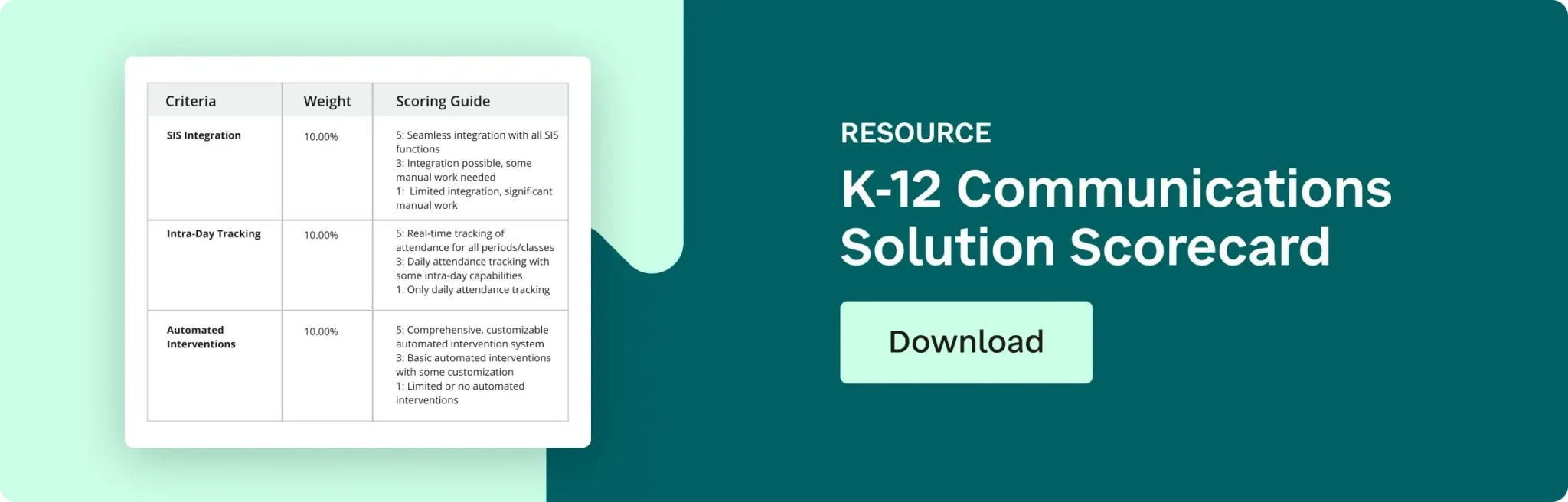
→ Download K-12 Communications Scorecard
V. Researching and Evaluating Vendors
VI. Mini Case Study: San Marcos CISD
VII. Why Districts Choose SchoolStatus Connect
→ Download Essential Features Checklist
Related Resources
FAQ

I. The Case for Consolidated Communications
Why Consolidation Matters
Chronic absenteeism remains far above pre-pandemic levels. According to the U.S. Department of Education, 28% of U.S. students were chronically absent in the 2022-23 school year, nearly double the pre-pandemic rate. Effective communication re-engages families and reverses the trend.
Yet a patchwork of apps and products still stands between districts and their families. That technological hodgepodge creates confusion for families, adds work for staff, and dilutes a district’s ability to deliver consistent, timely, and personalized communication.
A consolidated communication solution ensures:
- A single source of truth for all messages
- Accessible outreach through translation and channel preferences
- Stronger trust between families and educators
Supporting Stat:
In a Gallup and Learning Heroes survey, 9 in 10 families didn’t know their child’s actual reading level. Consolidated communication closes that gap with relevant, timely updates on the topics that matter most.
We’re not just reaching more families—we’re reaching the right families with the right message at the right time.
Communications Lead, Roseville City School District
II. Assembling the Right Decision-Making Team
Selecting a new communications solution is a cross-functional effort. Be sure to include the following roles:
- Communications Lead: Aligns solution with branding and messaging policies
- Technology Director: Ensures SIS integration, data security, and solution scalability
- School Administrators: Provide practical insight into daily use cases
- Educators & Staff: Bring the day-to-day classroom perspective
Appoint a project lead to document requirements, track progress, and facilitate vendor conversations.


III. Setting Goals for Your District
Before evaluating solutions, define measurable goals:
1. Increase Family Engagement
Send personalized, two-way messages to foster relationships.
2. Consolidate Messaging
Eliminate app overload and bring every tool into a single hub.
3. Improve Attendance
Use data-informed messaging to re-engage families and reduce chronic absenteeism.
4. Address Accessibility
Make every message one families can understand and respond to, regardless of language or device access.
Need more guidance on defining outcomes? Learn how districts use communications to improve attendance >
IV. What to Look For in a Consolidated Communications Solution
Core Capabilities to Prioritize
✓ Two-Way Communication via SMS, email, voice, and mobile apps
✓ Auto-Translation into 130+ languages
✓ Communication Logging and Reporting for transparency and accountability
✓ Newsletter Tools like Smore for mass messaging
✓ SIS Integration for real-time, accurate data syncing
✓ Granular Permissions to control access by school, grade, or role
Bonus Features
- In-app conference scheduling
- Embedded analytics dashboards
- Support for ADA-compliant messaging
Part of our student management plan is an effective, efficient, lightning-fast way to communicate with parents in real time. Because we’re in the day and age where an email takes too long.
Dr. Jeff Seeton, Assistant Superintendent, Lake Worth ISD
V. Researching and Evaluating Vendors
Discovery Sources
- Peer referrals via regional consortia and online forums (like AASA, CoSN)
- Case studies and testimonials
- Vendor-hosted demos and pilot programs
Questions to Ask Vendors
- How is your solution integrated with PowerSchool, Skyward, Infinite Campus, etc.?
- How do you support multilingual communication?
- What kind of training and implementation support do you offer?
- How do you handle opt-outs, FERPA, and privacy compliance?
The diligence you put in now shows up later as higher read rates, faster family responses, and stronger trust.
Use this checklist as a quick reference when evaluating potential solutions:
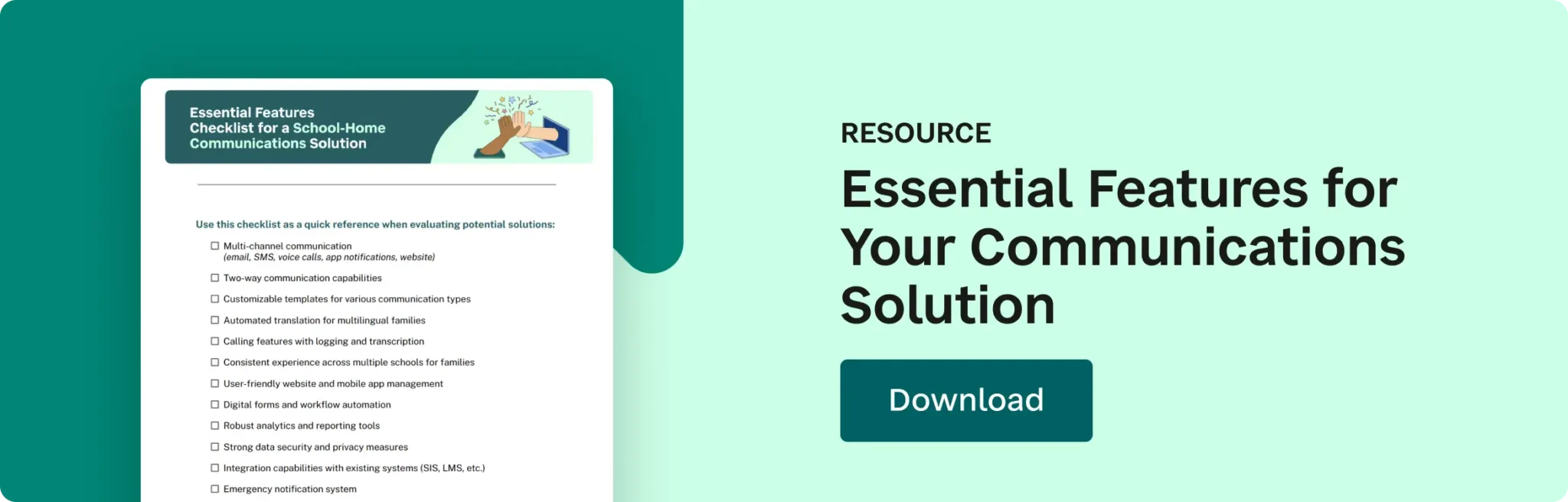
Not every solution offers all these features, and your district may not need all of them. Treat the list as a starting point and adjust it to your priorities.
VI. Mini Case Study: San Marcos CISD
Location: San Marcos, TX
Enrollment: 8,000+ students
Solution Used: SchoolStatus Connect
Challenge
San Marcos CISD needed a way to ensure all families—especially multilingual and underserved communities—received timely and consistent communication.
Results
- Significant increase in two-way messaging volume
- Improved trust and transparency across the district
- Data-informed insights into family communication patterns
Communication is the foundation of building relationships so that students can be successful.
Andrew Fernandez, Executive Director of Communications and Community Relations, San Marcos CISD
VII. Why Districts Choose SchoolStatus Connect
SchoolStatus Connect offers a full-featured, SIS-integrated solution for school-home communications:
- Supports Two-Way Messaging with translation
- Logs Every Interaction for compliance and auditing
- Integrates Directly with Your SIS and Rosters
- Includes Smore Newsletters for broad announcements
Trusted by districts across the country:
- Lake Worth ISD
- San Marcos CISD
- Darlington County School District
- Bentonville Schools
- Vicksburg Warren School District
- Galena Park ISD
. . . and more! Check out other Case Studies today >
It’s fast, efficient, and gives us immediate access to families. That’s the key to success.
Dr. Jeff Seeton, Assistant Superintendent, Lake Worth ISD
Related Resources
- eBook: Leading with Data—A K-12 Guide to Attendance Success
- Guide: Turn Critical Communications Into Conversation Starters
- Case Study: Lake Worth ISD
- Webinar: Summer Communications: How to Engage Staff and Families Year-Round
- Webinar: 8 Strategies for Building Stronger School-Family Partnerships
- Webinar: The New Rules of Family Engagement: Research-Backed Strategies That Actually Work
- Webinar: What Really Works for K-12 Attendance & Engagement
FAQs
A consolidated solution combines communication products such as texting, email, newsletters, and call logs into a single, integrated system. One system keeps messages consistent, saves staff time, and improves family engagement.
SchoolStatus Connect automatically translates messages into over 130 languages based on the preferred language in the student’s SIS profile. Families can reply in their home language, and your staff sees the translated response.
Yes. SchoolStatus Connect replaces multiple siloed systems. It handles mass notifications, one-on-one conversations, and newsletter distribution from one login.
Absolutely. SchoolStatus is fully FERPA compliant, with data privacy and security at its core. The system logs and encrypts every communication, with permission-based access controls.
Districts typically implement SchoolStatus Connect in 4–6 weeks. The process includes personalized onboarding, training sessions for staff, and ongoing customer success support.

Next Steps
Schedule time with us to see how SchoolStatus Connect helps your district reach every family and build lasting trust.