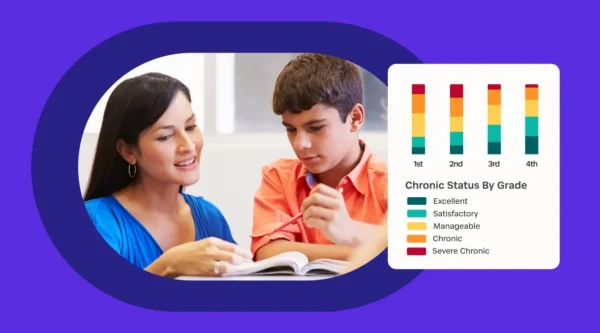
Why District Literacy Initiatives Stall Without Family Engagement
read more


New Book Gives District Leaders a Practical Framework for Improving Chronic Absenteeism—and a Comprehensive Look at State-Level Attendance Policies
Read More >
Key Attendance Trends from the 2025-26 School Year: Insights from 1.1M Students
Read More >

Anyone who works with young readers knows that building literacy is about so much more than what happens in a lesson plan. Students make progress with steady time in the classroom, families who know how to help, and support that meets them right where they are. The most positive results come from partnership. Districts that watch for early signals, keep families in the loop, and connect the dots before small challenges become larger see lasting reading growth as a result.
Every educator has seen it: reading skills grow through everyday practice, hearing sounds, practicing, building confidence. All that progress builds on presence and participation. Missing a few days can leave a student out of step with classmates, uncertain whether to speak up or stay quiet. Over time, those small interruptions quietly accumulate, making it harder to keep pace and widening the gaps educators work so hard to close.
Research shows that strong attendance in the early grades greatly increases the odds of reading on grade level by third grade. That milestone matters. Third grade marks the shift from learning to read to reading to learn, and every day in class supports that transition.
Many conversations focus on chronic absenteeism, yet patterns that shape learning begin much sooner. Just a handful of absences in a month can make a difference. Early shifts in attendance often appear well before test scores change, and they closely align with student growth across subjects. Spotting these patterns early gives students the best possible foundation for success.
Families are partners in this work, and they thrive with more than test results or report cards. A simple, timely message about attendance or a change in participation can make all the difference. With early information, families step in sooner, ask the right questions, and keep students moving forward alongside their peers.
Decades of evidence connect family engagement with stronger literacy growth, especially in the early years. The most effective communication is frequent, personal, and relevant, making it easy for families to take meaningful action at home. For districts looking to strengthen those connections, this resource on increasing family engagement shows how schools build stronger partnerships over time.
Schools that connect attendance, communication, and literacy see students thrive. As soon as a small signal appears, the right staff member responds, the family is informed, the teacher adjusts support, and the student gets help before the challenge grows. That kind of coordinated response leads to better outcomes for students and communities.
The greatest results come from early action, long before a test score shifts or a student’s confidence changes. Focusing on early signals and real-time communication lets educators and families work side by side, always a step ahead.
Each student’s story comes into focus when attendance, engagement, and academic signals are examined together. That fuller picture allows teams to support every learner in real time, with proactive responses and steady progress as the result.
Every district invests in reading instruction and intervention. The greatest results come when attendance, communication, and early support all work together. Staying connected across students, teachers, schools, and families keeps students engaged, empowers caregivers, and enables educators to respond while challenges are still small. That partnership is what drives steady progress and lasting literacy for every child.
Reading skills build through consistent, cumulative exposure to instruction. Early grades in particular are when foundational skills take hold, and regular classroom time is what makes that possible. Research shows that students with strong attendance in the early grades are significantly more likely to reach reading proficiency by third grade.
The districts seeing the strongest results are connecting attendance data, family communication, and academic signals in one view. That visibility helps teams act early, before gaps widen, and gives families the context they need to support learning at home.
Specific, timely communication makes the biggest difference. When families understand what their student is working on and where support would help most, they can take meaningful action. General encouragement matters less than a clear, practical next step tied to what the student is learning right now.
Attendance, engagement, and academic signals together tell a more complete story than any one of them alone. Patterns often emerge well before formal assessments, giving teams the opportunity to respond early and keep students on track.
Alignment across attendance, communication, and instruction creates consistency that instruction alone cannot achieve. When families and educators are working from the same information at the same time, support reaches students faster and progress holds.
Nef DukesManager of Education Strategy and Insights
Nef is a former teacher who is passionate about helping educators use data and communications to build family trust and improve educational outcomes. At SchoolStatus, Nef partners with districts to share practical insights and stories about what works in schools today.
News, articles, and tips for meeting your district’s goals—delivered to your inbox.

Ready to learn more about our suite of solutions?