
How Efficient K-12 Districts Reclaim Time
read more


SchoolStatus Launches Literacy Solution to Help Districts Engage Families in Improving Reading Outcomes
Read More >

Key Attendance Trends from the 2025-26 School Year: Insights from 1.1M Students
Read More >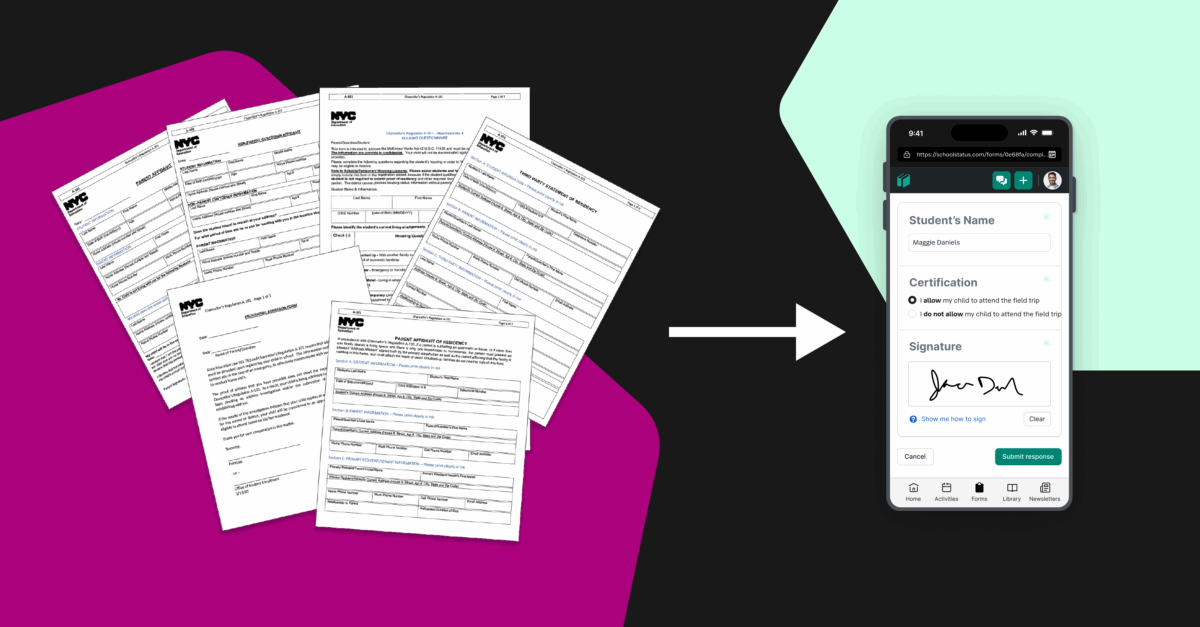

Superintendents balance big-picture goals with daily operational demands. Manual, paper-heavy workflows can slow progress, eat into leadership time, and delay decisions. Removing obstacles is the solution.
By streamlining processes with the school workflow automation, superintendents can focus on building relationships, supporting educators, and improving student outcomes. Our free eBook, How K-12 Administrators Can Save Time on Forms & Workflows, offers practical strategies to simplify operations and free up capacity without compromising the personal touch.
In any given week, a superintendent might review a dozen purchase requisitions stuck somewhere in the approval chain, chase down missing documentation for a federal grant due Friday, realize three different HR processes are holding up critical hires, and discover the board packet is incomplete because someone’s vacation delayed a finance report.
Then there’s the compliance burden. State reporting deadlines that can’t slip. Federal grant applications with hundreds of pages of documentation. Safety audit trails. Special education compliance reviews. Each has real consequences if mishandled: potential lawsuits, lost funding, or state intervention. These are high-stakes documents that keep the district running and legally protected.
The key is having fewer barriers in your way. When repetitive processes are simplified, you can turn your attention to the leadership moments that make the biggest difference.
One concern is that automation might feel less personal. It will not if you choose tools designed for K-12 realities.
For example, imagine a purchase requisition that needs multiple approvals – principal, finance director, assistant superintendent, and finally you – for anything over $10,000. What used to take days of routing paper between buildings, with items getting stuck on someone’s desk, now moves through the approval chain in hours. You can review and approve from your phone between meetings, finance can track spending in real-time against budget categories, and there’s a clear audit trail for the board. Staff spend less time chasing signatures, and critical purchases for instruction don’t get delayed.
This is especially critical when dealing with sensitive situations, for example employee grievances, student discipline appeals, or special education disputes. The right tools can ensure proper documentation and timelines while preserving the confidentiality and human judgment these situations demand.
When the routine work moves more smoothly, leaders have more energy for conversations with principals, check-ins with teachers, and community engagement.
Time saved on routine processes means more capacity for the complex challenges that define your tenure:
The ebook shares real-world examples, including the School of Arts & Sciences, which moved from multi-day approval chains to same-day sign-offs using SchoolStatus Forms & Flows. They also eliminated many manual steps that previously slowed projects during busy times of year. The school was able to eliminate 15 paper forms by replacing them with mobile-friendly digital forms and workflows.
Karen Burns, Finance Manager at the School of Arts & Sciences, described the difference this way: “Today, we’ve used [SchoolStatus Forms & Flows] as the backbone to automate many of our major financial-, request- and consent-based processes for parents and staff across both schools.”
These kinds of process improvements become proof points that reinforce your leadership. When staff and families see systems working well, it builds trust in the decisions you make.
Technology alone does not solve leadership challenges. You need a partner who understands the realities of K-12 work and adapts to the culture of your district.
That is the approach behind SchoolStatus Forms & Flows. It is built to fit into the systems you already use. It can start small with one high-volume process and expand as your team sees the benefits. It is also flexible enough to reflect your district’s policies, approval structures, and communication preferences.
Our free eBook, How K-12 Administrators Can Save Time on Forms & Workflows, is a practical starting point. You will find superintendent-ready ideas to remove friction, strengthen processes, and free up your leadership capacity without adding more to your plate.
Let’s be clear: no technology solution will eliminate the 11 PM phone calls about tomorrow’s snow day decision or make board politics disappear. But when your operational house is in order and the routine work flows smoothly you’re better positioned to handle the inevitable crises and political challenges with the leadership presence your district needs.
Streamlining forms and workflows means clearing the path so you can lead with clarity, stay connected to your schools, and keep students at the center of every decision.
Download the ebook today and see how a few smart changes can create more space for the work only you can do.
It is the process of digitizing and streamlining repetitive tasks like form approvals, payment processing, and reminders so they happen faster, more consistently, and with less manual effort.
It reduces delays, ensures compliance, and frees leadership time for higher-impact work like strategic planning, community engagement, and instructional leadership.
No. The goal is to move routine steps out of the way so you can focus on conversations and decisions that require your expertise and presence.
Implementation can start with just one or two high-impact processes, allowing staff to see quick wins and adopt new workflows without disruption.
Our free ebook How K-12 Administrators Can Save Time on Forms & Workflows offers real-world examples and strategies to begin streamlining right away.
Start by calculating the staff hours currently spent on manual processes. Often, the ROI becomes clear when you factor in overtime, errors, and compliance risks. Many districts start with one critical process to prove value before expanding.
Implementation success depends on choosing intuitive tools and starting with your early adopters. When others see colleagues saving hours per week, adoption typically follows. The key is selecting systems that make their jobs easier, not more complex.
Nef DukesManager of Education Strategy and Insights
Nef is a former teacher who is passionate about helping educators use data and communications to build family trust and improve educational outcomes. At SchoolStatus, Nef partners with districts to share practical insights and stories about what works in schools today.

News, articles, and tips for meeting your district’s goals—delivered to your inbox.



















Ready to learn more about our suite of solutions?