
How to Choose Software That Aligns to Your District Goals
read more


SchoolStatus Launches Literacy Solution to Help Districts Engage Families in Improving Reading Outcomes
Read More >

Key Attendance Trends from the 2025-26 School Year: Insights from 1.1M Students
Read More >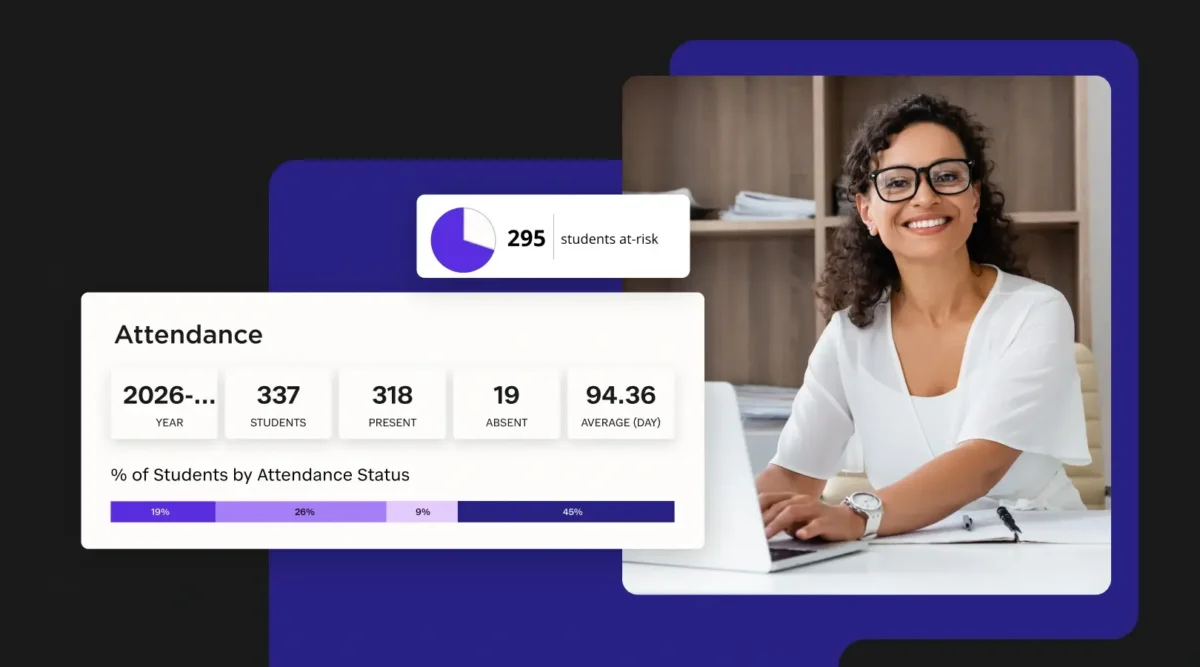

With final ESSER deadlines expiring, chronic absenteeism stalling, and staffing challenges ongoing, superintendents in 2026 face sharper pressures. These five data points offer clarity for districtwide planning and help ensure every decision supports student success. Use them to inform data-driven decision-making in education.
Attendance by itself only tells part of the story. Combine it with outreach metrics—calls made, messages opened, meetings held—to see where family engagement is making a difference.
For example, if a campus shows steady attendance gains and consistent documentation of follow-up, that’s a strong indicator that outreach staffing and strategy are aligned. Superintendents can use this pairing to identify which campuses may need additional support or tools.
Start your day with one metric: overall attendance change week over week. Then look at the outreach volume attached to it. A steady pulse helps leaders stay ahead of surprises.
Districtwide MTSS data is only useful when it reflects actual support delivered. Superintendents should have visibility into how many Tier 2 and Tier 3 supports were started and completed within each month. Trends in lag time between referral and action can signal where teams need help with implementation, documentation, or communication.
Establish a monthly review with your student services leadership to surface patterns and clear next steps.
Tracking message delivery matters, but understanding who’s receiving and engaging with communication is what drives connection. Monitor language preference usage, message open rates by channel, and two-way response rates.
Set your dashboards to report this monthly by school. Then ask communications leads and principals to identify where additional support, training, or tools could improve connection among families.
While individual student data lives at the school level, superintendents benefit from a top-line view of engagement.
Choose one districtwide metric to check daily, such as the percentage of schools with upward attendance movement or the percentage of documented family responses in the past 24 hours.
On a monthly basis, review aggregate trends with cabinet leaders. Look at campuses where outreach doesn’t translate into engagement, and at schools that need additional support to close that loop. This level of review helps identify both bright spots and urgent needs.
With fewer unrestricted dollars available, districts need to show what’s working. Match new investments—staffing roles, tools, family engagement programs—to outcome data like improved attendance, reduced referrals, or increased contact rates.
This is about planning for sustainability. When superintendents regularly track program performance, they are better positioned to make informed trade-offs and lead with purpose.
The goal is to track what moves your district forward. Set a data review rhythm that works: daily attendance checks, weekly trend reviews for outreach, and monthly cabinet conversations. Use a single platform to keep insights connected, current, and ready to act on.
SchoolStatus gives superintendents real-time access to the data that matters, from outreach logs to intervention timelines, all in one place. Ready to find out more about data-driven decision-making in education? Let’s talk about your district goals!
Family engagement and attendance are connected because families shape daily routines, priorities, and follow-through. When families feel informed, respected, and supported by schools, students are more likely to attend consistently and address challenges early.
Family engagement matters because attendance habits are built at home. Clear communication helps families understand expectations, recognize early warning signs, and partner with schools before absences become patterns.
Personal, timely outreach has the greatest impact. Messages that acknowledge the student, explain why attendance matters, and invite two-way communication are more effective than generic reminders or one-way notifications.
Districts can support family engagement by standardizing outreach expectations, aligning tools across schools, and using systems that reduce manual tasks. When communication and attendance data are connected, staff can act earlier without duplicating work.
The most effective outreach happens early. Contacting families after the first few absences—rather than waiting for a formal threshold—helps prevent patterns and signals that the school is paying attention and ready to support.
Family engagement is a shared responsibility. Teachers, attendance teams, counselors, and administrators all play a role. Districts that clarify roles and provide consistent systems make it easier for everyone to contribute.
Schools can track changes in attendance trends alongside outreach data, such as response rates, follow-up completion, and improved consistency over time. When engagement leads to quicker responses and steadier attendance, the connection is working.
1. Attendance Trends Paired With Outreach DataDistricts strengthen family engagement and attendance by aligning expectations across schools, prioritizing early outreach, and using connected systems that support both communication and attendance intervention. Consistency builds trust, and trust supports daily attendance.4. Districtwide Engagement Health5. Program Impact Connected to Outcomes
 Dr. Kara Stern
Director, Education and Engagement
Dr. Kara Stern has seen school from just about every angle: high school English teacher, middle school principal, fellowship director for math and science teachers across New York City, and head of school at a rural N-12 school. That breadth is what she brings to her work at SchoolStatus, where she writes, speaks, and challenges educators to build the kinds of school communities where every student thrives. She holds a Master’s in Education Leadership from Teachers College and a Ph.D. in Teaching and Learning from NYU.

News, articles, and tips for meeting your district’s goals—delivered to your inbox.

Ready to learn more about our suite of solutions?