
Better Alignment with the MTSS Framework: A Strategic Guide
read more


New Book Gives District Leaders a Practical Framework for Improving Chronic Absenteeism—and a Comprehensive Look at State-Level Attendance Policies
Read More >
Key Attendance Trends from the 2025-26 School Year: Insights from 1.1M Students
Read More >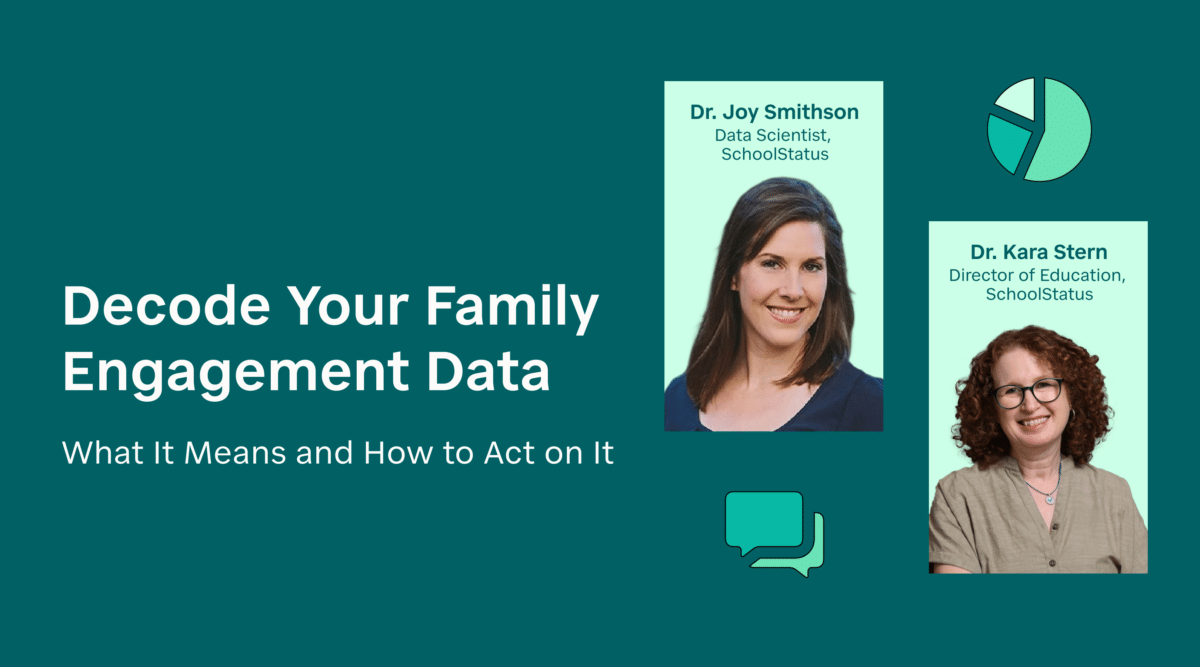

Seventy-three percent of families respond to school outreach within a week, and the median response time is 11 minutes. The key is making sure those messages are specific, timely, and tied to each student’s experience. Early outreach sets the tone for the whole year. Middle school families need a more personalized approach. And small shifts in message timing make a real difference in response rates.
Families are responding. That’s the finding that kicked off a recent SchoolStatus webinar, and it’s worth sitting with for a moment because it runs counter to what many educators assume.
Seventy-three percent of families reply to school outreach within a week. The median response time? Eleven minutes.
So what should districts do with that?
In Decoding Your Family Engagement Data: What It Means and How to Act on It, Dr. Kara Stern, Director of Education at SchoolStatus, and Dr. Joy Smithson, Manager of Data Science, dug into 3.3 million text message exchanges across 116 districts. What they found gives school and district leaders something concrete to work with.
The picture is encouraging. Families are responding, and they’re doing it quickly. The question worth asking is this: Are those messages giving families information that helps them support their child?
Relevant messages build trust. A message that says “Marcus missed his third class this week. Here’s the resource the school flagged for him and one way you can help from home” gives a family something to act on. That’s what turns outreach into partnership. The data shows districts have a real opportunity to make every message count.
Families who engaged in August or September maintained a significantly higher response rate for the rest of the school year. Their reply rate from October through June was 77%, compared to 71% for families who engaged later. They also responded faster, about a minute quicker than average.
That six-point difference compounds over a year. The habits families form in the first four weeks of school carry through June.
The practical implication is clear: make those early messages count. Specific. Personal. Tied to that student’s actual experience. Something like “We’re glad Marcus is here. Here’s what he’s working on and how you can support him this week” tells a family their child is known. That’s what keeps them engaged.
Parent response rates for students ages 11 to 13 run consistently lower than for other age groups, and that gap holds steady all year. Middle school is when the stakes go up. Attendance starts to slip, grades matter more, and students are navigating a lot of new pressure. Families want to stay connected. The opportunity is in sending messages specific enough to their student that responding feels worthwhile. Personalized messages do that.
Families are most available during the school day on weekdays, with peak response windows around 8 AM and again from 2 to 4 PM. Messages that arrive when families can act on them get faster responses, fewer follow-ups, and more meaningful conversations.
Sharing this with teachers and staff costs nothing. It’s the kind of practical guidance they can use the next day.
Three concrete actions came out of the webinar discussion:
One: Ask your highest-performing schools to share a handful of messages that connected student information to family action. Use those as models in professional development. Strong messages include the student’s name, a specific skill or progress point, what it means, and what the family can do to help.
Two: Prioritize early-year outreach. Encourage schools to send clear, relevant, student-specific communication in the first four weeks. That’s when families form their expectations about whether the school knows their child.
Three: Share peak engagement windows with your teams. Eight AM and 2 to 4 PM on weekdays. Small shift, real impact.
The data gives districts the roadmap. Families are ready. The work is making sure the messages are worth responding to.
It tracks how often families reply to school outreach, how quickly they respond, and how those patterns shift over the course of the school year and across grade levels.
Families who respond in August or September are significantly more likely to stay engaged throughout the year. The habits formed in those first weeks carry through June.
The data shows a consistent gap in reply rates for families of students ages 11 to 13. Student-specific, personalized messages close that gap by giving families something relevant and actionable to respond to.
Peak response windows are around 8 AM and 2 to 4 PM on weekdays. Messages sent during these windows get faster responses and more follow-through.
Messages that include the student’s name, a specific detail about their progress or experience, and a clear action the family can take. Personal, relevant messages build trust and keep families engaged.
 Dr. Kara Stern
Director, Education and Engagement
Dr. Kara Stern has seen school from just about every angle: high school English teacher, middle school principal, fellowship director for math and science teachers across New York City, and head of school at a rural N-12 school. That breadth is what she brings to her work at SchoolStatus, where she writes, speaks, and challenges educators to build the kinds of school communities where every student thrives. She holds a Master’s in Education Leadership from Teachers College and a Ph.D. in Teaching and Learning from NYU.
News, articles, and tips for meeting your district’s goals—delivered to your inbox.

Ready to learn more about our suite of solutions?