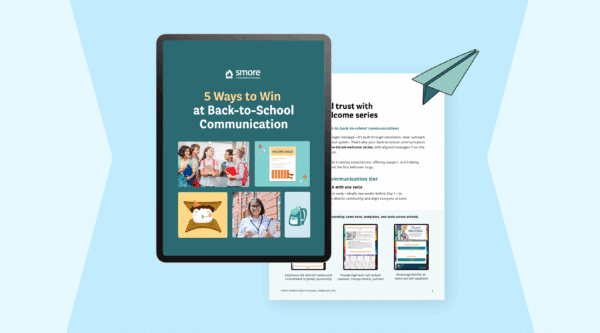
New Guide for Strengthening Early-Year Communication & Engagement
read more

SchoolStatus Launches Literacy Solution to Help Districts Engage Families in Improving Reading Outcomes
Read More >
Key Attendance Trends from the 2025-26 School Year: Insights from 1.1M Students
Read More >

Increasingly, students are growing up in homes where English isn’t the primary language. These emergent bilingual students and their families need school messages they can read and understand. When communication isn’t clear, families can miss important updates about how their child is doing, especially when help is needed.
This post looks at what’s getting in the way of communication, what families really want to know, and how schools can use the right tools to connect with every family, in every language.
Want the full guide? Download the free eBook →
One out of every four public school students in the U.S. speaks a language other than English at home. That equals millions of students. And while many districts work hard to reach families, traditional methods often fall short for emergent bilingual students and their caregivers.
The breakdown usually starts with good intentions. A note goes home in a student’s backpack. A robocall is sent out in English. A teacher has a quick conversation with a student and hopes the message gets relayed accurately at home.
But here’s the problem: When school communication isn’t clear or in a language families can understand, critical information gets lost. Families may not hear about missed assignments, behavioral concerns, or chronic absences until it’s too late to act. And that can affect everything from student performance to family trust.
In some cases, schools rely on students themselves to translate messages—a practice that puts pressure on kids and leads to partial or filtered information. In others, there’s no system in place to translate messages at all, or translation happens inconsistently across schools or classrooms. This lack of inclusive school communication creates confusion, frustration, and missed opportunities to partner with families, especially when students are struggling.
Families want to support their kids. But to do that, they need real information that’s shared clearly and on time. In fact, 87% of parents say they want honest, direct updates about their child’s performance, even when things aren’t going well. That includes families of emergent bilingual students, who may be even more eager for updates, especially when language barriers have kept them out of the loop.
This is where you can build trust.
Families want clear, translated messages about grades, attendance, or behavior. If they get that, they’ll be part of the conversation and ready to take action. Something as simple as, “Your child missed two classes this week. Let’s talk,” can prompt a conversation that gets a student back on track. But if that message is never delivered, or is not written in the family’s language, schools miss a chance to engage.
Proactive communication matters most when a student is struggling. Reaching out early, in the family’s preferred language, and in a way that feels personal goes a long way. It shows families they’re not just being contacted when there’s a problem. They’re being invited in as partners.
Ready to dive deeper? Download the free eBook →
Strong communication takes systems that work for all families. If schools want to truly support emergent bilingual families, they need tools that make communication automatic and accurate.
That’s where a school messaging translation tool can make all the difference. These tools don’t just translate a few words. They let educators send the right message, in the right language, through the right channel. Whether it’s a school closure update, an attendance concern, or a classroom reminder, families should get the message in a format they can actually use, whether that’s text, email, newsletter, or app, without delay.
But translation alone isn’t enough.
Effective outreach is about context, timing, and tone. A translated message still falls flat if it’s confusing, too late, or overly formal. The most powerful communication systems, like SchoolStatus Connect, let educators customize messages, track engagement, and keep a record of interactions, all while ensuring the content is understandable and accessible. That’s what inclusive school communication looks like.
Using school communication to build relationships takes more than a one-time translation or an ad-hoc update. It takes consistency, care, and commitment from the entire district to make inclusive school communication the norm.
That starts with asking some questions: Are we making it easy for families to stay informed? Are we communicating in ways that show we value every caregiver? Are we reaching emergent bilingual families early and often?
Schools that treat language access as essential build trust and better engagement. Families become true partners in student success.
When families understand what’s happening at school, they’re more likely to engage, speak up, and support their child’s success. That’s especially true for emergent bilingual families, who are often left out simply because communication systems weren’t built with them in mind.
The good news? It doesn’t take a complete overhaul to do better. With the right tools, a little intention, and a mindset that prioritizes inclusive school communication, districts can make sure every family gets the message and every student gets the support they need.
Want a deeper look at how to make this happen in your district?
Emergent bilingual refers to students who are learning English while continuing to grow in their home language. It’s a strengths-based term that recognizes multilingualism as an asset, not a deficit.
Families can’t engage if they don’t understand what’s being shared. Inclusive communication, especially in a family’s home language, builds trust and helps ensure that students get consistent support both at school and at home.
Use a school messaging translation tool that delivers timely, translated messages through the family’s preferred method (text, email, or app). Tools like SchoolStatus Connect let educators send accurate, trackable messages in 130+ languages.
Automation and translation tools reduce manual work. The right platform can simplify outreach, track engagement, and keep messaging consistent without putting more on educators’ plates.
All families want timely updates about attendance, academics, behavior, and events. But messages about struggles, like falling behind or missing school, are especially critical and should be sent early, with care and clarity.
Nef DukesManager of Education Strategy and Insights
Nef is a former teacher who is passionate about helping educators use data and communications to build family trust and improve educational outcomes. At SchoolStatus, Nef partners with districts to share practical insights and stories about what works in schools today.
News, articles, and tips for meeting your district’s goals—delivered to your inbox.

















Ready to learn more about our suite of solutions?