How to Build Outstanding Data-Driven Attendance Interventions
read more


SchoolStatus Launches Literacy Solution to Help Districts Engage Families in Improving Reading Outcomes
Read More >
Key Attendance Trends from the 2025-26 School Year: Insights from 1.1M Students
Read More >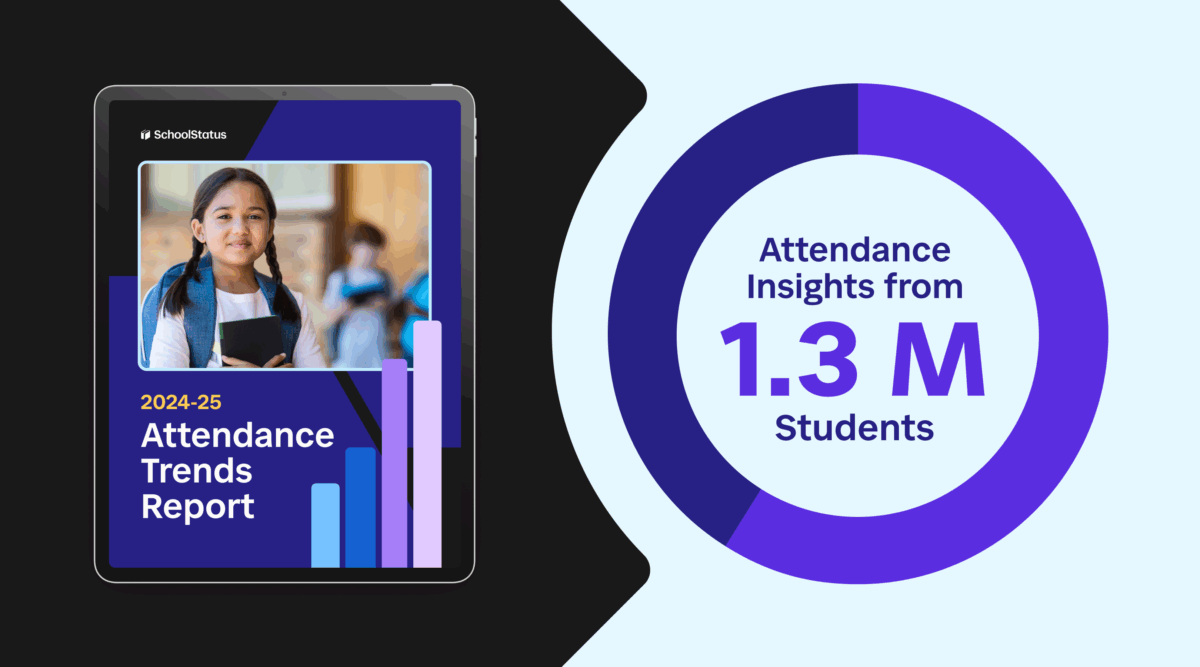

Our new attendance analysis of 1.3M students reveals four key findings about what works: Overall, elementary intervention achieves 7% improvement while high school shows minimal change; family communication succeeds at getting kids back to school, with varying effectiveness across populations; 5th grade offers a key intervention window, and districts taking a systematic approach to attendance achieve 20.92% chronic rates compared to the 23.5% national average.
Chronic absenteeism affects nearly one in four students nationwide, but some districts are making real progress. Our 2024-2025 end-of-year analysis of attendance data from 172 districts shows exactly what works when it comes to getting kids in class and keeping them there.
Here are four key findings from our research that are helping districts beat national trends.
Elementary students show significant improvement in chronic absenteeism rates (12.6% for first-graders) while high school seniors actually see increases (0.8% worsening). In practical terms, elementary intervention helps approximately 1 student per classroom avoid chronic absence status, or 12-13 students in a 500-student elementary school.
Elementary intervention builds the foundation when change is most achievable. Elementary years establish attendance patterns with kids and trust with parents at the point where both are most malleable.
Pro Tip: Start with elementary intervention. Invest heavily in grades where attendance habits form, then develop specialized secondary approaches that build on that foundation. A 12th grader needs different support than a 1st grader, and both benefit from the foundation that starts in elementary years.
Family outreach generates strong overall results, with response rates varying significantly across populations. Asian families respond at 50.1%, while American Indian families respond at 37.7%. Among Hispanic/Latino families alone, more than 334,000 students improved their attendance after family contact.
Pro Tip: Acknowledge different community values, language preferences, and engagement patterns. Some families respond to direct calls about attendance concerns. Others need relationship-building first. Some want texts, others want face-to-face conversations. Recognize that effective communication may look different across populations and consider tailoring your approach accordingly.
Students follow a predictable attendance trajectory: challenges in Pre-K and kindergarten (about 1 in 4 chronically absent), stability through elementary years (reaching an optimal 1 in 7 by 5th grade), then a steady climb in chronic absenteeism from 6th grade onward. By senior year, nearly 1 in 3 students are chronically absent.
Fifth grade represents the sweet spot before middle school challenges emerge. The elementary to middle school transition becomes the point where attendance patterns typically shift.
Pro Tip: Use 5th grade as your strategic intervention point. Implement support systems before attendance patterns shift. Use this grade as preparation time for middle school transitions.
Districts using systematic approaches reduced chronic absenteeism from 21.9% to 20.92%. This improvement occurred across urban and rural contexts, high-poverty and affluent communities, and districts ranging from under 2,000 to over 20,000 students.
Approach matters more than demographics or resources. Districts using systematic approaches implement consistent communication protocols that save staff time. They use data to identify at-risk students early. They maintain family engagement throughout the K-12 experience with grade-appropriate strategies.
Individual results varied, with some districts achieving as much as 34% improvement. The systematic districts consistently outpaced national recovery trends.
Ready to see all the data behind these findings? Download our complete attendance analysis to get district-specific strategies, detailed methodology, and actionable implementation guides.
This analysis uses period attendance tracking rather than full-day absences, providing more detailed insight into student engagement. This allows for earlier identification of attendance concerns and more targeted intervention.
Elementary students are developing attendance habits while families are establishing routines. Intervention can shape these patterns when they’re most malleable. Secondary students face different barriers like work schedules and transportation independence, but the elementary foundation matters for all ages.
Systematic approaches use data to identify at-risk students early, implement consistent communication protocols with families, and maintain engagement throughout K-12 with grade-appropriate strategies. Systems work automatically and save staff time while improving results.
The analysis included districts ranging from under 2,000 to 20,000 students across urban and rural contexts with diverse demographics. While individual results varied, systematic approaches showed positive results across different circumstances.
Begin by assessing current approaches and setting clear attendance goals. Establish consistent family communication protocols and focus on building processes that save staff time while improving family engagement. Start with elementary grades for maximum impact, then build secondary strategies that acknowledge different developmental needs.
 Dr. Kara Stern
Director, Education and Engagement
Dr. Kara Stern has seen school from just about every angle: high school English teacher, middle school principal, fellowship director for math and science teachers across New York City, and head of school at a rural N-12 school. That breadth is what she brings to her work at SchoolStatus, where she writes, speaks, and challenges educators to build the kinds of school communities where every student thrives. She holds a Master’s in Education Leadership from Teachers College and a Ph.D. in Teaching and Learning from NYU.

News, articles, and tips for meeting your district’s goals—delivered to your inbox.



















Ready to learn more about our suite of solutions?