


New Data from 1.1 Million Students Shows Chronic Absenteeism Falling for Third Straight Year in 142 K-12 Districts
read more


SchoolStatus Launches Literacy Solution to Help Districts Engage Families in Improving Reading Outcomes
Read More >
Key Attendance Trends from the 2025-26 School Year: Insights from 1.1M Students
Read More >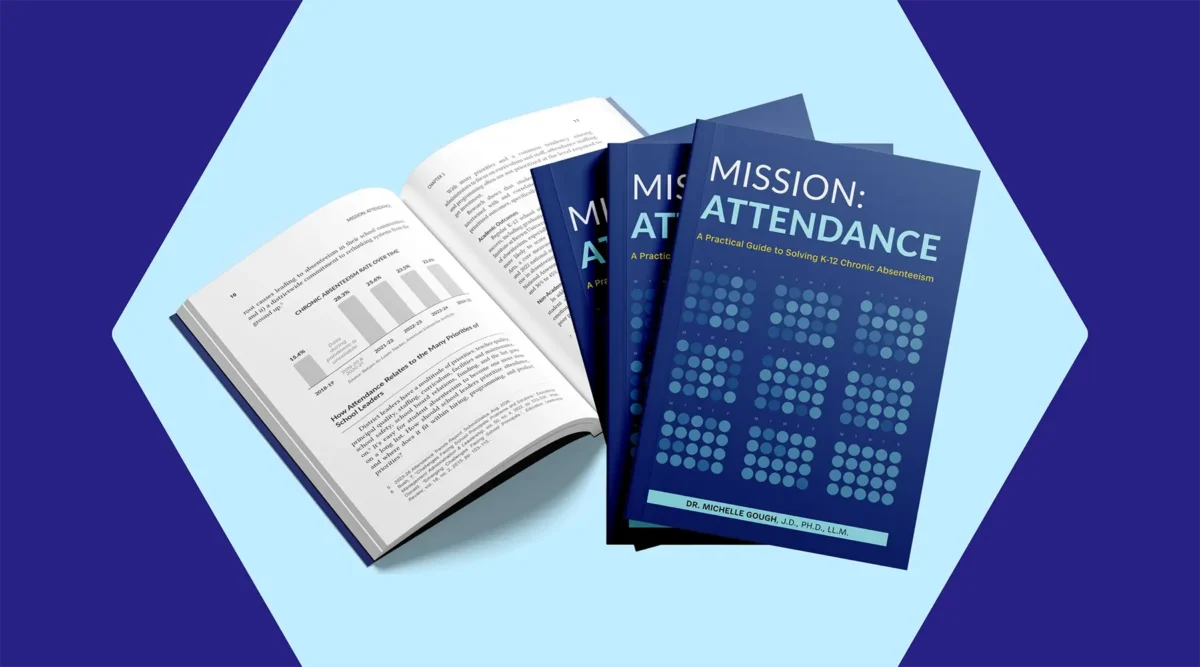

New book, Mission: Attendance, by policy scholar and former Indiana State Board of Education General Counsel Dr. Michelle Gough, examines two decades of attendance data and legislation to give district leaders actionable insights for addressing chronic absenteeism and responding to evolving state-level requirements.
SACRAMENTO, CA—September 15, 2026—Approximately 23% of U.S. students were chronically absent in the 2024-25 school year, according to research from AEI. Persistently high numbers have encouraged state governments to enact new legislation. This academic year, district leaders are working to address high levels of chronic absenteeism while navigating evolving state attendance policies. To support educators, SchoolStatus has released Mission: Attendance—A Practical Guide to Solving K-12 Chronic Absenteeism, a new book by Dr. Michelle Gough, J.D., Ph.D., LL.M., an education policy expert and General Counsel at SchoolStatus.
As a lawyer, policy scholar, and practitioner, Dr. Gough has a unique perspective on school attendance, understanding both the policy, legal, and educational sides of the issue. She’s served as a legal and education-policy expert and has spent the last few years working alongside district leaders to address absenteeism. She has served in senior leadership roles in public agencies, including serving as the General Counsel for the Indiana State Board of Education and Agency Head at the South Carolina Department of Disabilities and Special Needs. She is a graduate of Georgetown Law, where she earned her Master of Laws, and Indiana University, where she earned both her Ph.D. in Education Leadership and Policy and her Doctor of Law.
The book contains proven strategies drawn from over two decades of experience fighting absenteeism with an analysis of evolving state legislation. Dr. Gough then provides district leaders with a framework for responding to chronic absenteeism that allows them to meet state legislative requirements while meaningfully reducing chronic absenteeism across all district sizes and demographics.
The book includes:
The second half analyzes national trends shaping attendance legislation and then includes a breakdown of each state’s attendance laws. Together, these resources provide the policy context district leaders need to put the framework into action, helping them meet existing requirements, prepare for new legislation, and implement attendance strategies that produce meaningful change.
Some examples of the state legislation analyzed include:
Mission: Attendance: A Practical Guide to Solving K-12 Chronic Absenteeism is available in print and for Kindle through SchoolStatus at schoolstatus.com/book-purchase or on Amazon. The book includes companion tools, worksheets, and a robust breakdown of legislation affecting attendance in all fifty states.
Media Contact
Annmarie Ely, Director
0to5 for SchoolStatus
267.454.4686
[email protected]
 SchoolStatusSchoolStatus connects educators and families around the topics that matter most. The company partners with K–12 districts to improve attendance, engage families, and build trust so students can succeed. A recognized leader in data-driven attendance and family engagement solutions, SchoolStatus enables districts and educators to engage families with relevant, timely communications and proactive support on important topics including absenteeism, literacy progress, and overall student readiness. Today, SchoolStatus supports districts in all 50 states and serves more than 22 million students nationwide as a trusted partner in driving better student outcomes.
News, articles, and tips for meeting your district’s goals—delivered to your inbox.




















Ready to learn more about our suite of solutions?