Messaging and Communication are Not the Same Thing
read more


New Book Gives District Leaders a Practical Framework for Improving Chronic Absenteeism—and a Comprehensive Look at State-Level Attendance Policies
Read More >
Key Attendance Trends from the 2025-26 School Year: Insights from 1.1M Students
Read More >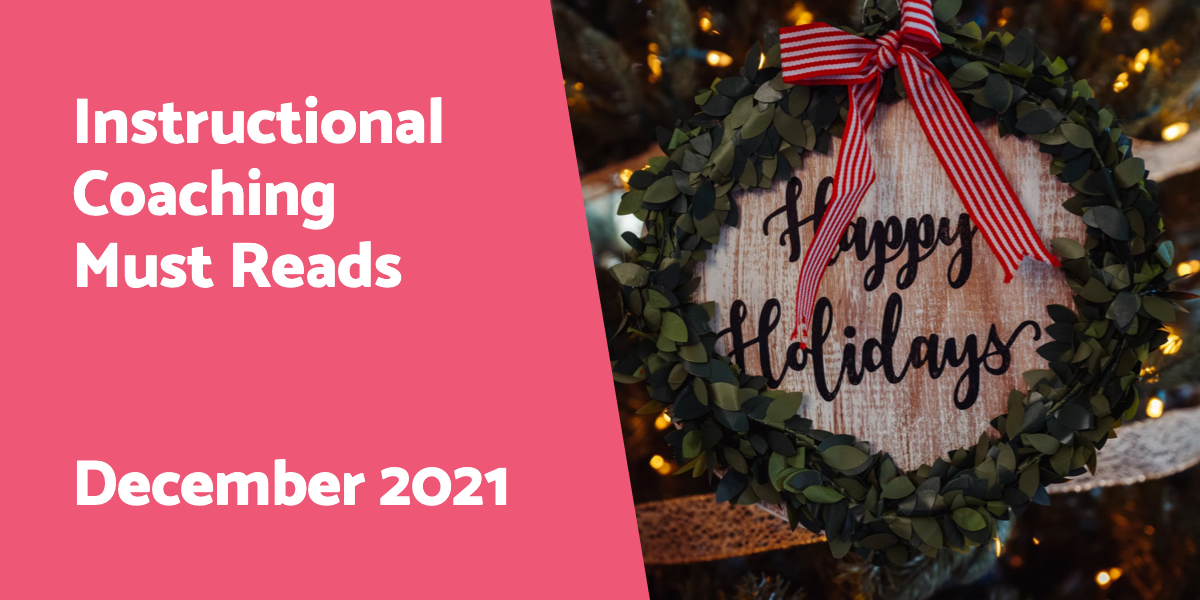


Happy holidays! ☃️ It’s time to shut the door on 2021 but first, let’s revisit the top articles from December’s weekly coaching roundups. Learn how to shift a coaching culture from avoidance to acceptance, a tasteful approach to build relationships with teachers and students in your building, four tips for effective coaching conversations, and more!
Be sure to subscribe to our weekly coaching roundup to receive articles like these to your inbox every week, and never miss the latest coaching news, tips, or tools!
Kayleigh Wright delivers a tasteful way to build relationships with teachers and students in your building—with the help of treats.
“Teachers would fill out their room service cards and hang them on their door. Leadership students would then take the cart around to classrooms, read the door hanger, and deliver the treat.
It was such a bright spot for both the students and the staff, and a great way for the students to see the impact an act of kindness had on their teachers
They loved doing it and often asked me when they could do it again.”
Casey Watts showcases fun and strategic ways to build a culture of collaboration and learning among staff through on-the-go professional development.
“Usually,
I’ll try to locate multiple mediums to keep the content interesting and lively (articles, podcasts, videos, websites, etc.). I also try to include an interactive component that encourages teachers to communicate with me or with one another. . . .
Once I’ve cultivated the information I want to provide, I consider all of the creative possibilities for delivery! This is the fun part! I take into account the time of year, nearby holidays, themes that match the content, or themes that match community events.”
Kevin Leichtman believes there are five areas leaders should focus on to sustain a positive working culture in their building and retain teachers.
“Effective leaders understand that
added pressure with no added purpose will simply lead to more stress and burnout. On the other hand, leaders can build a strong culture by leading with purpose. Any policy you implement with a powerful, clear, connected purpose can be successful. . . .
Be an obstacle remover. Amazing school leaders seek out areas where teachers don’t feel autonomous.”
Jessica Crawford highlights four coaching conversation moves she’s learned over the years from other leading instructional coaches. Read on for some new ways to help your conversations begin to forge stronger teacher partnerships.
“Starting a conversation is fantastic, but
to truly impact our coaching conversations, we have to be a good listeners. Before I started coaching, I thought being a good listener and co-worker meant I should help and have the answers for whatever my conversation partner was bringing up. I became the speaker, talking about what I would do, or have done, in the situation. . . . This did not, in fact, lead to better conversations; It actually shut them down.”
TeachBoost Coach is the first technology platform to manage coaching cycles, goals, meetings, & evidence. It works on any device—so you’ll never miss an important moment with a teacher. Sign up below to try us out today!
{{cta(‘6d320956-4380-405e-8e93-06ed341bdca2’)}}
Ever feel like your role with teachers involves only being asked to put out fires? Delrose Adkinson shares four steps that will help you set boundaries and establish your coaching identity with your staff.
”
Successful coaching relationships are built on empathy and trust, and building these relationships takes time. Avoid the pitfall of devaluing the time you spend on intangible relationship-building work. . . . After securing the teacher’s partnership,
create a personal plan for every interaction, and identify your goal for the experience.”
Dr. Lisa Corbin identifies what makes an effective PLC and how you can use the “Learn, Be, Do” model to grow and develop yours.
“At its core, the shared goal of every PLC is student achievement. . . . In fact, most effective schools
ensure that all personnel understand how their role specifically contributes to the shared goal of student achievement.”
Britteny Jacobs reflects on her transition into coaching and the three questions all new ICs should ask themselves.
“As a new coach,
spend time fleshing out what your leadership style is. Are you direct and assertive, easily taking charge and making decisions or more analytical and organized, enjoy drafting detailed and strategic coaching plans, or empathetic and facilitative, asking questions to guide teachers to their action step?
No one style is better than another. It’s about what aligns to your persona.”
Chrissy Beltran suggests that ICs who experience coaching reluctance with their teachers should try one of her five practiced techniques that help shift a coaching culture from avoidance to one of excitement.
“We want to
begin with the teachers who are excited to work with us and have some good things happening in their classrooms. . . . When teachers see the benefits of the coaching cycles in the model classroom, they become interested in participating in a cycle. They realize the coaching cycle isn’t scary, but rather is supportive.
The model classroom can act as a commercial or billboard for what is possible with coaching.”
{{cta(’34b13594-505a-497a-8a75-16ae35acf14d’)}}
Have some interesting instructional coaching news?
Share it with TeachBoost and we’ll highlight it here.
Photo by Osman Rana from Unsplash.
 SchoolStatusSchoolStatus connects educators and families around the topics that matter most. The company partners with K–12 districts to improve attendance, engage families, and build trust so students can succeed. A recognized leader in data-driven attendance and family engagement solutions, SchoolStatus enables districts and educators to engage families with relevant, timely communications and proactive support on important topics including absenteeism, literacy progress, and overall student readiness. Today, SchoolStatus supports districts in all 50 states and serves more than 22 million students nationwide as a trusted partner in driving better student outcomes.
News, articles, and tips for meeting your district’s goals—delivered to your inbox.