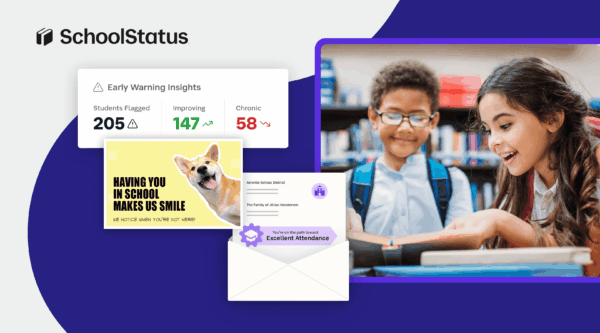
New Automated Early Warning System Identifies At-Risk Students Months Before They Become Chronically Absent
read more


New Book Gives District Leaders a Practical Framework for Improving Chronic Absenteeism—and a Comprehensive Look at State-Level Attendance Policies
Read More >
Key Attendance Trends from the 2025-26 School Year: Insights from 1.1M Students
Read More >

Students are more likely to show up when families feel informed and supported. Engagement at home builds trust and contributes to steady daily attendance. Here’s how districts can strengthen that connection.
Helping families connect the dots between attendance and learning starts with simple, steady messaging. When families hear that showing up helps their child stay on track academically and socially, they’re more likely to prioritize attendance.
Use moments like back-to-school nights, report card distribution, or teacher newsletters to reinforce the value of consistent attendance. A few words from a trusted adult can go a long way.
The most effective attendance outreach feels like it came from someone who knows and cares about the student. Generic robocalls inform, but a quick check-in from a teacher or front office staff member can build a connection
📌Pro tip: Start by acknowledging the student’s strengths. A message that begins with “We missed seeing Jalen in class today. He’s such a thoughtful contributor during morning meetings” invites conversation and reminds families that their child is known.
When a student misses school, there’s always a reason. Sometimes it’s logistical. Other times, it’s emotional. The key is finding out why, so schools can respond with support.
Start by making it easy for families to reach out. Share who to contact, what information helps, and when someone will follow up. That builds trust and keeps lines of communication open.
Then, listen with intention. If families share that a student is struggling with anxiety, peer conflict, or academic pressure, it creates a chance to intervene early and collaboratively.
When schools view every absence as an opportunity to support, families are more likely to stay engaged.
A student who missed multiple days and then shows up three days in a row is making progress. Recognizing small steps helps reinforce positive habits.
📌Pro tip: A quick shout-out from a teacher, a note home, or a mention in the morning announcements signals to students and families that their efforts are seen.
Attendance patterns form early and stick around. Schools that stay connected to families through simple, consistent outreach help shape those habits.
Each message is an opportunity to show care, offer help, and strengthen the relationship between home and school.
Family engagement and attendance are deeply connected. When families feel informed, respected, and supported, students are more likely to attend school and keep coming back. The work builds on what you already do well. It centers on consistency, personal outreach, and systems that empower staff to connect with students early and often.
SchoolStatus helps districts support that connection in practical ways. SchoolStatus Attend gives teams clear attendance insight and helps them act early, while SchoolStatus Connect makes it easier to reach families in ways that feel timely and personal. Together, they help you build a bridge between family connection and consistent attendance that drives real academic success.
Family engagement and attendance are connected because informed, supported families are more likely to help students show up consistently. When schools communicate clearly, respond early, and make it easy for families to engage, attendance improves, and small issues are addressed before they become ongoing absences.
Families who feel informed and supported are more likely to prioritize daily attendance and respond early to challenges.
Personal, timely messages that connect attendance to student success and invite two-way communication.
Everyone. From teachers to attendance clerks to administrators, every staff member plays a role in building relationships with families.
 Dr. Kara Stern
Director, Education and Engagement
Dr. Kara Stern has seen school from just about every angle: high school English teacher, middle school principal, fellowship director for math and science teachers across New York City, and head of school at a rural N-12 school. That breadth is what she brings to her work at SchoolStatus, where she writes, speaks, and challenges educators to build the kinds of school communities where every student thrives. She holds a Master’s in Education Leadership from Teachers College and a Ph.D. in Teaching and Learning from NYU.

News, articles, and tips for meeting your district’s goals—delivered to your inbox.
















Ready to learn more about our suite of solutions?