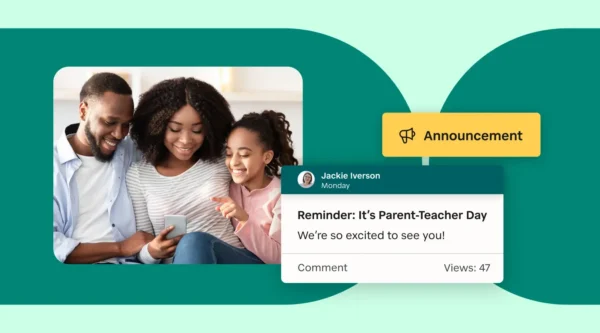
Three Strategies for Proactive Family Outreach
read more


New Book Gives District Leaders a Practical Framework for Improving Chronic Absenteeism—and a Comprehensive Look at State-Level Attendance Policies
Read More >
Key Attendance Trends from the 2025-26 School Year: Insights from 1.1M Students
Read More >

When families feel connected to their schools, students are more likely to attend. Strong family engagement builds trust, reduces confusion, and helps families understand how attendance supports learning. Here’s how to use communication to drive progress.
Most families want their children to succeed, but they may not realize how quickly missed days add up or how much each absence impacts learning. Consistent, clear communication helps connect the dots between attendance and student success.
When families understand that showing up every day matters—and feel supported by the school when challenges arise—they’re more likely to prioritize attendance.
Attendance messaging works best when it feels personal and supportive. Rather than just sending automated reminders, schools can:
When families feel seen and respected, they are more likely to engage and respond.
Too often, families are unsure who to contact or where to find attendance information. Make sure communication systems:
Reducing confusion helps families feel more confident and better able to stay on track.
Review messaging data to see which channels, message types, or timing lead to higher response or improved attendance. Look for patterns by grade level, language, or school.
Use this insight to refine outreach and focus team efforts where they have the most impact.
When all schools share the same expectations, messaging cadence, and outreach norms, families receive a more cohesive experience. That consistency builds trust and drives behavior change, ultimately improving family engagement and attendance.
District leaders can support this by aligning tools, setting clear goals, and celebrating schools that build strong relationships with families.
Family engagement is a powerful lever for attendance improvement. It starts with listening, continues with timely support, and grows through relationships.
Let’s help every family feel informed, included, and invested in showing up.
When families feel connected to school and understand how attendance impacts learning, they are more likely to prioritize daily attendance.
Supportive, personalized messages that highlight the importance of attendance and offer help when patterns emerge.
Attendance clerks, teachers, counselors, and school leaders all play a role in keeping families informed and supported.
Districts improve attendance through family engagement by making communication clear, consistent, and easy to respond to. Engagement becomes part of everyday routines when families understand expectations, know who to contact, and feel supported.
Communication shapes how families experience attendance expectations. Timely updates, consistent language, and personal outreach help families stay informed and reduce confusion. Over time, that clarity supports steadier attendance habits.
There is no single cadence that fits every district, but families benefit from predictable communication. Regular updates paired with timely outreach when patterns change help families know what to expect and when to engage.
District leaders can support schools by aligning tools, setting shared expectations, and providing guidance on messaging tone and timing. Families experience communication as more consistent and trustworthy when schools work from the same framework, .
Yes. Family engagement supports long-term attendance by building habits early, reinforcing expectations consistently, and keeping communication open as challenges arise. Strong relationships make it easier to address issues before they become ongoing patterns.
SchoolStatus helps districts align attendance insight with communication tools so outreach feels timely, personal, and consistent. Teams can see what’s happening, coordinate follow-up, and keep families informed without adding extra steps.
 Dr. Kara Stern
Director, Education and Engagement
Dr. Kara Stern has seen school from just about every angle: high school English teacher, middle school principal, fellowship director for math and science teachers across New York City, and head of school at a rural N-12 school. That breadth is what she brings to her work at SchoolStatus, where she writes, speaks, and challenges educators to build the kinds of school communities where every student thrives. She holds a Master’s in Education Leadership from Teachers College and a Ph.D. in Teaching and Learning from NYU.

News, articles, and tips for meeting your district’s goals—delivered to your inbox.

















Ready to learn more about our suite of solutions?