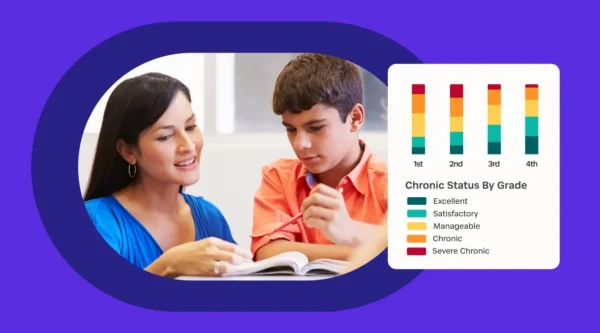
Why Parents Are Often the Last to Know About Their Child’s Literacy Progress
read more


SchoolStatus Launches Literacy Solution to Help Districts Engage Families in Improving Reading Outcomes
Read More >
Key Attendance Trends from the 2025-26 School Year: Insights from 1.1M Students
Read More >

Families are eager to support reading at home, but many are working with limited information about where their child actually stands. Districts play a vital role in closing that gap by providing clear, timely guidance connected to what students are learning right now. When communication is specific, consistent, and reaches every family, small actions at home build into real literacy progress.
Families want their children to become strong readers. That intention is nearly universal. What varies is whether families have what they need to act on it.
Research consistently shows that most families believe their child is reading at or above grade level, even when assessment data tells a different story. That perception gap creates a real problem. Families who think everything is fine have no reason to adjust routines or seek support. By the time they learn their child needs help, the window for early intervention has often passed.
Districts hold the data that could close this gap. The question is how consistently and clearly that information reaches families.
General encouragement to read at home leaves too much open to interpretation. Families who receive vague guidance may try for a few days and then lose momentum because they are not sure whether what they are doing is helping.
Specific, practical guidance works differently. When a family understands exactly what skill their child is building, what a short activity looks like, and how it connects to classroom instruction, they can act with confidence. That confidence is what sustains the habit over time.
The districts seeing the strongest results are sending communication that answers three questions for every family: What is my child working on right now? What can I do at home this week? How will I know it is helping?
When family communication depends on individual teachers, families get inconsistent experiences. One classroom sends weekly literacy updates. Another sends nothing until report cards. A family’s ability to support their child at home ends up tied to which teacher their child has, not to what the student actually needs.
Systematic communication changes that. Every family receives clear, timely information about their child’s reading progress, regardless of classroom or school. That consistency transforms family engagement from a variable into a district-wide strength.
It also matters how that communication arrives. Families engage more when messages are translated into their home language, written at an accessible reading level, and grounded in specific information about their child rather than generic district updates.
Communication designed with every family in mind reaches every family.
Timing shapes how families respond. A message that connects to what a student is learning this week feels immediately useful. A message about a skill covered two months ago is harder to act on.
Districts that tie family communication to current classroom focus, specific assessment data, and practical next steps give families the best opportunity to help. For example, outreach that shares a student’s current reading level alongside a simple activity for building that specific skill creates a direct line between school instruction and home support.
That relevance is what keeps families engaged across the school year, not just in the weeks after a report card.
Reading development extends well beyond the school day. Families are a meaningful part of the equation, and the research on family engagement and literacy outcomes is clear. The variable is whether families have the information and guidance they need to play that role effectively.
Districts already have the foundation in place: assessment data, intervention programs, and dedicated educators working toward the same goal. Systematic, personalized communication is what connects that work to the families who can extend it at home.
When every family receives clear, timely, specific guidance about their child’s reading progress, family involvement becomes a district-wide asset rather than a classroom-by-classroom variable.
The most effective approach is systematic communication that gives every family specific, timely information about their child’s reading progress and clear guidance on what to do at home. General encouragement matters less than a practical next step tied to what the student is working on right now.
Research consistently shows that most families overestimate their child’s reading proficiency because school communication rarely gives them an accurate picture. When families do not know where their child actually stands, they have no reason to adjust what they are doing at home. Clear, honest communication from districts is what creates the conditions for real family involvement.
Effective communication is specific to the child, connected to current classroom learning, delivered in the family’s home language, and arrives early enough to act on. The districts seeing the strongest family engagement are sending messages that answer a clear question: what can I do this week to help my child?
When communication is systematic rather than teacher-dependent, every family gets the same quality of information regardless of classroom or school. That consistency means more families are equipped to support reading at home, which translates to more instructional reinforcement outside of school and stronger literacy growth over time.
Even ten to fifteen minutes of focused, consistent practice makes a meaningful difference. The key is that families know what to work on. Short, specific activities tied to classroom instruction are more effective than longer, unfocused reading time.
Nef DukesManager of Education Strategy and Insights
Nef is a former teacher who is passionate about helping educators use data and communications to build family trust and improve educational outcomes. At SchoolStatus, Nef partners with districts to share practical insights and stories about what works in schools today.

News, articles, and tips for meeting your district’s goals—delivered to your inbox.

Ready to learn more about our suite of solutions?