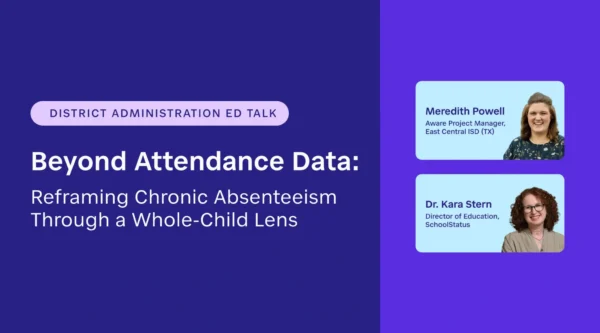
How East Central ISD Reduced Chronic Absenteeism by 12%
read more


New Book Gives District Leaders a Practical Framework for Improving Chronic Absenteeism—and a Comprehensive Look at State-Level Attendance Policies
Read More >

Key Attendance Trends from the 2025-26 School Year: Insights from 1.1M Students
Read More >

Chronic absenteeism rarely begins in the spring. Patterns start in the first few weeks of school and compound as the year progresses.
Districts that make progress pay attention to early signals, narrow their focus, and connect with families before attendance habits solidify.
Reducing chronic absenteeism requires clear insight and steady, focused action throughout the year.
By this time of year, attendance data carries more weight than it did going into winter break. Chronic absenteeism rates are clearer. Funding implications are easier to calculate. Board members and leadership teams want answers.
It can feel like chronic absence surfaced mid-year. It didn’t.
Chronic absence rarely appears out of nowhere in the spring. In September, there may have been two scattered absences. By October, perhaps a pattern of Mondays. A missed week is tied to a small disruption at home. Each instance looked manageable on its own.
Attendance does not collapse all at once. It drifts gradually. That slow drift is easy to miss.
Once a student crosses the 10 percent threshold, educators need to shift from preventing absence to helping students recover. Recovery requires more time, more coordination, and far more effort than early intervention ever would have.
Districts collect attendance data every day. Trends emerge year after year. Certain grade levels show higher risk. Transition points, like the start of middle school years, bring predictable spikes. Individual students show subtle changes before absence accelerates.
With all this data, the key is looking for the signals that matter.
On top of this, attendance records, academic progress, and communication history often live in separate systems. That means staff have to piece together the full story, often under time pressure. It’s tempting to send broad reminders or required notices just to keep up. But volume doesn’t change patterns. Relevance does.
Educators can spot students who are starting to drift if they have clear insight into the whole student. They can then see the “why” behind absences. At that point, conversations can get specific. Families start to understand what’s happening. And support can arrive sooner, focused on issues that actually matter in a student’s life. This is when a student’s whole trajectory can change.
Most attendance software systems are built to be reactive. They track absences, send notifications, and escalate only after a pattern is clear and the damage is done. These systems are effective at documenting what happened, but they offer little help in surfacing which students need support before problems compound.
The alternative is a solution designed for early insight and intervention. These solutions show trends in real time. They enable meaningful, focused action by connecting educators and families around topics that matter.
The school year may be winding down, but opportunity remains. Students nearing the 10 percent threshold are not a foregone conclusion. Timely, relevant outreach can still stabilize attendance before June.
Even late in the year, the same principles apply: focused, insight-driven action changes outcomes. Reviewing attendance now not only helps address current needs but also generates lessons to shape how the next school year begins.
Attendance improvement depends on a consistent, purposeful connection between educators and families, centered on shared goals like grades, milestones, and progress toward graduation. Keeping that connection at the heart of outreach shifts both the tone and the results.
That steady discipline will make next year lighter.
Identify students nearing the 10 percent threshold, prioritize targeted outreach, and connect attendance conversations to academic progress and milestones.
Small attendance shifts in the first months of school often align with larger year-end patterns.
Increased volume alone rarely changes attendance. Targeted, context-driven communication produces stronger engagement.
Attendance patterns compound over time. Addressing subtle shifts early requires less effort than reversing entrenched absence later.
 SchoolStatusSchoolStatus connects educators and families around the topics that matter most. The company partners with K–12 districts to improve attendance, engage families, and build trust so students can succeed. A recognized leader in data-driven attendance and family engagement solutions, SchoolStatus enables districts and educators to engage families with relevant, timely communications and proactive support on important topics including absenteeism, literacy progress, and overall student readiness. Today, SchoolStatus supports districts in all 50 states and serves more than 22 million students nationwide as a trusted partner in driving better student outcomes.

News, articles, and tips for meeting your district’s goals—delivered to your inbox.
















Ready to learn more about our suite of solutions?