How Data Helps Prevent Chronic Absenteeism
read more


SchoolStatus Launches Literacy Solution to Help Districts Engage Families in Improving Reading Outcomes
Read More >
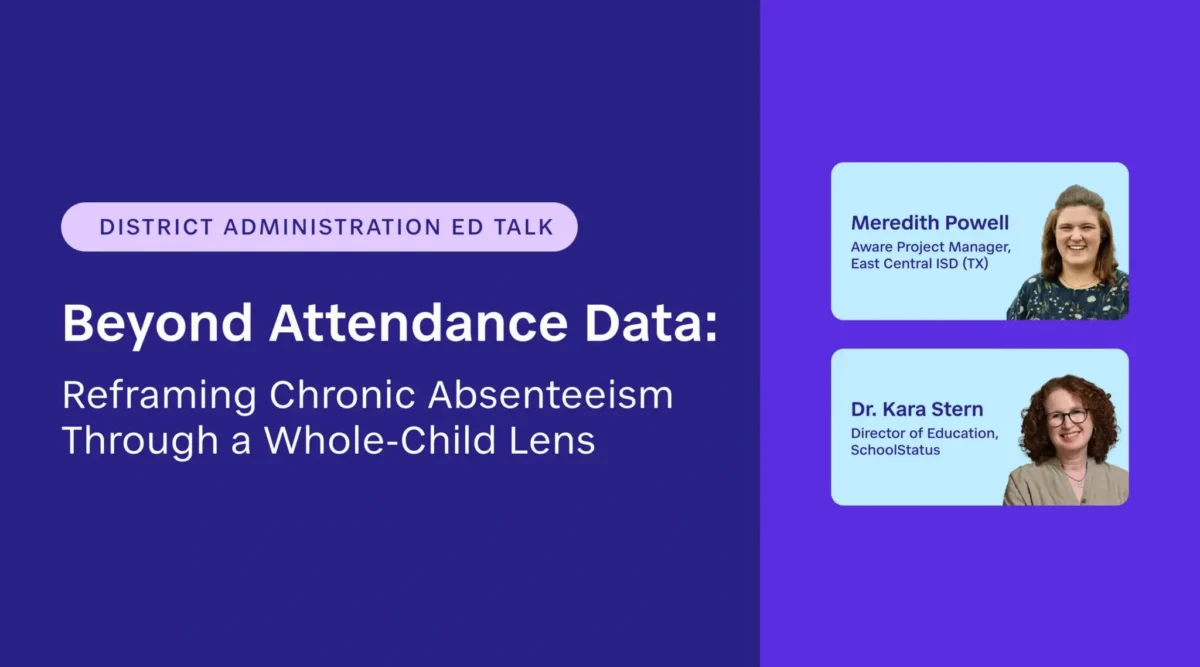

East Central ISD reduced chronic absenteeism by 12 percent by aligning attendance, behavior, and academic data into one coordinated system. Watch the full on-demand webinar to see exactly how they did it and how you can apply the same strategy in your district.
Attendance improves when districts see the full picture.
In our recent webinar with District Administration, East Central ISD shared how they built a whole child attendance strategy that led to measurable results
If you are looking for a sustainable, data-driven approach to chronic absenteeism, this session is worth your time.
👉 Watch the full webinar on demand here.
During the session, Dr. Kara Stern, SchoolStatus Director of Education, shared a core belief guiding this work:
Students aren’t absent randomly. There are almost always academic, behavioral, or emotional factors at play.
Attendance becomes more powerful when districts connect it with:
This broader lens helps teams understand why students are missing school and how to respond in ways that support long-term success.
Meredith Powell, AWARE Project Manager at East Central ISD, describes how the district shifted from isolated efforts to a Comprehensive Case Management model.
Instead of disconnected interventions, they built:
This alignment created consistency across campuses and clarity for staff.
👉 In the webinar, Meredith walks through their exact structure and cadence.
The session also highlights powerful engagement insights drawn from millions of messages and attendance records
You will hear how East Central uses these insights to plan outreach timing, design interventions, and track outcomes.
The webinar closes with clear action steps
👉 Watch the full webinar on demand now
A whole child approach connects attendance data with academic, behavioral, and emotional indicators. This broader view helps districts identify root causes and implement coordinated supports.
Districts see stronger results when they focus on early intervention, especially with students missing 5 to 9 percent of days, and when they track outcomes weekly through a unified dashboard.
Data shows that families who engage early in the school year remain more connected throughout the year. Timely, relationship-centered communication supports consistent attendance.
Track attendance improvement after each intervention. Review data consistently and adjust supports as needed.
 Dr. Kara Stern
Director, Education and Engagement
Dr. Kara Stern has seen school from just about every angle: high school English teacher, middle school principal, fellowship director for math and science teachers across New York City, and head of school at a rural N-12 school. That breadth is what she brings to her work at SchoolStatus, where she writes, speaks, and challenges educators to build the kinds of school communities where every student thrives. She holds a Master’s in Education Leadership from Teachers College and a Ph.D. in Teaching and Learning from NYU.

News, articles, and tips for meeting your district’s goals—delivered to your inbox.



















Ready to learn more about our suite of solutions?