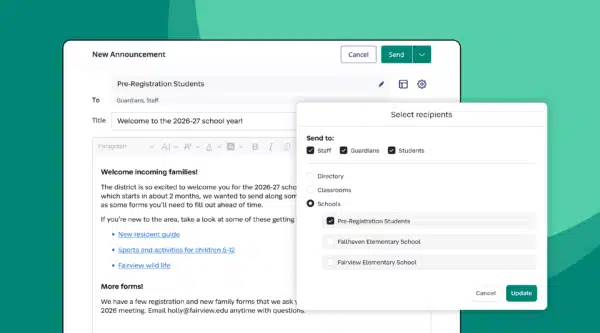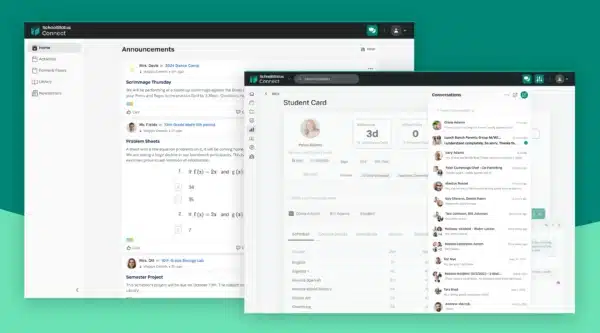
How SchoolStatus Connect Helps Schools Reach All Families
read more


New Book Gives District Leaders a Practical Framework for Improving Chronic Absenteeism—and a Comprehensive Look at State-Level Attendance Policies
Read More >
Key Attendance Trends from the 2025-26 School Year: Insights from 1.1M Students
Read More >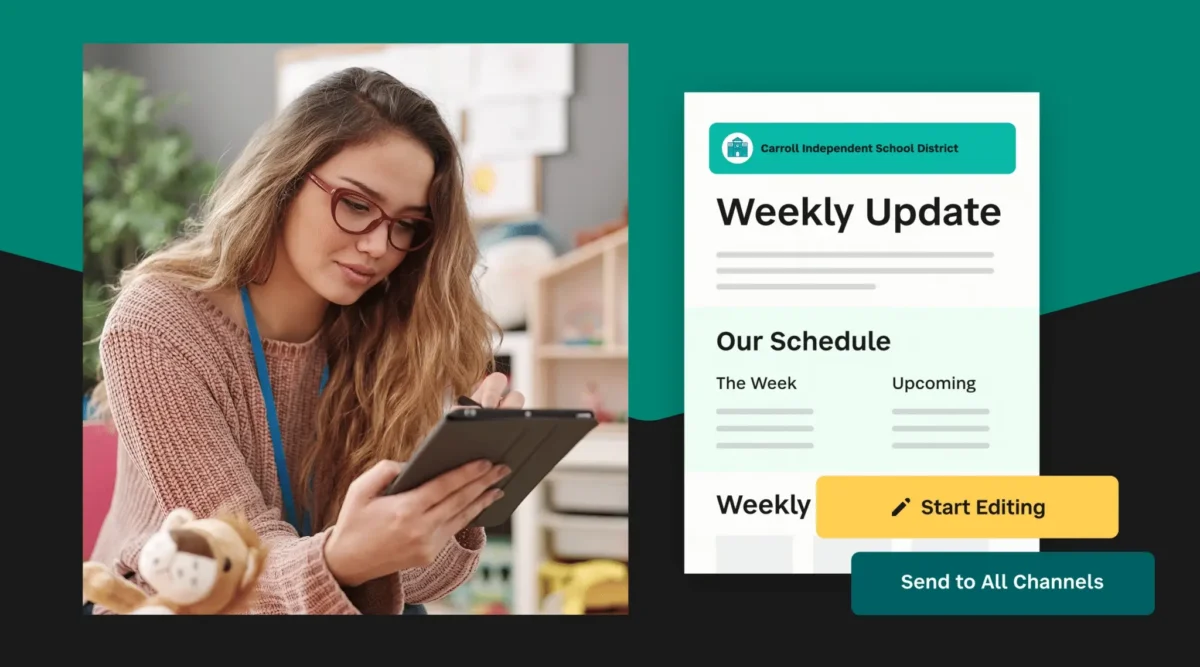

Families deserve a clear, consistent experience when reaching out for help. When student services teams share data and coordinate student support, families receive faster responses, and students benefit from more cohesive interventions. Here’s how to coordinate a unified student support approach.
Families often connect with several different school support teams: attendance, counseling, behavior, and academic support. These teams sometimes operate on different systems or timelines, which can create delays and missed opportunities.
A unified support team is coordinated. The team shared data access, consistent communication, and a shared understanding of student needs. Each role remains distinct, but the work is organized.
Support systems work best when everyone can access the same student insights. When attendance clerks, counselors, and administrators can view communication history and student data, they are better equipped to:
Shared visibility helps staff work together and builds stronger relationships with families.
In many districts, support practices vary from one campus to another. Coordinated student support teams standardize communication logging, attendance monitoring, and follow up on concerns. This approach helps create a reliable family experience and clear expectations for staff.
Defined norms give every team a shared framework for action while allowing flexibility based on school needs.
Communication logs are most useful when they support coordination. With a clear record of outreach efforts, staff can:
These records also support documentation requirements and help track family involvement in student plans.
When support teams use connected tools, it becomes easier to access data, send messages, and log outreach. Teams can stay aligned, respond faster, and measure the impact of their efforts.
Integrated systems improve internal coordination and create a smoother experience for families.
Aligned support teams help families feel confident and informed. They receive timely responses and clear communication. Schools can focus on solutions and collaboration.
Strengthening the connection between your existing teams creates a stronger network of support for students.
Let’s help every team support every student together.
Begin by identifying areas where communication is duplicated or inconsistent. Look for shared tools or processes that can streamline collaboration.
Bring in attendance clerks, counselors, family liaisons, assistant principals, and others responsible for student support or outreach.
Aligned teams make it easier for families to navigate support. They get timely responses and a more coordinated experience.
 Dr. Kara Stern
Director, Education and Engagement
Dr. Kara Stern has seen school from just about every angle: high school English teacher, middle school principal, fellowship director for math and science teachers across New York City, and head of school at a rural N-12 school. That breadth is what she brings to her work at SchoolStatus, where she writes, speaks, and challenges educators to build the kinds of school communities where every student thrives. She holds a Master’s in Education Leadership from Teachers College and a Ph.D. in Teaching and Learning from NYU.

News, articles, and tips for meeting your district’s goals—delivered to your inbox.















Ready to learn more about our suite of solutions?