SchoolStatus Launches Nationwide Initiative to Get More Kids in Class in 2025-2026
read more


SchoolStatus Launches Literacy Solution to Help Districts Engage Families in Improving Reading Outcomes
Read More >
Key Attendance Trends from the 2025-26 School Year: Insights from 1.1M Students
Read More >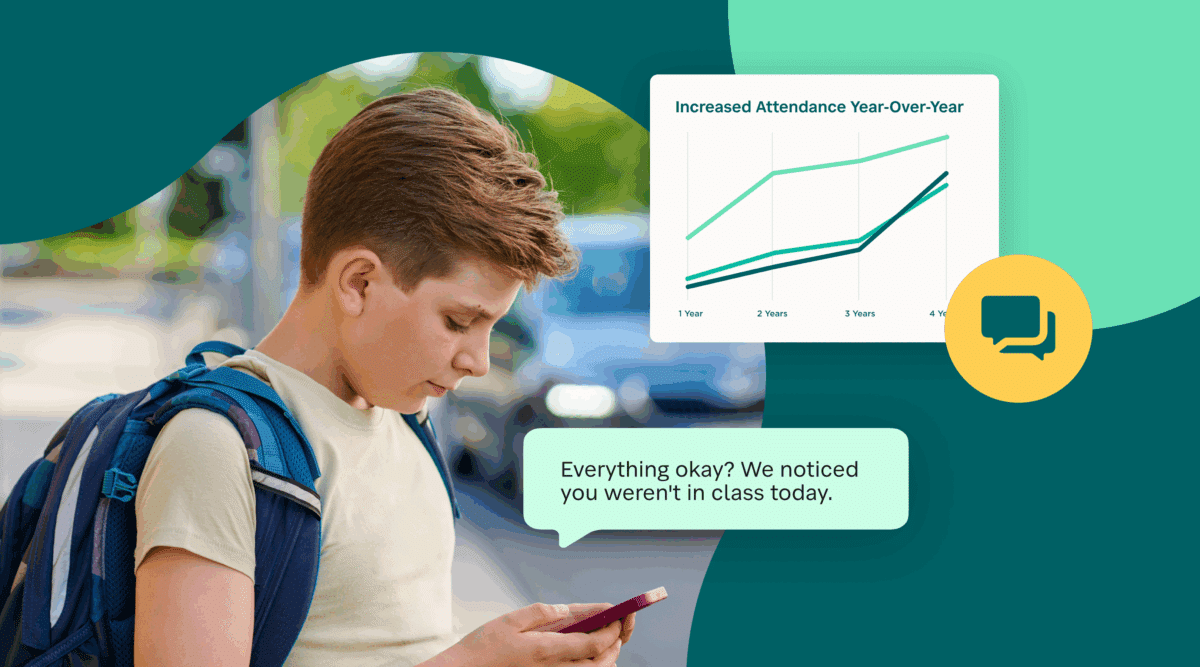

District attendance strategies focus heavily on parent communication, but new survey data reveal a critical gap: we’re not talking directly to students themselves. When districts include students in attendance communications, they see measurable improvements in both attendance and engagement. Download our free guide to learn what successful districts are doing differently.
“The majority of students who drop out were chronically absent as early as 9th grade,” explains Dr. Tameka Lewis, Student Attendance and Dropout Prevention Coordinator at Grand Prairie ISD. This stark reality highlights why attendance interventions matter so much—and why we need to examine whether our current approaches are reaching the right people.
Recent survey data from the National School Public Relations Association reveals a striking pattern: while 97% of respondents regularly communicate with families about student attendance, only 3% include students directly in those same communications. We’re talking about teenagers instead of talking to them.
This gap becomes even more concerning when we consider that only 42% of students feel like part of their school community. When students feel disconnected from their educational environment, attendance patterns often become entrenched—exactly the cycle that leads to the dropout outcomes Dr. Lewis describes.
Traditional attendance interventions—letters home, parent conferences, attendance contracts—serve important purposes. But they often position students as passive subjects rather than active participants in their own educational success.
Consider the difference between these two approaches:
Traditional approach: A district sends an automated message to parents when a student misses third period.
Student-informed approach: The same message goes to parents, but the student also receives a text: “Everything okay? We noticed you weren’t in class today.”
That simple addition transforms a compliance notification into a conversation starter. It signals to students that their presence matters and that adults at school see them as individuals worthy of direct communication.
Education research supports this shift. A study of four secondary schools found that when students see their input leads to meaningful action, their investment in school increases measurably. The key insight: students distinguish between performative engagement and authentic inclusion in conversations that affect their daily lives.
The districts that do communicate directly with students about attendance report seeing tangible results. Survey data shows that 56% of communication professional respondents report improved attendance rates when students are included in communications. Additionally, 59% see increased student belonging, and 45% notice better family engagement as well.
This last finding makes intuitive sense. When students feel connected to their school community through inclusive communication, they’re more likely to share positive information with their families and advocate for school involvement. Students often serve as bridges between school and home, especially in multilingual families where they may be the primary interpreters of school communications.
Including students in attendance communications doesn’t require overhauling existing systems. Small, strategic changes create significant impact:
Direct Student Communication: Ensure students receive copies of district communications that affect them. If families get emails about new graduation requirements, students should too. When there’s a newsletter about college preparation resources, students need direct access to that information.
Authentic Student Stories: Rather than talking about student experiences, create opportunities for students to share their own perspectives. It’s about consistently elevating student voices as credible sources of insight about educational experience.
Communication Preferences: Only 8% of districts reported surveying students about their communication preferences, according to NSPRA data. Understanding these preferences matters, but the reality is straightforward: students want direct, timely communication that acknowledges them as individuals.
Check out this infographic to see what districts with better attendance are doing differently.
When districts consistently include students in conversations about their educational environment, culture begins to shift. Students start seeing themselves as stakeholders in their school community rather than passive recipients of adult decisions. They’re more likely to engage in discussions about school improvement and more willing to participate in solution-building.
This approach also addresses something critical about adolescent development. Teenagers are naturally seeking greater autonomy while looking for meaningful recognition from adults in their lives. Direct communication about attendance and engagement gives students exactly what developmental psychology tells us they need: opportunities to practice being responsible, engaged people with adult recognition that acknowledges their growing maturity.
SchoolStatus Connect enables this kind of direct, meaningful communication through real-time, two-way messaging in 130+ languages, making it easier for districts to include students in the conversations that affect them.
Chronic absenteeism remains nearly double pre-pandemic rates in many districts. High school students—particularly those navigating economic challenges, language barriers, or limited support systems—are experiencing the greatest impact.
The path forward begins with recognizing that students themselves are the most important stakeholders in their educational success and including them in conversations that shape their daily experiences.
The most powerful message we can send students is simple: You matter enough to be part of the conversation. When we communicate that message consistently through our practices, engagement follows.
Download the complete guide to discover specific strategies, downloadable implementation tools, and practical steps for including students in your district’s communication approach.
Get your copy of Students Are Listening: Are We Talking to Them?
Looking for better ways to communicate directly with students and families? Explore SchoolStatus Connect and SchoolStatus Attend. These solutions provide you with the communication tools and early warning systems necessary to build stronger connections with students and improve attendance outcomes.
Student-informed communication means including students directly in conversations and communications that affect them, rather than only communicating with parents about students. This includes everything from attendance notifications to policy updates to district newsletters.
When students receive direct communication about their attendance, it creates opportunities for relationship-building and signals that their presence matters. Students who feel seen and valued are more likely to prioritize being at school.
Student voice initiatives typically focus on gathering student opinions through surveys or committees. Student-informed communication goes further by consistently including students as recipients and contributors in the day-to-day communications that affect their school experience.
Students want direct, relevant communication that treats them as individuals. They prefer text messages for immediate information and appreciate when schools acknowledge them by name and circumstance rather than talking about them to their parents.
Start small by adding students to existing communication lists for messages that already go to families. Many district communication systems can easily include both parent and student contacts for the same messages.
Districts should follow their existing student privacy policies and communication guidelines. Most direct student communication about attendance, policies, or school events falls within normal educational communication practices.
While the research focuses on middle and high school students who are developmentally ready for more direct communication, the principles apply to younger students as well. Age-appropriate direct communication helps all students feel valued and included in their school community.
 SchoolStatusSchoolStatus connects educators and families around the topics that matter most. The company partners with K–12 districts to improve attendance, engage families, and build trust so students can succeed. A recognized leader in data-driven attendance and family engagement solutions, SchoolStatus enables districts and educators to engage families with relevant, timely communications and proactive support on important topics including absenteeism, literacy progress, and overall student readiness. Today, SchoolStatus supports districts in all 50 states and serves more than 22 million students nationwide as a trusted partner in driving better student outcomes.
News, articles, and tips for meeting your district’s goals—delivered to your inbox.




















Ready to learn more about our suite of solutions?