


Featured Resource
New Book Gives District Leaders a Practical Framework for Improving Chronic Absenteeism—and a Comprehensive Look at State-Level Attendance Policies
Read More >

New Book Gives District Leaders a Practical Framework for Improving Chronic Absenteeism—and a Comprehensive Look at State-Level Attendance Policies
Read More >
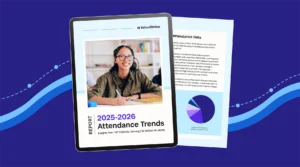
Key Attendance Trends from the 2025-26 School Year: Insights from 1.1M Students
Read More >

Trusting yourself is critical in a coaching role filled with victories, roadblocks, and everything in-between. Monica Carpenter reflects on nine lessons she learned to build confidence during her first year on the job:
“Being authentic and vulnerable gains you the respect and trust of those teachers you are working with. . . . You will experience willing and enthusiastic teachers, educators that are simply compliant and want to get it over with, and others who are straight-up resistant. Start with the willing ones, because the more you can work with teachers, the more you can slowly start to build up your reputation for coaching.”
Lori Gracey dives into 4 fundamental truths about the brain and how to move away from a fixed mindset:
“A growth mindset is defined as the underlying belief that we can get smarter and that effort on our part makes us stronger. That belief leads to learners putting in extra time and effort, which leads to higher achievement. . . . As educators, it’s important for us to model what we want our students to do. And that’s equally true for having a growth mindset.”
Steve Barkley ponders the current impact of data meetings and the importance of organizations tracking changes in student learning outcomes:
“The reason we’re looking at the student data is to identify what questions emerge. Those questions should be leading to teacher learning. . . . If you’re a teacher leader, administrator, or instructional coach who’s currently facilitating data meetings, consider tracking the changes that are occurring in teacher practices, as well as tracking the changes that are occurring in student learning outcomes. In effect, data team meetings should be a component of teacher professional growth.”
Chrissy Beltran covers 4 methods ICs can exercise to show overwhelmed teachers that they are problem-solvers, not just their coach:
“Many times, teachers get stuck in their bubble and all they can see is their issues. As an instructional coach, you can show them another path and give them new ideas because you have the experience of seeing other classes. You have the benefit and freedom to think beyond individual challenges to see the big picture. This is what many teachers need to gain perspective and finally solve their problems.”
Justin Baeder responds to 19 frequently asked questions about classroom walkthroughs by instructional leaders:
“Getting into classrooms— simply paying attention and asking good questions—is one of the best forms of professional development for instructional leaders. . . . You don’t have to take notes, but if you are taking notes, giving them to the teacher is an important step to build trust and minimize fear.”
 TeachBoost Team

News, articles, and tips for meeting your district’s goals—delivered to your inbox.















Ready to learn more about our suite of solutions?


