Why Most Attendance Intervention Programs Start Too Late
read more


SchoolStatus Launches Literacy Solution to Help Districts Engage Families in Improving Reading Outcomes
Read More >

When families understand exactly where their child‘s attendance stands and why it matters, they become partners in changing the pattern. Attendance interventions, grounded in data, make that happen.
Most districts send absence notifications. Some go out as texts. Others are form letters. Unfortunately, notifications rarely change outcomes.
The gap between sending a notification and running a real attendance intervention is worth naming directly:
A notification won’t solve chronic absenteeism. Interventions have been proven to get kids back to school. In fact, 54% of students who receive an intervention through SchoolStatus Attend never require another.
When a family receives a generic automated message that their child was absent, the most common response is to read it and move on. In most cases, they know their child wasn’t in school. A message that only informs doesn’t offer anything new or give them a reason to change behavior.
Families need to understand three things that a generic notification rarely conveys:
Here’s something that surprises a lot of educators: many parents and guardians of chronically absent students have no idea their child is at risk. They see each absence in isolation. Their child was sick. There was a family vacation. It was just one day. From inside those individual moments, there’s no pattern. There’s no crisis.
By the time a student hits 10% of the school year missed, a family has made dozens of separate decisions that each felt reasonable at the time. No single one of them felt like the choice to make a child chronically absent.
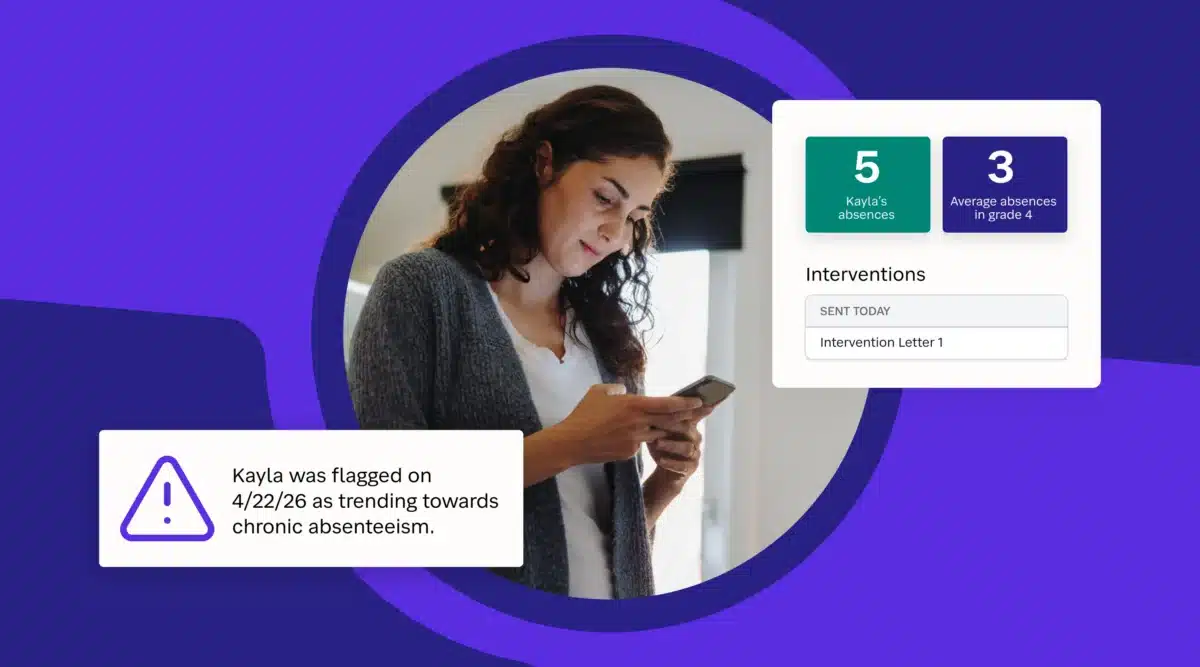
This is why attendance interventions have to communicate context, not just events. A message that says “Your child missed school on October 14th” tells a family what they already know. A message that says “Your child has missed 8 days this year. That puts them within two absences of missing 10% of the school year, a threshold that research links to significant learning loss” changes the frame entirely.
The second message creates urgency. More than that, it treats the parent or guardian as someone capable of making an informed decision once they have the information to make it.
The shift that happens when families understand the full picture is dramatic. They go from people who are receiving notices to people who are engaged in solving a problem they now understand is real.
That’s when the conversations that matter can happen. A family that knows their child is close to a critical threshold is far more likely to surface the actual barriers: a transportation issue, a health concern, bullying, or anxiety. Those conversations can’t happen when the outreach is one-sided, and they rarely happen after a generic automated message.
SchoolStatus Attend is built for connecting educators and families to uncover the barriers to attendance. Interventions go out automatically the moment absences start to accumulate. Each message is specific to the student: their actual absence count, their current trajectory, and what it means. And because those messages go out across multiple channels and in over 130 languages, they reach families wherever they are, in the language they prefer.
The result is that families have what they need to become partners instead of passive recipients. And when families are partners, things change.
Another key difference between a notification and an intervention is when it arrives. An encouraging, personalized message that arrives early in the year can make a difference. If it arrives too late in the year, a family may feel like it’s too far gone to make different choices.
SchoolStatus Attend’s Early Warning Insights uses predictive analytics to flag students who are likely to become chronically absent within the first 60 days of school. When you know a student is at risk of falling behind before Thanksgiving, it’s much easier to change habits than waiting until February or March.
Knowing who needs you while you still have time to help is the difference between prevention and remediation. The attendance improvement work that sticks happens before the pattern hardens.
SchoolStatus Attend combines predictive analytics, automated multi-channel outreach, conference management, and intervention tracking in one system built on 20 years of working with districts on this exact problem. Districts using SchoolStatus average over four percentage points better than the national chronic absenteeism rate.
Request a demo of SchoolStatus Attend to see how it works in practice.
An attendance intervention is a deliberate, targeted action taken to change a student’s attendance pattern before or after it becomes chronic. This goes beyond sending a notification. Effective attendance interventions give families specific, contextualized information about their child’s attendance, open a dialogue about what’s getting in the way, and provide support to address the real barriers. The goal is behavior change.
Generic notifications tell families that something has happened. They don’t explain why it matters, how it fits into a pattern, or what the family can do about it. Most families who receive generic absence alerts see each absence as an isolated event and don’t connect individual days to a chronic absenteeism risk. Effective interventions communicate context like the student’s absence count, what threshold they’re approaching, and what crossing it means, so families have what they need to act.
Earlier than most districts think. By the time a student is chronically absent (missing 10% or more of the school year), reversing the pattern is significantly harder. Predictive tools like SchoolStatus Attend’s Early Warning Insights can identify students likely to become chronically absent within the first 60 days of school. The earlier the outreach, the more likely it is to change the outcome.
Interventions that treat families as partners consistently outperform those that treat families as recipients.
Effective attendance interventions are:
SchoolStatus Attend automates intervention outreach the moment absences begin to accumulate, using messaging honed over 20 years that has been shown to improve attendance by 34% after a single contact.
SchoolStatus Attend:
Yes. SchoolStatus Attend includes daily attendance notifications alongside its full intervention suite. While the real attendance improvement happens with early intervention, starting a conversation about absenteeism from the very first absence ensures districts can comprehensively respond with one solution.
 SchoolStatusSchoolStatus connects educators and families around the topics that matter most. The company partners with K–12 districts to improve attendance, engage families, and build trust so students can succeed. A recognized leader in data-driven attendance and family engagement solutions, SchoolStatus enables districts and educators to engage families with relevant, timely communications and proactive support on important topics including absenteeism, literacy progress, and overall student readiness. Today, SchoolStatus supports districts in all 50 states and serves more than 22 million students nationwide as a trusted partner in driving better student outcomes.

News, articles, and tips for meeting your district’s goals—delivered to your inbox.




















Ready to learn more about our suite of solutions?