


Featured Resource
New Book Gives District Leaders a Practical Framework for Improving Chronic Absenteeism—and a Comprehensive Look at State-Level Attendance Policies
Read More >

New Book Gives District Leaders a Practical Framework for Improving Chronic Absenteeism—and a Comprehensive Look at State-Level Attendance Policies
Read More >
Key Attendance Trends from the 2025-26 School Year: Insights from 1.1M Students
Read More >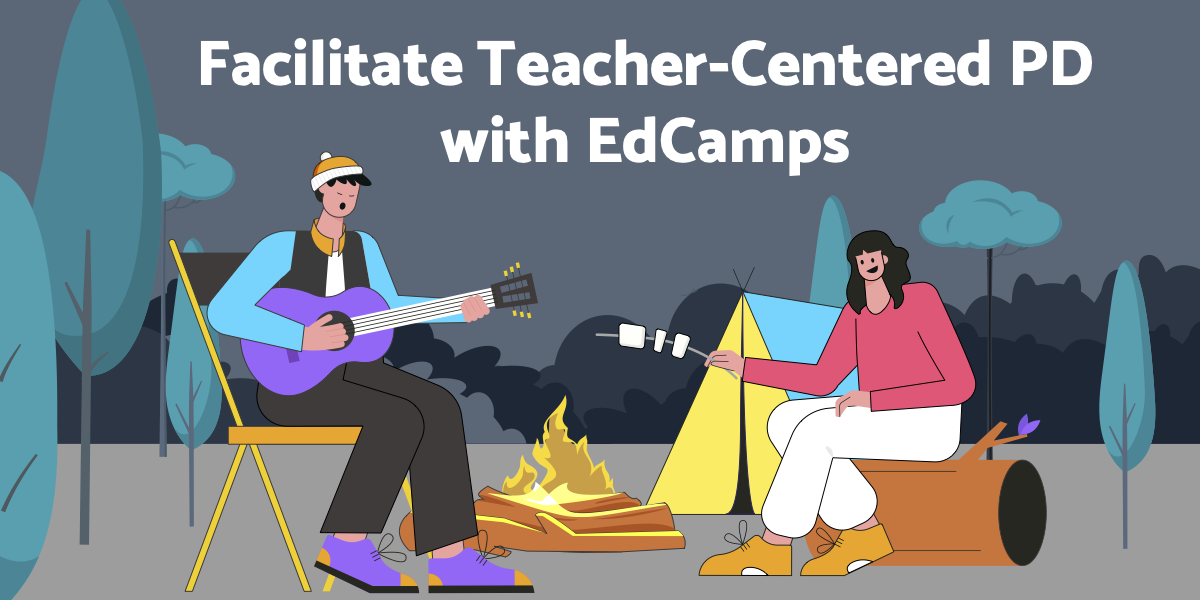

How do you empower your teachers while giving them a voice and choice in their professional learning, you ask? EdCamps! Jenny Steller, instructional coach in Ohio, overviews the EdCamp model for PD and the steps you can take to help your teachers organize their next professional learning session.
Picture this: your next staff meeting, professional development, or in-service day has no agenda, yet you’re able to highly impact what learning took place. Wouldn’t that be nice? This teacher-centered mindset is at the heart of the EdCamp professional development model.
EdCamps are informal sessions by and for teachers, where any participant can facilitate. The focus during an EdCamp is on collaboration and connections, group expertise, and instructional design. Each session has a facilitator, not an expert presenter, that encourages conversation and upholds the group norms.
There are four tenets of the EdCamp model:
When planning an EdCamp for teachers, I first begin with a teacher input survey for possible session topics. This helps front load any preparation in organizing session descriptions and gives me a pulse on the needs of the team as the coordinator.
On the day of the EdCamp, I spend time introducing what the model is and the tenets to everyone in attendance. After addressing any questions, we get into the logistics. As a group, we collaborate around teacher interest for additional session ideas; anyone can propose an idea for a session and even facilitate the discussion.
Participants can indicate which sessions interest them. Then, the topics with the most interest move to the planning sheet tab where teachers can sign up. The session board is completely adaptable, providing the flexibility needed for teacher-driven PD. The coordinator can adjust the timing and session offerings, depending on the group’s interest and needs. For example, I blocked off two hours for whole group work on my session board because those topics required input from all teachers in attendance.
Each session takes notes—using shared documents or tools like Padlet—to communicate learning back to the main group. This is helpful when teachers want to attend more than one session during a time slot, as they can still access information from the other sessions they didn’t attend. It also enables participants of a session to access their notes at a later date.
Professional development using an EdCamp model places complete trust in the attendees, embodying the viewpoint that teachers are highly knowledgeable and skilled at their profession.
With teachers as the facilitators of the conversations about a topic, tool, or technique in a collaborative setting, EdCamps help eliminate the social hierarchy of traditional PD models where the presenter is the only expert, increasing both engagement and communication.
Jenny Steller is an instructional coach at Hamilton County Educational Service Center in Cincinnati, Ohio. She has a passion for working with teachers to give students opportunities to access curriculum at all levels, supporting teachers in creating student-led learning experiences, and sparking curiosity in classrooms.
Jenny regularly presents at state and local conferences on best practices in analyzing student data, using math puzzles to foster perseverance, and facilitating groups for teachers. She also serves as the Hamilton County Representative for the Southwest Ohio Council of Teachers of Mathematics and actively participates in collaborative sessions for Society for Research on Educational Effectiveness. She welcomes any opportunity to connect and collaborate with other educators.
{{cta(‘352a410e-db79-4f33-a482-d301e8041965′,’justifycenter’)}}
 SchoolStatusSchoolStatus connects educators and families around the topics that matter most. The company partners with K–12 districts to improve attendance, engage families, and build trust so students can succeed. A recognized leader in data-driven attendance and family engagement solutions, SchoolStatus enables districts and educators to engage families with relevant, timely communications and proactive support on important topics including absenteeism, literacy progress, and overall student readiness. Today, SchoolStatus supports districts in all 50 states and serves more than 22 million students nationwide as a trusted partner in driving better student outcomes.

News, articles, and tips for meeting your district’s goals—delivered to your inbox.












Ready to learn more about our suite of solutions?


