Coaching Teacher Clarity Through Backward Planning
read more


SchoolStatus Launches Literacy Solution to Help Districts Engage Families in Improving Reading Outcomes
Read More >
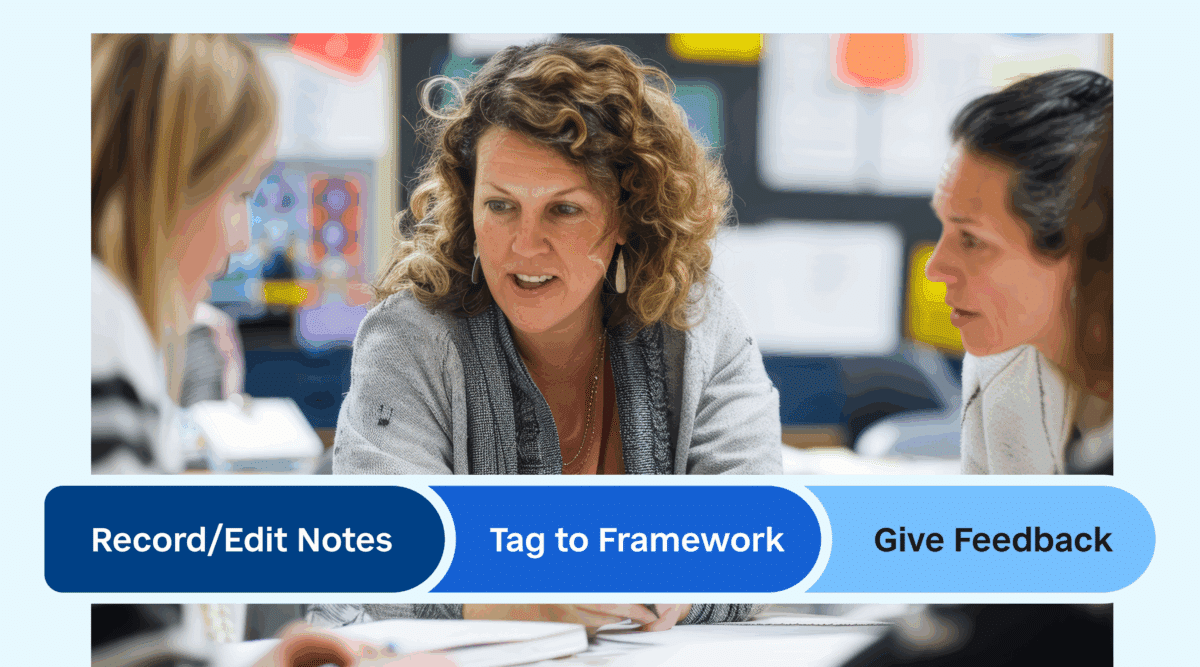

Strong coaching conversations are the foundation of effective partnerships between coaches and teachers. Jessica Crawford, District Literacy Coach in Michigan, highlights four instructional coaching questions and conversation moves she’s learned from other leading coaches. These strategies can help you build stronger teacher partnerships from the start. They include:
These small shifts can build trust, deepen collaboration, and support real growth in both teachers and students.
As an instructional coach, I know that collaboration is key for a successful coaching partnership, and coaching conversations lay the foundation for that collaboration. I’ve chosen to center my personal goals around the conversations I have with my teachers, and I’ve used several different resources to shape my approach. Here I’m sharing four of my go-to resources for effective coaching conversations and how I’ve applied them to my own practice.
The most influential book I have read in my coaching journey—especially around instructional coaching questions— has been The Coaching Habit: Say Less, Ask More, & Change the Way You Lead Forever by Michael Bungay Stanier. In this book, Stanier lays out seven essential questions that leaders in any arena of life can use in their coaching to produce great results.
Before incorporating Stanier’s work, here’s how my check-ins with a teacher would typically go:
Me: Hey there! How’s it going?
Teacher: It’s going alright.
Me: That’s awesome. [Pause] Well, if you need anything, let me know!
Now I start conversations by asking Stanier’s kickstart question: “What’s on your mind?” When I do this, I see teachers pause and truly think before answering when I ask this question, and their answers become much more honest. I hear responses like: “I’ve been thinking if I should use this tool to support my students,” and “I recently learned more about a new phonics approach I want to try with my students, but I’m not sure where to start.” These responses open up many more opportunities for collaboration to work toward the teacher’s goals and support student growth.
I like to follow up with the question Stanier deems the most powerful: “And what else?” It forces me as the coach to dig deeper to get to the root of the thought or challenge the teacher mentions, since rarely do the first answers we hear show the entire picture.
I highly encourage you to look more into Stanier’s work to better understand all seven questions. And, just like I did, start small! Include just one question at a time to start ramping up those coaching conversations.
Starting a conversation is fantastic, but to truly impact our coaching conversations, we have to be good listeners. Before I started coaching, I thought being a good listener and co-worker meant I should help and have the answers for whatever my conversation partner was bringing up. I became the speaker, talking about what I would do, or have done, in the situation. I did not pause and think to process the conversation fully. And, most egregious of all, I would interrupt with my own ideas! This did not, in fact, lead to better conversations. It actually shut them down.
Thankfully, I had the opportunity to attend a training focused on coaching and do my professional development before my first year as a coach began. I knew listening was going to be my first goal. Jim Knight directs us to listen with empathy in his book Better Conversations: Coaching Ourselves and Each Other to Be More Credible, and I work hard to build these habits into my coaching work.
Whenever I enter a conversation, I remind myself to commit to listening to what my partner is saying. I’ve become mindful of my thoughts during conversations and use self-talk to ensure I do not interrupt and immediately start giving advice or inadvertently turn the conversation to be about me. It’s a constant work in progress, but has reaped many benefits. I have built trusting, strong relationships with the teachers and coaches I have the privilege of working with each day.
Offering effective instructional coaching strategies, like strengths-based feedback, helps teachers grow without feeling overwhelmed. I’m a natural cheerleader: the eternal optimist that always focuses on the positive. While these are fantastic qualities to have, that’s only one part of giving feedback and being an effective coach. A coaching colleague, Hope Chapman, shared the analogy of the difference between a cheerleader and a coach: “a cheerleader is all about encouraging from the sidelines, while the coach has a responsibility to get ‘in there’ with colleagues and speak to the things we see to help our colleagues grow.”
Diane Sweeney and Leanna S. Harris urge us to use strengths-based feedback in their book Student-Centered Coaching: The Moves. Sweeney and Harris tell us, “Strengths-based feedback enables the coach to celebrate what is going well and also think about what the next steps would be.” There are three moves we can add to our coaching toolboxes to use in giving strengths-based feedback in our conversations: clarify, value, and uncover possibilities.
Sweeney and Harris provide sentence stems to use in each phase of the framework. I find these helpful in celebrating what is going well and working toward the next steps for growth for both teachers and students. The teacher and I collaborate on what the next lesson may look like, what instructional strategies to incorporate to support student growth, and plan how to support students, no matter their level.
Education has always been a complex field with many challenges. Coaches often wonder what they should do when a teacher is overwhelmed, frustrated, angry, or upset. Since the pandemic’s start, teachers, administrators, and coaches face many more challenges each day.
In Cognitive Coaching: A Foundation for Renaissance Schools, Arthur L. Costa and Robert J. Gramston provide us with a problem-solving map to support teachers. First, we honor the existing state the teacher is in. We name the emotion and situation the teacher is facing, showing our empathy for the situation. Second, we frame the desired state and acknowledge the teacher’s goal. Finally, we state that the teacher is looking for a way to make that happen.
Having this sentence stem in my toolbox has been invaluable as it lets me acknowledge how they are feeling and then focus on the next steps for how we can move forward in our collaboration. I then employ other tools from my toolbox—like questioning and effective listening—to support the teacher in finding their way through.
Conversations with teachers—and the coaching questions we choose— are one of the most powerful tools coaches can use. Remember to take small steps in incorporating new-to-you strategies into your coaching work, and view every conversation as an opportunity to practice your skills.
Support Teacher Growth with Tools That Make It Stick
Instructional coaching works best when it’s consistent, collaborative, and grounded in growth. SchoolStatus Boost helps you support teacher development with real-time feedback, customizable goal tracking, and clear progress visibility. Designed to fit your district’s workflows and frameworks, SchoolStatus Boost helps coaches and administrators spend less time managing systems and more time supporting educators. Stronger teachers lead to better outcomes. Give them the support they deserve.
They set the tone for collaboration. Effective conversations create trust, help teachers feel supported, and open the door for meaningful growth.
Start with better questions. Instead of “How’s it going?” try “What’s on your mind?” and follow up with “And what else?” These questions prompt deeper reflection and more honest dialogue.
Practice pausing. Instead of jumping in with advice, focus on what the teacher is saying. Listening with empathy builds stronger relationships and keeps the conversation centered on their goals.
It balances encouragement with growth. First, highlight what’s working well. Then, collaborate on next steps. This approach makes feedback supportive and actionable, rather than overwhelming.
Acknowledge the feelings first. Name the challenge, show empathy, and then shift to identifying the teacher’s goals. This validates their experience while keeping the conversation productive.
 Jessica CrawfordJessica Crawford, a District Literacy Coach in Michigan, brings 15 years of educational experience to her role. Passionate about literacy, she collaborates with teachers to cultivate literacy-rich classroom environments, ensuring all students have opportunities to engage in reading, writing, listening, and speaking behaviors.
News, articles, and tips for meeting your district’s goals—delivered to your inbox.

Ready to learn more about our suite of solutions?