
How to Improve Attendance Before the Holidays
read more


SchoolStatus Launches Literacy Solution to Help Districts Engage Families in Improving Reading Outcomes
Read More >

To keep improving attendance in the spring, carry these three practices forward: (1) consistent, simple outreach; (2) data-informed action; and (3) relationships that help every student feel known. They’re working, and they’re sustainable.
The first semester is winding down, and with it comes a chance to reflect on what worked, what moved the needle, and what we want to carry forward to improve school attendance in the second half of the year. For the 1000+ educators participating in Mission: Attendance, the answer is clear: improving student attendance is everyone’s job, and it takes all of us to make progress.
As we head into January, here are three key takeaways from the first half of the year to bring with you. These are the strategies that are making a difference, helping more students show up every day, and helping schools build momentum that lasts.
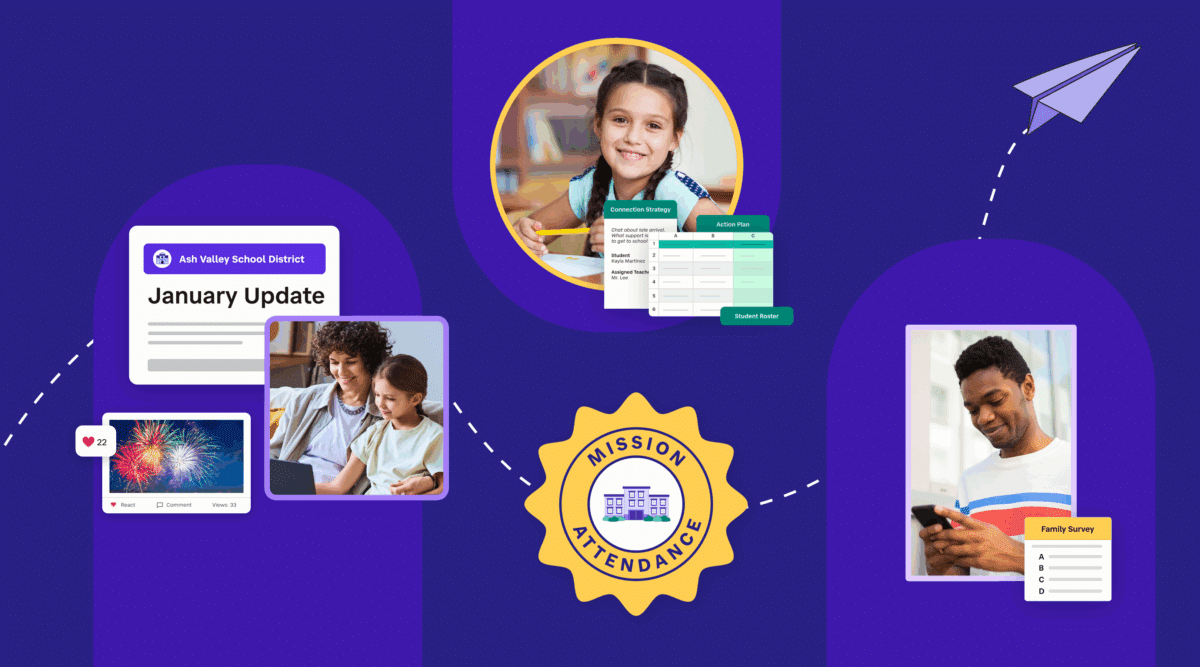
The schools seeing the most traction with attendance aren’t doing flashy campaigns. They’re sending short, simple reminders. They’re reaching out early and often. They’re making attendance part of daily routines. When communication is steady and aligned—whether through Smore newsletters, multilingual texts, or daily check-ins—families are more likely to stay engaged and take action.
Try this: To keep your momentum going, sign up to download tools from our free Mission: Attendance Resource Hub. You’ll find message templates, calendars, and creative ideas to support your outreach.
Start the new year with a Student Connection Audit. Review your student roster and ask: Is there at least one adult in the building who truly knows this student—someone who can speak to their strengths, interests, or needs? If the answer is no, that student needs extra outreach. This is a simple, high-impact way to make sure no one falls through the cracks, and it often reveals patterns that don’t show up in the data.
Try this: Pair your connection audit with our Attendance Goal-Setting Worksheet. Use what you learn to drive student-centered action and track progress as a team.
Once you know who’s most in need of support, the next step is connection. That means consistent check-ins, positive messages home, and trusted messengers. We’ve seen again and again: students come to school when they feel seen. Families stay engaged when they feel heard. Schools that lead with care—rather than compliance—see stronger school attendance and better family engagement.
Try this: Use our Family Feedback Form to open a two-way dialogue with families when you return from break. It’s a simple way to show you’re listening and to learn what kind of support they need most.
As we move into a new semester, Mission: Attendance is here to keep you inspired and equipped. Whether you’re in a district-wide role or working with one group of students, your efforts to improve school attendance matter. Thank you for your attentive, consistent work and care. Here’s to stronger attendance, better connections, and continued progress in 2026.
Be sure to sign up to access the Mission: Attendance Resource Hub to keep your momentum going.
Mission: Attendance is a free, year-long initiative from SchoolStatus offering tools, templates, and community support to help schools improve attendance and student success.
You can join at any time. Sign up here.
You’ll find editable calendars, family-ready message templates, Smore newsletter designs, incentive ideas, and more—all designed to support consistent outreach and meaningful connection.
Absolutely. While the tools can be adapted for any grade level, strategies like data-informed outreach and student connection are especially important in middle and high school.
 Dr. Kara Stern
Director, Education and Engagement
Dr. Kara Stern has seen school from just about every angle: high school English teacher, middle school principal, fellowship director for math and science teachers across New York City, and head of school at a rural N-12 school. That breadth is what she brings to her work at SchoolStatus, where she writes, speaks, and challenges educators to build the kinds of school communities where every student thrives. She holds a Master’s in Education Leadership from Teachers College and a Ph.D. in Teaching and Learning from NYU.

News, articles, and tips for meeting your district’s goals—delivered to your inbox.













Ready to learn more about our suite of solutions?