


Featured Resource
New Book Gives District Leaders a Practical Framework for Improving Chronic Absenteeism—and a Comprehensive Look at State-Level Attendance Policies
Read More >

New Book Gives District Leaders a Practical Framework for Improving Chronic Absenteeism—and a Comprehensive Look at State-Level Attendance Policies
Read More >
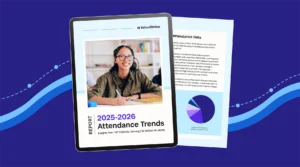
Key Attendance Trends from the 2025-26 School Year: Insights from 1.1M Students
Read More >

As the end of the academic year wraps up, many districts begin to consider ways to support coaching positions in their districts. While the art of coaching itself is often dependent on your response in the moment, there’s a lot of foundational work you can accomplish to make a smoother transition into a coaching role.
Although coaching has gained popularity as a promising practice in the past several years, many new coaches struggle with getting started or building critical teacher trust. As a coach, the more seeds you can plant around your role and how you see yourself positively impacting the work already being done, the higher the degree of trust you’ll earn. Below I’ll offer some suggestions for how to introduce yourself as a coach to administration, teachers, and other coaches.
For first-time coaches, there’s the added burden (and gift) of building systems of support with administrative leadership and it’s imperative to not try to tackle this entire task all at once. A document that will be key to ongoing support is a “job description.” This will provide those you support with a clear definition of what you actually do.
Surprisingly, I speak with many coaches who have been hired and are operating without a job description. In the absence of this crucial document, the position can become nebulous and ineffective. If a coach is brought into an expanding support system, they should inquire about what supports are available to them for data collection, ongoing professional learning, and networking. In all cases, walking away with an ongoing process to touch base with the district or building administrator is essential.
If hired as a building-based coach, establishing a relationship with principals is crucial. The support of building leadership is essential to developing a vision of growth and a culture of coaching. Without a clear understanding of what coaching is and the research behind it, a leader may ask coaches to break confidentiality, act as an evaluator, or use the position as a substitute for all other positions and tasks.
After an informal meeting with the principal, decide your next move. For leaders who aren’t very well informed, I’ve taken time to share research from Joyce and Showers, as well as one-page graphic outlining the typical roles of an administrator, a coach, and the overlap (plus mutual exclusiveness) between and among the two.
Although coaching as a practice is growing in popularity, approach informing the staff as if you were explaining a completely new concept. Individuals prefer to approach new learning incrementally, breaking off small chunks and chewing on the information until it fits into their schema—plant seeds about coaching as soon as possible.
If you know you’re transitioning into a coaching role in the upcoming year, think about sending an end-of-year email to the staff you will be working with letting them know about your new role. Then, touch base again during the first week of school.
Another way to create a connection is to have the leadership team introduce you at a whole staff meeting and explain their commitment to coaching, as support will go a long way in establishing a culture of a growth mindset. Following a general staff introduction, stop by to visit staff individually as a way to begin building relationships and trust.
One tool I picked up from colleagues was a “beginning of the year” folder. At the start of the year, when teachers are in their classrooms preparing for the first day, I would swing by, introduce myself, and drop off the folder. The folder contained a one-pager divided into two columns: an explanation of what a coach is and a coach isn’t, and an infographic explaining coaching and an introductory letter.
These first two documents (coach overview and introductory letter) are chunks of learning, providing an informal definition of coaching and what to expect from the process. I used the introductory letter to further demystify some of the common concerns new coaches hold, such as the fact that coaching is non-evaluative and confidential. I also included a paragraph about my experience as an educator, emphasizing my classroom experience, and a final paragraph about my hobbies and interests. During that first face-to-face introduction, I made sure to wish them a great first week of school and mention that I will likely stop by during the second week to get a feel for their individualized teaching style.
Districts are beginning to invest more heavily in coaching. Be prepared to share an explanation of your role as you best understand it, but be open and flexible with it. Aligning resources, tools, and coaching models as much as possible is key to ensuring that the coach doesn’t feel burdened by another process. This will also provide the new coach with more time to focus on building relationships, learning about a system of support, and engaging in new coaching cycles.
A coaching colleague of mine was hired to coach new teachers. She joined a growing community of coaches, which included a literacy coach, a math coach, and a technology coach. Over the summer, she met with each coach and introduced herself, the model of coaching she was implementing, and the vision for her work. After speaking with each of them, she realized everyone was going about coaching in different ways. Because of this, the four coaches came together to agree on key tools and a defined coaching cycle. As the year began, they were able to collect survey and observation data and collaboratively make adjustments to the tools to better fit educators’ needs.
As the school year comes to a close, take a moment and identify which groups of educators you will need to introduce yourself. What do you think they already know? What do they need to know? Putting in a little work over the summer to create a foundation upon which to build your coaching practice will be worth the payout.
Joseph is in his second year as Wisconsin’s statewide coaching coordinator. Prior to this position, he worked as a coach for an educational service center in Austin, TX and as a campus-based instructional coach.
His mission is to act as a liaison between the field and the state with the intention of creating a statewide system of coaching support for regions, districts, and schools to access as they develop their own coaching programs.Be sure to check out Joseph’s blog, Coaching Roots, and connect with him on Twitter @j_kanke!
 Joseph KankeJoseph is Wisconsin's statewide coaching coordinator. Previously, he served as a coach for an educational service center in Austin, TX, and as a campus-based instructional coach. His mission is to bridge the gap between the field and the state, striving to establish a comprehensive statewide coaching support system accessible to regions, districts, and schools. Passionate about equity, Joseph advocates for its integration into coaching practices, believing in its transformative power.

News, articles, and tips for meeting your district’s goals—delivered to your inbox.
















Ready to learn more about our suite of solutions?


