Messaging and Communication are Not the Same Thing
read more

New Book Gives District Leaders a Practical Framework for Improving Chronic Absenteeism—and a Comprehensive Look at State-Level Attendance Policies
Read More >
Key Attendance Trends from the 2025-26 School Year: Insights from 1.1M Students
Read More >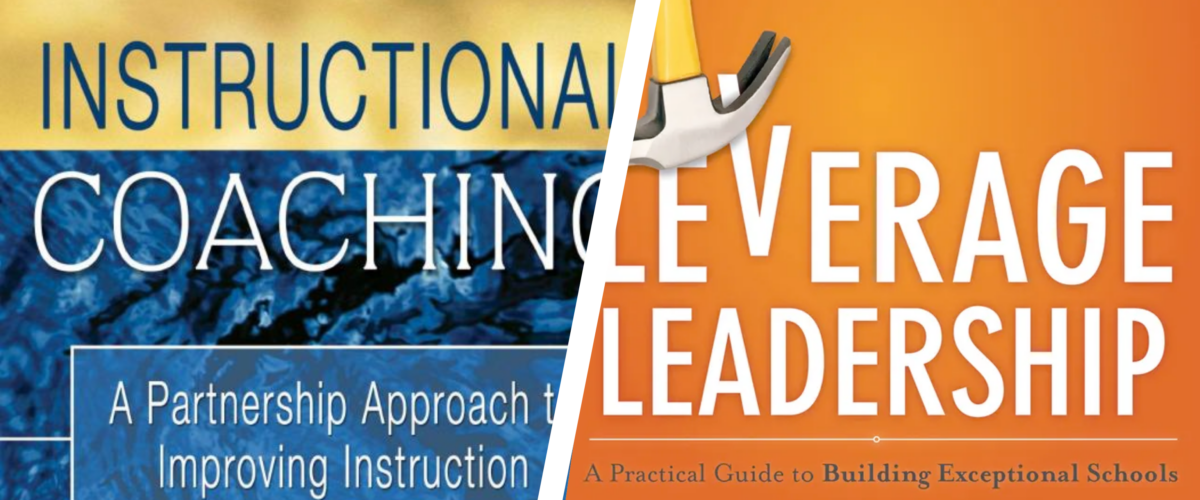

When starting off as a coach, it’s difficult to gauge exactly how, and how much, to support your teachers. Coaches often go straight from the classroom, where they are used to directly managing students, to their coaching role of supporting adult learners. In that transition, how do you decide the level of input you provide vs. what a teacher provides? How do you help guide them to the strongest levers of action in their classroom while helping them work towards their self-identified goals?
Two well known, yet slightly different, coaching models come from Jim Knight and Paul Bambrick-Santoyo. At times, the tactics are in opposition with each other, but at the core they both drive towards how to best support teachers to impact students. Choosing to follow one of these models can help give boundaries and structure to your work as a coach—as well as a community of resources to support you.
With learning experiences like these in place, it’s exciting to think about how creative and collaborative this generation of students will become when they enter the work field! Instructional coaching is the perfect place to help teachers refine their own 21st century learning skills.
If you’re looking for a model to follow as a new, transitioned, or even veteran coach look no further! We’ve put together a list of comparisons to help get you started in picking your baseline of coaching. Take into consideration your school, district or organization’s priorities, your professional working preferences and which model resonates best with you as an educator.
Rookies and veterans often require different levels of support. A rookie teacher may need more guidance, structure and direct coaching to help them understand their role in the classroom. Veteran teachers on the other hand, might want more autonomy and partnership in their professional development.
Paul Bambrick-Santoyo’s book, Leverage Leadership, is excellent for providing the structure and support for new education professionals. He provides 7 instructional and cultural levers, which explain how and why you improve teacher outcomes. While these levers can be applied to help any teacher, as they are particularly useful for providing a groundwork for new educators.
Jim Knight’s book, Instructional Coaching: A Partnership Approach to Improving Instruction offers a different approach centered on establishing a level playing field between coach and teacher. He offers 7 partnership principles which can conceptually drive the coach/teacher relationship. For veteran teachers, having an equal voice in the coaching process can improve their capacity to identify areas for self-improvement and use the coach as a partner to help collect data and suggest changes.
Goals are an essential part of an educator’s development and a coach’s work in supporting them. Goals give common language and vision to the work they do together. Sometimes those goals will be part of larger initiatives from school or district leadership and sometimes goals will be individual for each teacher.
In Jim Knight’s coaching model, goals are decided upon through partnership between the coach and teacher. He writes, “Partnership coaches start by gathering data with or for the teacher. They then collaborate with the teacher to identify a specific student goal.” In this model, teachers are equal partners in determining what they want to work on and utilize the coach as a resource to strengthen and refine those goals.
In Paul Bambrick-Santoyo’s model, coaches gather weekly evidence independent of the teacher and use that evidence to set clear, action-oriented bites of feedback for their teachers instead of setting large goal. He says, “Teachers are like tennis players: they develop most quickly when they receive frequent feedback and opportunities to practice.” By giving a single, small and actionable piece of feedback, teachers will be more successful and achieving it in the given time frame and quickly moving on to the next piece of feedback.
Any coach will tell you, feedback is a core component of their work with teachers. It’s the function that bridges the evidence you’ve collected with the larger goal the teacher is working on. How you deliver that evidence, however, might vary greatly based on the model you choose.
Paul Bambrick-Santoyo views feedback as an opportunity for the coach to provide and outside perspective to the teacher’s work. The coach collects the evidence and data and delivers precise feedback to the teacher. The feedback is typically delivered with observable evidence (both positive and negative) and specific discreet action steps to move the teacher forwards. He offers a structure of six steps to providing feedback including precise praise, working to identify the problem and action step and then practicing. The session is concluded with planning a timeline to accomplish the action step.
Jim Knight suggests that teachers and coaches collaboratively explore the data collected together to reach a conclusion for feedback. With this strategy, coaches still offer their opinions, but also drive towards teacher reflection and ownership of the feedback. Coaches have one opinion and set of feedback, but it’s not the only way for a teacher to improve. Ultimately, the teacher will be the one implementing the feedback, so they need to have a high investment and belief in it.
There have been many different coaching methods and philosophies interconnected to these two. When deciding to investigate one further, take into consideration how you think you will best connect with the teachers and reach given goals in a timely manner. You might find that borrowing a little bit from each methodology might work best for your team.
A final piece to remember, just as students have different learning styles that need to accounted for as a teacher, adult learners have different learning styles.
 TeachBoost Team
News, articles, and tips for meeting your district’s goals—delivered to your inbox.