Messaging and Communication are Not the Same Thing
read more

New Book Gives District Leaders a Practical Framework for Improving Chronic Absenteeism—and a Comprehensive Look at State-Level Attendance Policies
Read More >
Key Attendance Trends from the 2025-26 School Year: Insights from 1.1M Students
Read More >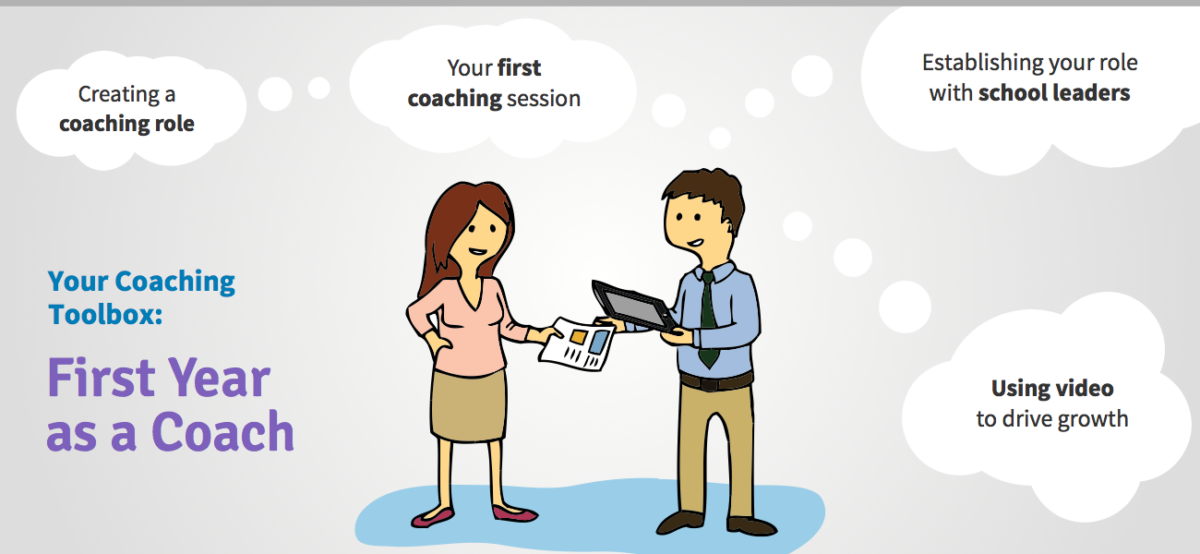


Kelli Coons, instructional coach from Spartanburg County School District One in South Carolina, shares the importance of personalizing professional development within your coaching role—part of our new chapter in the “Your Coaching Toolbox” series, “First Year as a Coach.”
A
s a coach, the more time you spend with educators you realize that, to most, professional development has become yet another item to check off their ever-growing list of things to do. Like students, their first thought during a faculty-wide workshop is always: “How does this apply to me?” We as coaches must ask ourselves: “How can we make professional development more meaningful, both for our own sake and for the sake of the educators we serve?”
Can I be honest? This is my fourth year as an instructional coach, and for the first time I am understanding how much more meaningful it can be when you work individually with teachers and set professional goals based upon their needs and not just the needs of the district, school, or grade level. Think about meeting a fitness goal if money was no object—do you feel you would benefit more from a whole group fitness class or personal training session?
As part of my work with the Dynamic Learning Project as a Coaching Fellow, I have been trained under a very personalized coaching model. Author and technology advocate, Jennie Magiera, refers to this type of problem-based innovation in her book, Courageous Edventures. This method allows both the coach and teacher to discuss possible challenges, select a specific challenge to address, brainstorm strategies to combat the challenge, implement the suggested strategies, and reflect on what did or did not work.
Think about it… if a teacher is given the opportunity to develop professionally on their own terms and set their own goals, they will be much more invested in working with you.
Sometimes it’s unavoidable to get away from faculty-wide professional development, but as their coach, you should always find a way for your educators to connect to whatever is being presented—even if it is a stretch. As a technology coach, I usually find a new tech tool to incorporate and tell them about it because participants should never walk away from any type of professional development without learning something new or useful.
Professional development in a small-group setting can include meeting with their grade level teams or content area groups. Often during these meetings, the conversation unfortunately shifts off topic to address school-wide challenges, and not the challenges of the individual. These small group meetings are an improvement from the whole-group setting, but still lacking the intimacy needed to truly grow professionally.
When I am able to sit one on one with a teacher and have conversations about struggles, goals, and possibly obstacles, it is truly the most validating work I have ever done as a coach. These meetings allow me to get to know each teacher individually and form a true partnership that leads to greater professional growth.
When we begin a new coaching cycle, the teacher and I have a very open and honest conversation about potential challenges they’re facing. This step is so important in addressing factors that may or may not be within our control and allows us to focus only on issues we can control moving forward.
After we have identified some potential challenges, the teacher then selects a specific challenge they would like to focus on. This challenge is going to be what we hope to work towards during the duration of the coaching cycle. The teacher and coach can then brainstorm some potential strategies to address the challenge. Depending on the skill level of the teacher, the coach may suggest all of the strategies or the coach may lead the teacher to think of possible existing strategies. And even though we are not focused on a district or school goal primarily, most likely, the individual teacher goal aligns with those greater goals.
After the coach and teacher decide on the focus challenge and strategies determined in the pre-conference, class visitations take place. The coach visits the room with the specific challenge in mind, which enables the coach to stay focused on the needs of the teacher and provide valuable feedback. During the visit the coach will take brief notes and if the challenge warrants, use one of several observation tools: a frequency chart, student interviews, student work, selective scripting, student participation, and video. With the help of these tools, the observer can share valuable objective data with the teacher. Often teachers appreciate the information they can gather from the data tools and use it to reflect upon their teaching.
Technology Coach, Kelli Coons (right) works with a student and colleague.
Once the observation has been conducted, the coach will share their findings and provide information collected from the observation tools. During this time, the coach and teacher discuss standard reflective prompts such as: what was successful, what was unsuccessful, what they learned and what they might do differently next time. These questions can help guide your next coaching cycle to something even more meaningful for the teacher.
As a coach, the most important reflective questions to validate your work and help you to grow will be:
These questions are so crucial to examining your own practice and reflect on how well you are meeting the needs of the teachers you serve—as well as help guide your next coaching cycle to something even more meaningful for the teacher.
Teachers are looking for shared experiences and for support to try things they’ve never tried before. As their coach, you can encourage, guide, and implement these strategies right alongside them. Sure, you may not be able to say that you worked with large numbers of people each and every day, but you can say that the work you are doing individually with teachers is incredibly profound and meaningful.
Kelli Coons is a technology coach through the Dynamic Learning Project at Landrum Middle School with Spartanburg County School District One. This is her 4th year as an instructional coach. Prior to being the technology coach, she was an instructional coach and fifth grade teacher, and continues her works as a teacher consultant for the Spartanburg Writing Project. Kelli is passionate about all things education, particularly anything related to literacy and technology.
Follow Kelli Coons on Twitter: @KelliCoons_
{{cta(‘352a410e-db79-4f33-a482-d301e8041965′,’justifycenter’)}}
 SchoolStatusSchoolStatus connects educators and families around the topics that matter most. The company partners with K–12 districts to improve attendance, engage families, and build trust so students can succeed. A recognized leader in data-driven attendance and family engagement solutions, SchoolStatus enables districts and educators to engage families with relevant, timely communications and proactive support on important topics including absenteeism, literacy progress, and overall student readiness. Today, SchoolStatus supports districts in all 50 states and serves more than 22 million students nationwide as a trusted partner in driving better student outcomes.
News, articles, and tips for meeting your district’s goals—delivered to your inbox.