Messaging and Communication are Not the Same Thing
read more


New Book Gives District Leaders a Practical Framework for Improving Chronic Absenteeism—and a Comprehensive Look at State-Level Attendance Policies
Read More >
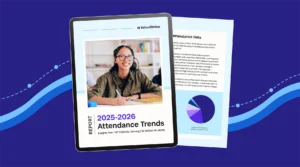
Key Attendance Trends from the 2025-26 School Year: Insights from 1.1M Students
Read More >

From Vision to Reality: Pulling the Right Levers for Transformational Instructional Leadership series has served as a guide for those seeking to implement instructional leadership best practices—sustainably and at scale. Educators and experts at all levels have generously shared their knowledge and experience throughout, in the hope that it will help transform your vision into reality.
Our final post will serve to recap and reinforce the best practices learned, underpinned by the core advice offered by all the educators we work with: plan for slow change.
“Don’t rush change: plan for the good training of all your educators and make sure your admins are experts—both on your vision and the platform. Be intentional and encourage a cultural shift at all levels.” —Sabrina La Londe
Before you start your instructional leadership program, you’ll have laid firm foundations by crafting and codifying your vision. Your vision articulates your proposed leadership strategies, how these will be communicated to your leaders, and how they will influence student outcomes. Building a sustainable culture around your vision requires sensitivity to your district’s current procedures and discussion with educators at all levels around what makes great leadership practice.
After crafting a vision and building a sustainable culture, the next step is how to implement a Theory of Action (TOA). To do so, one should answer:
On this subject, Kate Sugarman remembers how a cultural shift in the district program required a concurrent amendment to their TOA: “Change happens slowly at a big district. When moving from a program geared towards compliance, to one focused on growth and development… the district had to acknowledge that the way it’s rolled out to principals had to change.” Ultimately, their TOA needed to become more than instructions for leaders to check off a box—it required a dedicated and meaningful long-term strategy.
At this point, building a plan with both short-term and long-term objectives is key. Linda Rosenbury recalls, “before we started the year, we built a comprehensive timeline for when everything would happen—from first observation to goal setting to mid-year reviews and so on. This was all mapped out and shared with teachers at the beginning of the year.” Collaborating on a transparent and comprehensive timeline helped to set expectations on achieving their school vision. “You have to make sure all are on board—that fosters accountability and creates a coherent professional growth plan for everyone” continues Ms. Rosenbury.
The next stage—creating an accountability system—will vary across districts, depending on your vision and TOA. However, all leaders we work with agree that the burden needs to be shared. How, when, and with whom is a matter for your individual vision and culture. As a district leader, Ms. Rosenbury advises:
“You can’t get caught up in both the technical side and coaching side—it’s best to offload the technical aspects to a dedicated staff member. […] Our coordinator is making sure everyone’s on track at every step, sending reminders if anyone’s behind. This way it’s better, safer, and more secure—it doesn’t become overwhelming as only one person’s responsibility.”
At San Luis Coastal Unified School District, Peggi Charlesworth similarly advocates that all stakeholders must be involved: “Instructional leadership requires participation from everyone in the district—teachers, school leaders, district leaders, admin staff. There can’t be a single person running the show—it’s a group effort.”
Restructuring your senior leadership team and redefining roles regarding your program is a start, although you may find that it’s best to devolve responsibility in gradual stages as your program develops. Vanessa Garza, former director of teacher development at Partnership for LA Schools, shares that after some time, they too found it was best to have different staff devoted to the evaluation process: “one person will support just the teacher side of observations, while another supports the school leadership side of evaluations. Thus, both stakeholders have a dedicated person to guide them, keeping everyone on the same page.”
In chapter 3, we covered how to choose your edtech partner in order to establish a positive, long-term relationship. With a platform to house all your evaluation documents, you can use this opportunity to streamline the processes within your program, use the data outputs to norm feedback across the board, and begin using this data to improve practice at all levels.
It’s important, however, not to try to run before your program can walk. Ms. Charlesworth advises:
“You should learn in small chunks: don’t try to solve every problem and master every facet at once. […] Be patient with yourself and with the system. I know our program and the system will get better and better—but it will take time.”
The strongest programs are built in complexity over time, layering different combinations of leadership strategies year on year.
At first, simply committing to more regular and focused use of data from observations will enable you to deliver informed feedback on pedagogical practices. Once you begin to see how this affects student outcomes, you can start to adjust your long-term plan by adding new dimensions to the program in consecutive years—the possibilities here are many. Key strategies used by the districts we work with are often focused on creating targeted, professional development plans for everyone—from individuals to an entire organization. Alternatively, some of our partners choose to transition their program from a compliance activity to one focused on all-round growth. Whatever your district’s desires may be, be sure to share your vision with the team to gather buy-in from all!
Constant attention to the success of your program year over year will yield continual improvements to pedagogical quality and, in turn, positively affect student outcomes. The critical factors in this transformation are patience, reflection, and reiteration. Although the pace of change will be gradual, just be sure to look back once in a while to see how far you’ve come.
We hope that this series has provided a packed full playbook of the advice from the extraordinary educators we work with and will help you pull the right levers to improve teacher effectiveness. If you would like to share your own experiences in setting up an instructional leadership program, or if you’d like to find out how we can help you implement your vision, please get in touch—we look forward to hearing from you!
{{cta(‘417de94b-2f71-4123-a807-1f4438f581c5′,’justifycenter’)}}
 SchoolStatusSchoolStatus connects educators and families around the topics that matter most. The company partners with K–12 districts to improve attendance, engage families, and build trust so students can succeed. A recognized leader in data-driven attendance and family engagement solutions, SchoolStatus enables districts and educators to engage families with relevant, timely communications and proactive support on important topics including absenteeism, literacy progress, and overall student readiness. Today, SchoolStatus supports districts in all 50 states and serves more than 22 million students nationwide as a trusted partner in driving better student outcomes.
News, articles, and tips for meeting your district’s goals—delivered to your inbox.