Data from 89 Districts Serving 513K Students Shows How to Consistently Reduce Chronic Absenteeism
read more


New Book Gives District Leaders a Practical Framework for Improving Chronic Absenteeism—and a Comprehensive Look at State-Level Attendance Policies
Read More >
Key Attendance Trends from the 2025-26 School Year: Insights from 1.1M Students
Read More >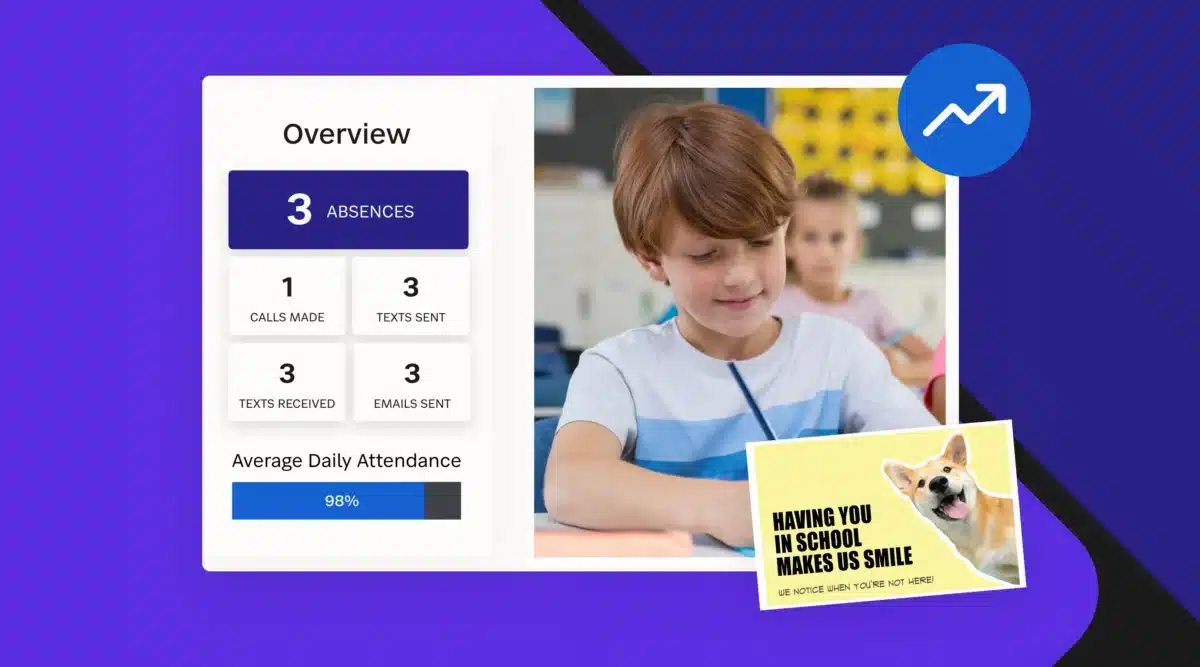

Attendance letters usually read like compliance documents, and families respond to them accordingly. Positive outreach changes that: districts using proactive attendance letters have seen chronic absenteeism drop by 45%, and 54% of at-risk students return after just one contact. This post covers how to write them and why recognition letters matter as much as intervention ones.
Attendance letters have a reputation problem.
Ask families what they expect when a letter from school arrives in the mail, and they’ll tell you: something is wrong. Someone is in trouble. Another form to sign. That association is one of the most stubborn barriers to attendance outreach: families who receive a letter from school expect bad news, and the families who most need to hear from you have often already decided that hearing from you means trouble.
Positive attendance letters break that pattern. Used consistently and strategically, they shift the tone of school-home communication from punitive to partnered.
Families facing real barriers to attendance don’t return to school because they received a warning. Transportation gaps, housing instability, chronic illness, and work schedule conflicts don’t get resolved by a letter that reads like a legal notice. Outreach that leads with consequences puts families on the defensive. Outreach that leads with concern and support opens a door and encourages families to share what’s actually contributing to absences. When families and educators can have real conversations about what’s getting in the way, solutions get found and attendance improves. Corsicana ISD saw chronic absenteeism drop from 19.7% to 10.7% in a single year after shifting to proactive, positive outreach.
The letter is the first impression. Make it one that invites a conversation rather than ends one.
A positive attendance letter accomplishes two things at once: it communicates clearly about attendance, and it positions the school as a partner rather than an authority assigning blame.
The best ones share a few common elements. They use the student’s actual name, not “your child.” They acknowledge the family’s effort even when attendance has slipped, framing the outreach as support. They name next steps clearly. And they make it easy to respond.
Just as important: they go out before patterns become chronic. A letter that arrives after a student has already missed 10 days is a last resort. A letter that arrives after three unexplained absences is early outreach. The earlier the contact, the more options a family has to address whatever’s getting in the way.
Recognition letters are just as important as intervention ones. A congratulations letter to a student who’s maintained 95% attendance through the second quarter reinforces the behavior you want to see more of. A note marking a dramatic improvement tells families that school notices when things go right.
This kind of recognition is rare enough that families remember it. A letter celebrating a student’s attendance record is often the first positive communication that family has ever received from a school. For that student, it can be the thing that makes the second half of the year feel worth showing up for.
Districts should budget for recognition letters across the school year, not just at the end. A mid-year congratulations is received differently than a certificate at the June awards assembly. It arrives when the school year still has momentum, and when a little encouragement can carry a student through the harder months.
A well-written attendance letter is short, specific, and easy to act on.
Use the family’s home language. Families who receive communications in their primary language engage at higher rates. Include a direct contact: a name and phone number, not just a general office line. Put any next steps in the opening paragraph, not buried in the third.
For intervention letters, name the available support. If the district has flexibility around make-up work, transportation assistance, or connection to community resources, say so. Families can’t take advantage of support they don’t know exists.
Review every letter for readability. A letter written at a 12th-grade reading level in formal academic language will not reach the families who most need to read it. Plain language at a 6th – 8th grade reading level makes sure the message lands.
The districts that see the biggest attendance results don’t write a new letter from scratch every time they need to reach out. They build a library of customizable templates: early outreach, intervention, recognition, and re-engagement. And they send consistently across the year rather than in reactive bursts.
Templates save staff time and keep tone consistent across a large district. A warm letter and one that reads like a legal notice create two different relationships with two different families. Those differences compound over time. For the family that has received formal notices all year, a warm letter in January can be the thing that finally opens the door.
If your district is building or revising its attendance letter strategy, start with the recognition template. It sets the tone for everything else and signals, clearly, what kind of school community you’re working to build.
Creating a consistent attendance outreach program is hard work. SchoolStatus Attend makes it easier. The solution integrates with your SIS to identify students who deserve recognition and families who may need additional support, then sends outreach on your behalf.
A standard attendance notification informs a family that their student has missed a certain number of days, often in formal or procedural language. A positive attendance letter is written to build trust and encourage engagement, whether it’s celebrating good attendance, opening a supportive dialogue about absences, or making it easy for a family to reach out. The distinction is tone and intent, not just content.
Positive outreach should go out early, before a student crosses the chronic absence threshold of missing 10% or more of school. Districts find better results when positive outreach outnumbers intervention notices over the course of a year.
Every attendance letter should be sent in the family’s home language whenever possible. Sending a letter in English to a family whose primary language is Spanish, Somali, or Vietnamese is functionally the same as not sending a letter at all. Translation is the minimum standard for reaching families who need to hear from you.
Both. Physical letters have higher open rates than email in many household demographics, and they signal that the school invested real effort in reaching out. Digital follow-up reinforces the message and makes it easier for families to respond. A hybrid approach, starting with a physical letter and following up digitally, consistently outperforms either channel alone.
Yes, when they’re part of a consistent, tiered outreach strategy. Outreach tone shapes whether families see school as a partner or an adversary, and that relationship is one of the strongest predictors of whether a family will engage when attendance gets hard. Districts using proactive, positive outreach have seen chronic absenteeism drop by 45%.
 Dr. Kara Stern
Director, Education and Engagement
Dr. Kara Stern has seen school from just about every angle: high school English teacher, middle school principal, fellowship director for math and science teachers across New York City, and head of school at a rural N-12 school. That breadth is what she brings to her work at SchoolStatus, where she writes, speaks, and challenges educators to build the kinds of school communities where every student thrives. She holds a Master’s in Education Leadership from Teachers College and a Ph.D. in Teaching and Learning from NYU.
News, articles, and tips for meeting your district’s goals—delivered to your inbox.
















Ready to learn more about our suite of solutions?