Family Engagement Doesn’t Grow From More Messages
read more


SchoolStatus Launches Literacy Solution to Help Districts Engage Families in Improving Reading Outcomes
Read More >
Key Attendance Trends from the 2025-26 School Year: Insights from 1.1M Students
Read More >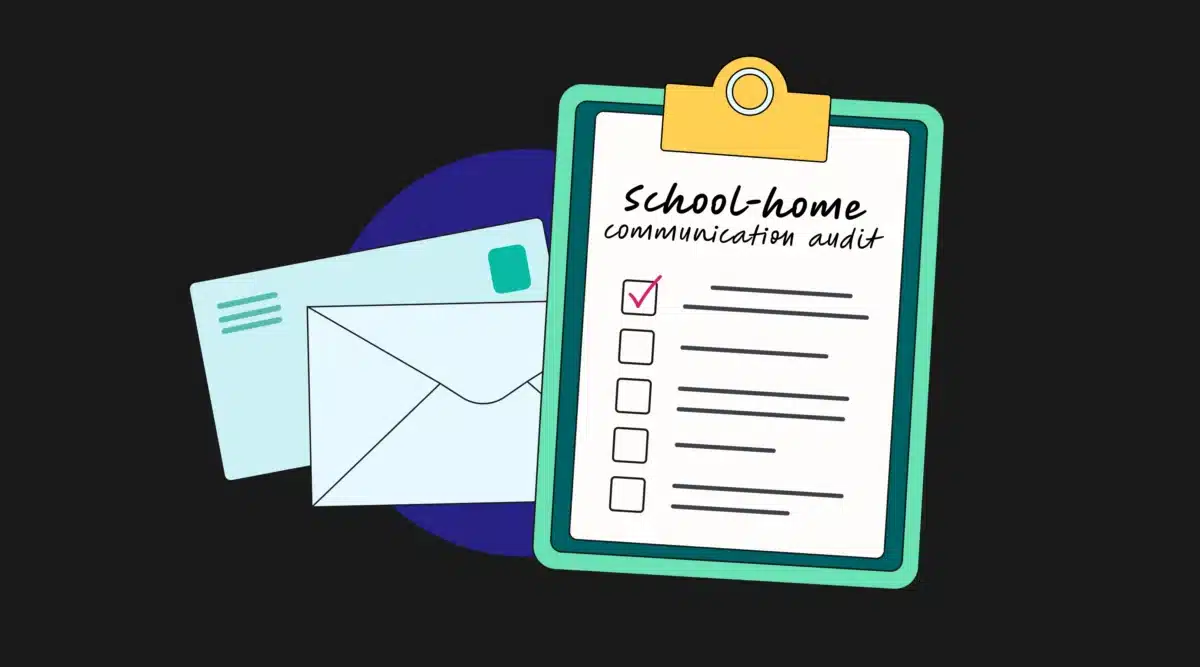

Sending the right messages builds family trust. Sending more of them does not. This school communication audit gives district leaders 10 questions to find the gaps in reach, relevance, and response, and schools with strong family engagement have chronic absenteeism rates 6 percentage points lower than those with weak engagement—gaps SchoolStatus Connect is built to close.
Districts that struggle with family engagement are usually doing plenty. They’re sending texts, emails, newsletters, and app notifications, and the results don’t match the effort.
Families in district after district have muted notifications, deleted apps, and stopped opening emails. The open rates and the attendance data confirm it. And so does the experience of watching a student fall behind while a family says they never heard there was a problem.
A Learning Heroes/TNTP analysis found that schools with strong family engagement had post-pandemic chronic absenteeism rates 6 percentage points lower than comparable schools with weak engagement, a gap larger than the one between low-poverty and high-poverty schools.
A family communication system that produces activity without producing trust has failed at its actual job. Before you invest in a new tool or overhaul your strategy, run the audit below. The answers will show you exactly where your system is breaking down.
A pattern of “no” answers in the Reach section signals a delivery problem: your messages are going out, but not necessarily arriving in a form families can read, understand, or act on. A family that receives a notice in a language they don’t speak does not know to call the school.
A pattern in the Relevance section signals a content problem: families are receiving information, but the information isn’t personal enough to earn their attention. A family that gets 47 messages about spirit week and zero messages about their child’s reading level stops engaging with all of them.
A pattern in the Response section signals a relationship problem: your communication is one-directional, and you have no way to know when it stopped working for an individual family. Families should hear from the school when it matters, in a way they can act on, and they have a channel to respond.
SchoolStatus Connect closes the gap in each of the categories identified above. It pulls data from your student information system to help educators send personalized, timely messages to each family. Messages go out in 130+ languages, across the channels families actually use. Districts using Connect have reached a 73.4% average message read rate. Families respond because the messages are worth responding to.
Mass notification systems are built for speed and volume. They send the same message to everyone at once. For emergencies, that is genuinely useful. For day-to-day family engagement, the goal is building a relationship between a school and a specific family around a specific child, and broadcasting to a list leaves every family wondering if anyone actually knows their kid.
A focused conversation using these 10 questions takes 45 to 60 minutes. The harder part is gathering honest answers, especially around metrics like delivery confirmation and response rates. If your current system does not surface those metrics, that is the finding.
The audit is designed to find where your staff’s effort is going without results. When every communication requires manual translation, manual follow-up, and manual tracking, staff are already carrying an enormous workload. Identifying and eliminating those manual steps is what gives staff time to do the work that actually matters.
Families care deeply about their children. When engagement drops, the signal is that the communications stopped earning attention. A school that sends relevant, timely, personal messages gets responses. Darlington County School District reached a 73.4% average message read rate. That number is repeatable. It is what happens when the message matches the family.
Connect automatically sends messages in 130+ languages, reaching every family in their home language with no manual routing by staff. A family whose home language is Khmer and a family whose home language is Spanish receive the same quality of communication on the same timeline.
 Dr. Kara Stern
Director, Education and Engagement
Dr. Kara Stern has seen school from just about every angle: high school English teacher, middle school principal, fellowship director for math and science teachers across New York City, and head of school at a rural N-12 school. That breadth is what she brings to her work at SchoolStatus, where she writes, speaks, and challenges educators to build the kinds of school communities where every student thrives. She holds a Master’s in Education Leadership from Teachers College and a Ph.D. in Teaching and Learning from NYU.
News, articles, and tips for meeting your district’s goals—delivered to your inbox.




















Ready to learn more about our suite of solutions?