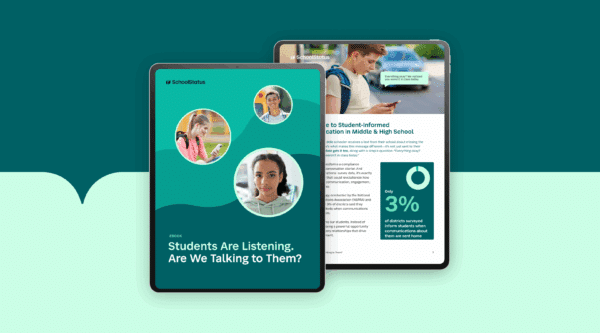
The Attendance Communication Gap You Didn’t Know Existed
read more


SchoolStatus Launches Literacy Solution to Help Districts Engage Families in Improving Reading Outcomes
Read More >
Key Attendance Trends from the 2025-26 School Year: Insights from 1.1M Students
Read More >

Most school communication strategies face hurdles like unclear goals, fragmented channels, or weak measurement. The good news is you can fix problems with school communication strategies using clear, practical solutions.
Effective communication is the foundation of a successful school community. Whether it’s updating parents about their child’s progress, coordinating with staff, or sharing important announcements, having a strong communication strategy is critical. But how can you tell if your current approach is falling short?
Here are five key signs that your school might need to rethink its communication strategy. From improving parent-teacher interactions to adopting modern engagement tools, these actionable insights will help you strengthen your school’s connection with families, staff, and the wider community.
For a proven three-step process, check out our guide to creating a school communication strategy
If parents are disengaged or uninformed, it may indicate that your communication tools aren’t reaching them effectively. Common symptoms include:
Solution: Adopt modern engagement tools like SchoolStatus to send personalized, real-time updates. Features like multilingual messaging and mobile app notifications can ensure parents receive and understand important information.
Juggling several platforms for emails, texts, social media, and newsletters can overwhelm teachers and administrators, leading to inconsistent messaging and missed updates.
Solution: Centralized communication streamlines workflows by consolidating all channels into one system. This ensures consistency while saving staff time and effort.
Do parents, staff, or students often complain about receiving mixed messages or no messages at all? This can indicate gaps in your strategy, such as:
Solution: Establish a clear communication plan with defined roles, responsibilities, and protocols. Use tools that provide real-time updates and scheduling features to ensure timely and consistent communication.
Schools serving diverse communities often struggle to engage families who speak languages other than English at home. This can result in these families feeling disconnected from the school community.
Solution: Incorporate translation services into your communication strategy. Products like SchoolStatus Connect offer built-in multilingual capabilities, ensuring all families can access updates in their preferred language.
If your school can’t measure the effectiveness of its communication efforts, it’s hard to know what’s working and what’s not. Signs of this include:
Solution: Choose a school communication product that includes robust analytics. Tracking open rates, engagement levels, and response times can provide actionable insights to refine your strategy.
A strong communication strategy is essential for fostering trust, engagement, and collaboration within your school community. If you’ve recognized one or more of these signs, it may be time to upgrade your approach. By adopting centralized tools, leveraging translation services, and prioritizing data-driven decisions, you can build a more effective and inclusive communication strategy.
Need a ready-to-use framework? Explore our School Communication Planning Guide with template.
Looking for better ways to communicate directly with students and families? Explore SchoolStatus Connect and SchoolStatus Attend. These solutions provide you with the communication tools and early warning systems necessary to build stronger connections with students and improve attendance outcomes.
Schools often struggle with setting clear goals, coordinating across multiple channels, and ensuring messages reach all families consistently.
Most fail because they lack measurable goals, don’t reach every audience effectively, or rely on too many disconnected tools.
By simplifying channels, tailoring messages, and offering multiple ways for families to stay informed, like text, phone, and email.
Tracking engagement helps districts know what works, adjust quickly, and demonstrate the impact of their strategy.
A strategy sets the long-term vision and priorities; a plan outlines the specific actions, channels, and timelines to make it happen.
Start by clarifying goals, aligning messages with district priorities, and using integrated tools to streamline outreach.
 Marico FayreMarico is an educator and storyteller who combines her passion for learning, branding, and communications into the innovative world of EdTech. Marico is dedicated to supporting educators with easy-to-use technology, advancing school-home relationships, and strengthen relationships through transparent communications and personal connections.
News, articles, and tips for meeting your district’s goals—delivered to your inbox.

Ready to learn more about our suite of solutions?