Messaging and Communication are Not the Same Thing
read more


SchoolStatus Launches Literacy Solution to Help Districts Engage Families in Improving Reading Outcomes
Read More >
Key Attendance Trends from the 2025-26 School Year: Insights from 1.1M Students
Read More >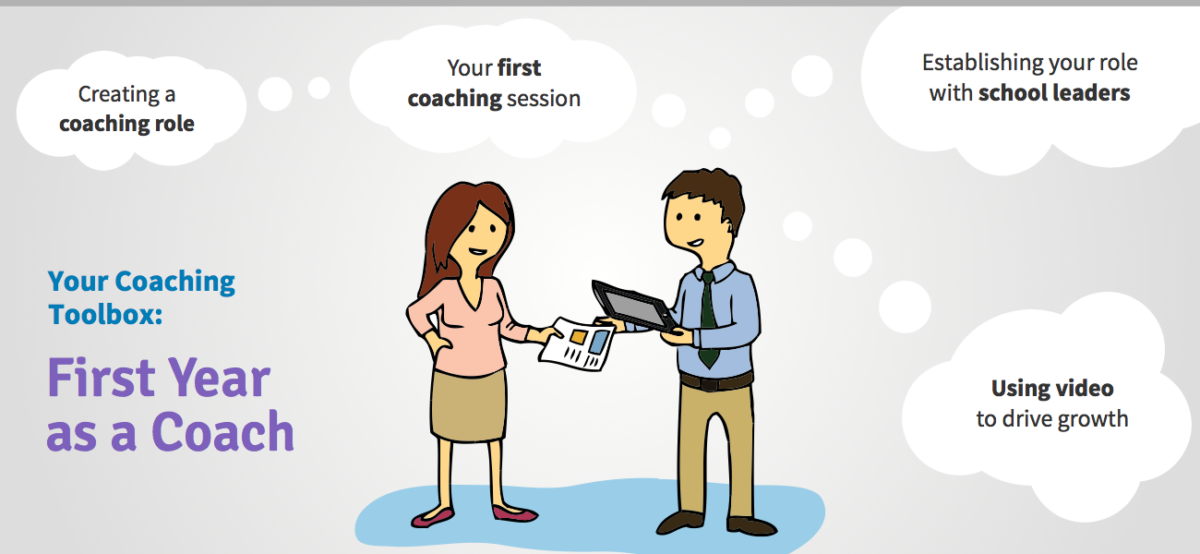


Maggie Colicchio, instructional coach from Alliance City Schools in Ohio, reflects on her experiences transitioning from being coached as a teacher to becoming an instructional coach herself.
I
t was my third round of interviews with a school in Denver, Colorado when I was initially asked the question that threw me off my game: “How do you see yourself utilizing an instructional coach?”
Prior to hearing this question, I’d been teaching for five years in North Carolina and I had never even heard of an instructional coach. I fumbled a bit, mentioned something about professional development, and prayed that my lack of understanding wouldn’t be a big deal. I was used to PD as I had been through a ton of it in my first years teaching—new initiatives, whole-group, workshop-based professional development—in the sweltering library after school. I figured an instructional coach would do something like that, so I wasn’t very concerned. Fast forward, I got the job, moved to Denver, and began teaching at a charter school in the heart of the city.
Soon into the year of my new position the concept of coaching came back around. I considered myself a pretty good teacher—my standardized test scores were excellent, and I was a cooperating teacher for some student teachers from my alma mater—so I figured the instructional coach would do what all evaluators did (i.e., come into my room, mark me lower on my first observation so that I could “show growth” by the end of the year).
I was assessed using an initial rubric that all teachers were required to pass before they could begin their individual coaching goals. The rubric included everything the school was expecting all teachers to do, such as using Teach Like a Champion techniques, higher-order questioning, and engaging lesson design.
When it came time for my first coaching session, I failed my first attempt on the initial rubric. I was devastated since I was so used to being told that I was “doing a good job.” I used inquiry-based lesson design! I had good classroom management! What else could this school, and this instructional coach, want? Even though I figured I could improve my instruction on my own and pass the rubric, I failed the second and third attempt too.
After my first few failed attempts at being coached, I finally started listening and using the recommendations she suggested. Using her suggestions, I adjusted my practice and soon enough, I was off the initial rubric and on to the actual coaching!
At first, my coach would come into my room and help me set instructional goals. Shortly after, I was seeking her out, using her to improve my lessons, and bouncing ideas off her anytime I had a chance to seek her out. She stretched me and pushed me and for the first time in my teaching career, I felt reinvigorated by the challenge.
While never one to mince words, my coach nonetheless made me feel respected and appreciated for the work I was doing—like a true professional should be treated. I learned that many of my projects were inauthentic, but my coach helped me adjust them to be more relevant to the students’ lives. I learned some of my assessment questions were not assessing the standards, but instead were assessing skills (e.g., reading), so my coach sat with me and poured over data. I learned that I had an ally in all aspects. More importantly, if my coach didn’t have an answer right away, she would give me a deadline to have a solution and would always stick to those deadlines.
After a year of working with a coach, I became a lead teacher in my department and grade level. Teachers on my team began seeking me out for support, goal-setting, instructional planning, and instructional innovation. As a result of all my work with my colleagues, I became interested in coaching.
After three years in Denver, my husband—who I met at the school where I was teaching—and I moved to Ohio, near where I grew up. I started teaching 7th grade in a city school, where the rhetoric was very similar to that of my first school district.
Evaluations were done twice a year by the principal. They began low to show growth on evaluations and the principal told everyone things like, “You’re doing a good job.” The district is one of the lower-performing school districts in the area (e.g., the middle school had a fairly high teacher and administrator turn-over rate). Teachers are autonomous in their classes, and the district was constantly looking for the “next big thing” to help improve test scores, leading many of the teachers feeling initiative-itis. Our unwritten motto seemed to be: “Change is temporary, the status quo is expected, and we do what we can with what we’re given.”
Between moving and beginning a new job, I also started working on my doctorate in curriculum and instruction from Texas Tech University. I learned that not only was my coach in Denver amazing for all of the reasons I already mentioned, but all of her strategies were research-based. Furthermore, learned the importance of inservice professional development, and continued to be grateful for the lessons I had learned from my coach. When a district coaching position opened up at my district last year, I jumped at the opportunity to apply and luckily was chosen as one of the new district coaches—mine being a middle school coach. Once the excitement settled in, I quickly realized something shocking: I had been coached, but I had no idea how to coach!
I immediately began researching my new position. I started out by buying three books by Jim Knight and following “instructional gurus” on Twitter like Dr. Knight, Thomas Guskey, Jennifer Abrams, and Robert Marzano. On top of reading and utilizing Twitter for resources, I reached out to my Denver coach and asked her for any materials she had for coaching; I did the same with a few people from my doctoral program who I knew had coached before. Finally, I asked my district to send me to an instructional coaching conference in Texas and they (thankfully) agreed.
At the coaching conference, I realized my experience is not unusual. Many districts and schools do not define what they expect from instructional coaches. Coaches go into their jobs completely blind, and are often given roles and responsibilities that are not related to coaching. Teachers are distrustful of the new “semi-assistant principal.” Principals treat their coaches as just another hand to help with lunch duty. It can cause major burnout.
The best way to combat this issue? Partnerships. The role of a coach starts by establishing trust, expectations, and boundaries—first with your principal, then with the rest of your coachees. While hearing this information, I immediately pulled out my computer and emailed my principal to set up a meeting outlining my role in the school.
When I got back to Ohio, my principal and I talked. We’re on the same page for what is expected of me next year. I will be spending 100% of my time doing the work, with 60% of my time in coaching cycles and the other 40% doing professional development and participating in PLCs. We agreed my coaching conversations are confidential and we’re building a culture of instructional improvement together at the school.
Albeit a bit nervous, I feel confident moving into this new role. I hope people want support and I hope I’m able to provide what people need. But most of all, I hope that I am able to challenge the people I’m coaching to achieve everything they want and more than they expect in their classes. I hope I make a difference.
Maggie Colicchio has been working in education for 11 years, first as a classroom teacher and now as an instructional coach. An alumni of East Carolina University, Maggie has taught science in North Carolina, Colorado, and Ohio, and is currently working on her doctorate at Texas Tech University.
Maggie and her husband, who is also a teacher, live in northeastern Ohio with their 10 month old son. When not at school or writing her dissertation, Maggie enjoys spending time in Cleveland and in the outdoors with her family.
Follow Maggie on Twitter @KHSColicchioSci!
{{cta(‘352a410e-db79-4f33-a482-d301e8041965′,’justifycenter’)}}
 SchoolStatusSchoolStatus connects educators and families around the topics that matter most. The company partners with K–12 districts to improve attendance, engage families, and build trust so students can succeed. A recognized leader in data-driven attendance and family engagement solutions, SchoolStatus enables districts and educators to engage families with relevant, timely communications and proactive support on important topics including absenteeism, literacy progress, and overall student readiness. Today, SchoolStatus supports districts in all 50 states and serves more than 22 million students nationwide as a trusted partner in driving better student outcomes.
News, articles, and tips for meeting your district’s goals—delivered to your inbox.