


Featured Resource
New Book Gives District Leaders a Practical Framework for Improving Chronic Absenteeism—and a Comprehensive Look at State-Level Attendance Policies
Read More >

New Book Gives District Leaders a Practical Framework for Improving Chronic Absenteeism—and a Comprehensive Look at State-Level Attendance Policies
Read More >
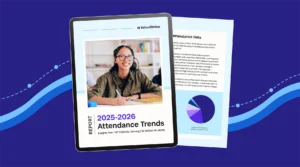
Key Attendance Trends from the 2025-26 School Year: Insights from 1.1M Students
Read More >

How do you encourage data-driven conversations with your teachers? Data walls! Crystal Ceresani explains the benefits of these powerful organizational tools for increasing teacher engagement and tips for successfully implementing your own.
“Literacy, literacy, literacy! Data, data, data!” These words are becoming more and more popular as new initiatives roll out and education continues to evolve. However, these words don’t need to just be “buzzwords” in your school. Many schools want to have data as a priority and at the forefront of conversations but don’t know where to begin. That’s where a coach and the use of data walls come into play.
Data walls are a great way to initiate conversations based on literacy data (or any data) in your school. They not only open the door for you, as the coach, to lead discussions around data, but they also create a culture where teachers refer back to this data in their own conversations, planning, and goal-setting.
As an instructional coach, data should be a habit and at the forefront of everything you do. However, getting teachers involved in discussions around data isn’t always an easy task. There are many teachers who are strong in data analysis and interpretation, but there are also many who lack confidence and avoid data conversations. Literacy data walls help create a culture where all teachers, including those who are not strong in data analysis, feel more confident in participating in data discussions.
Having a literacy data wall is also a great way to get all teachers engaged in tracking reading growth throughout the year. All teachers in the school have a set group of students they are tracking data for, and it needs to be a group of students they work directly with at some point. This way, they can take some ownership in the progress being seen through the data.
As teachers grow more confident in their impacts on student reading growth, you’ll hear the conversations surrounding the data wall deepen. The data discussions will go from “I see that this student’s score dropped from 975 to 850, what could be the cause of this?” to something more along the lines of “This student’s score decrease must be a result of their lack of vocabulary recognition. We may need to work on context clues strategies with her to help her in this.”
Literacy data walls also help drive engagement by keeping the school’s goals visual. As teachers track their student growth, it’s easy for them to see the school’s progress in moving students to be better readers. Whether your school is using Houghton Mifflin’s Reading Inventory, DIBELS, Fountas and Pinnell, or any other reading level program, it should be easy to track where students need to be compared to where they are.
The data used for a literacy data wall should be a reading level assessment that is used multiple times throughout the school year. Some ideas include the Reading Inventory by Houghton Mifflin, DIBELS DORF or MAZE data, Fountas and Pinnell, Development Reading Assessment, or any other reading level program your school uses.
The data wall needs to be set up in a confidential space within the school or use students’ ID numbers to avoid breaking confidentiality laws. You’ll want it in a central location where teachers are able to access the data to update it, or if they need data to plan for classroom instruction. Some suggestions are the school’s conference room, the instructional coach’s classroom or office, somewhere in the front office area, or in a teacher workroom. This will depend on what locations your school has available.
Teacher buy-in can make all the difference in the world when implementing a literacy data wall. The best way to get all teachers onboard is to create a sense of urgency surrounding the goal your school has in terms of literacy.
A good idea is to pull reading levels data for your school and have the teachers dig into it for the percentage of students reading below grade level compared to on-grade. Additionally, you can have charts made that show where students should be, given their grade levels, and pictures representing what textiles are needed for specific future careers—which can be done through a simple internet search.
When introducing a literacy data wall, the expectations and procedures for each step of the process should be clear upfront. Confusion about this process can discourage teachers and lead to the wall not being as successful as it could be. Teachers need to know when they are meant to update the data wall, what this process looks like, and what the expectations are for data discussions about the wall. Have a concrete plan set for the uses of the data wall, and be ready to clearly explain this to the teachers.
I always suggest that all teachers update the data wall within a week of the reading level testing and stay to discuss it as a team immediately following the updates. As the instructional coach, you will want to help facilitate the discussion, but the teachers will be the ones to do the talking, observations, and sharing ideas to help promote more growth.
As the year comes to an end, the teachers’ data discussion will be a bit different than during the school year. Teachers will reflect on what worked as a whole, which strategies had the largest impact, and which strategies weren’t as strong. The discussion will revolve around ideas for the next school year.
It’s so important for teachers to see their impact, and that’s exactly what this data wall will help accomplish. As a reminder, even the smallest of successes are worth celebrating and sometimes that’s as simple as celebrating a student maintaining a score. While high growth and students jumping reading level bands is the ultimate goal, we cannot forget the small accomplishments that build up to the bigger ones.
As an instructional coach, you’ll want to help point out these small victories. Teachers sometimes see small victories and failures because they want so much, and that is understandable. Just remember, you want to make sure every teacher feels a sense of gratification when seeing the data wall and students’ growth. As you see the teachers celebrating the small victories, you will also hear the conversations shift in a way that is more positive.
Whether it’s through the use of a data wall or some other method, teachers need to be interactive with data to truly gain something from it. If teachers simply look at data and go back to their classrooms, then they will not make a push to implement anything from it. True data discussions and having teachers be a part of the data will help them to return to their classes and use the data! Let teachers lead and participate in discussions where observations are made, strategies are shared, and reflection happens. These things combined will work magic.
I’ve found 10 great perks (reminders) in our use of data walls. So, why use them?
Data walls:
Mrs. Crystal Ceresani is an elementary/middle school instructional coach in a rural school system in South Georgia. Over the last 4 years, she’s researched and supported deeper learning for all students by helping teachers dig into data and its uses, implement new strategies, and promote differentiation as a norm in the classroom. She holds a Bachelor’s Degree in Middle School Education: Math and Language Arts, a Master’s Degree in Curriculum and Instruction: Accomplished Teaching, and Instructional Coach and Leadership certifications. Crystal aspires to make an impact in education that ultimately benefits student achievement, and she knows the best way to create a change in how students learn is by changing how educators learn. It is her goal to continue to help teachers grow and to share ways to use data in the school and classroom to best know where students are and how to best reach them.
Be sure to check out her blog, connect on Instagram, or reach out via email!
 Crystal CeresaniCrystal Ceresani, an elementary/middle school instructional coach in rural South Georgia, focuses on deeper learning for all students. With degrees in Middle School Education and Curriculum/Instruction, she empowers teachers to leverage data, implement new strategies, and prioritize differentiation. Crystal aims to enhance student achievement by nurturing educator growth and promoting data-driven practices.
News, articles, and tips for meeting your district’s goals—delivered to your inbox.













Ready to learn more about our suite of solutions?


