Messaging and Communication are Not the Same Thing
read more


New Book Gives District Leaders a Practical Framework for Improving Chronic Absenteeism—and a Comprehensive Look at State-Level Attendance Policies
Read More >
Key Attendance Trends from the 2025-26 School Year: Insights from 1.1M Students
Read More >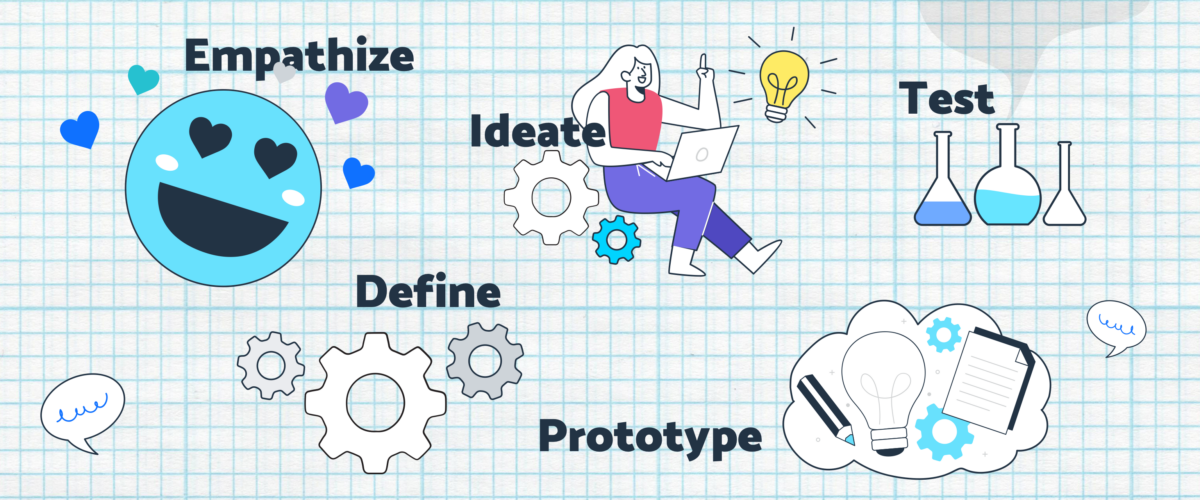

Sadie Lewis, Instructional Innovation Specialist in Mehlville School District in St. Louis, MO, spotlights 5 “design thinking” approaches to coaching that allow her to execute a personalized coaching model.
Design thinking is a huge trend in education, but designers have been using this human-centered method to find solutions to problems for years. I used design thinking with my students in the classroom, but when I stepped into this coaching role two years ago, my focus changed. However, as I began working with teachers on technology integration, project-based learning, and instructional strategies, I quickly realized the steps of the “design thinking process” very closely mirror the coaching cycle we go through with teachers. The decision to be more deliberate in taking a design approach to coaching has allowed me to better meet the needs of my teachers, and personalize my coaching model.
The design thinking process is broken into five steps—empathize, define, ideate, prototype, and test—and I’ve found that each one aligns with a piece of my coaching process.
As coaches, we start the coaching cycle by meeting with and observing teachers in order to identify their needs and challenges. We apply empathy—the first step of the design thinking process—in our interactions with teachers in order to build trust and truly understand where they are.
I start each semester by sending a needs assessment to the entire district, asking about the types of support they need with various instructional practices, strategies, and technology tools. This allows me to easily identify the needs across my 17 buildings and have informed conversations with principals about the approach we should take in their building.
When setting out to work with a new teacher or team, I think it’s crucial to understand their professional learning styles. Being empathic to how teachers like to learn can go a long way in building solid coaching relationships. Planning workshops and coaching sessions with teachers’ learning styles in mind makes a big impact on the questions I ask teachers about their preferred learning:
Every question is targeted to gather the teacher’s input, not jump to conclusions based on my own preferences.
Designers know that in order to develop a solution, you must first define the problem or challenge your user is facing. Once the challenge has been clearly defined, you can move forward in ideating possible solutions, while keeping your users’ needs at the center of the design process. As coaches, we work with our teachers to determine the challenges they’re facing in their classrooms. We don’t tell them what we think their challenges are, we talk with them about the things they see in the classroom and what impact it makes on student learning.
Setting goals with my teachers is the most important step in my coaching model. Often, professional development and building initiatives are top-down: teachers are told what their goals are, what they need to learn, and sometimes even how they will learn it. In order for coaching to be a user-centered design process, it’s important that teachers have the freedom to set their own goals that align with their students’ needs.
I work with my teachers to create a focus statement that is based on teacher practices and student outcomes. Written as an if/then statement, we identify a new instructional strategy or process that the teacher will implement. Then, we outline what impact that will have on student growth or learning. For example, if a teacher feels her students are having trouble managing their time during project or independent work, her focus statement might read:
“If I implement student-lead project calendars with teacher checkpoints, then students will better understand expectations throughout the project and manage their work.”
Just like coaches form learning partnerships with their cooperating teachers, they also need to form learning partnerships with other coaches and with their building level administrators. That’s right, I said it! Though it might make some uncomfortable, coaches should partner in learning with their administrators as well as with other coaches.
While many realize that coaches and administrators should work as a team, not much has been said about the need for coaches and administrators to partner together in cooperative learning opportunities. That may sound like it contradicts the idea that coaches are not administrators and shouldn’t be seen as being in the administrator’s pocket, but if we truly want to advance our students learning then we must be consistent with the messages we send to our teachers about effective instruction. This message must be the same whether it’s coming from an administrator, a coach, or anyone else who is providing professional learning opportunities for our staff.
If your school values student engagement then you all must be able to not only agree upon what student engagement is, but also upon what it looks like in action. The most effective way to do this is by engaging in learning opportunities together with your coaching and administrative team: looking at student learning together, talking about student learning together, grappling with identifying evidence that everyone can agree upon.
My coaching role has afforded me the opportunity to work with the coaches and administrators in many districts. While every coach is skilled and does their best to help advance student learning, the most effective coaching programs are those where the coaches and the administrators partner together and engage in collaborative learning experiences. With that said, coaches who do not find themselves in the position of being able to partner in learning with their administrators can still grow and learn by partnering in learning with the other coaches in their district.
Once the focus statement is written, we develop action steps around implementation of the new strategy, how the teacher can support students in the process, and how the coach will support the teacher.
If we see our focus statement and action steps as our prototype, then what comes next—implementing that plan and providing support—is the test phase of our design process.
Just like designers, instructional coaches don’t just help their teachers develop a plan and walk away, never to return. We as coaches spend time with our teachers providing support through co-planning, classroom visits, and modeling lessons. Planning lessons and activities with our teachers with the focus plan in mind allows us to take multiple approaches at the challenged we defined. As these various lessons and activities are “tested” in the classroom, I love to visit the class and see it in action. This helps me see first-hand if our plan is having its intended impact and meeting the needs of our learners, or if adjustments need to be made.
Just like the design thinking process, it’s important to see the coaching process as a non-linear cycle. Once we have worked with teachers to identify a challenge, and ideate and test solutions, we must remember to always come back and analyze the impact of solutions we designed. For example, ask yourself:
A strategy that I like using with groups of teachers during this phase of the process is the “success stories protocol.” In this structure, teachers each write a short story of a success they had, and identify the specific teaching practices that they think made it so successful. We then share each story with the group, and find commonalities among our successes. These commonalities are then turned into best practices that we can refer back to as we move forward.
Coaches are designers. We work with our teachers to identify challenges and ideate solutions. By being deliberate in approaching our process from a design thinking standpoint, we can more effectively set goals and achieve outcomes that meet our teachers’ needs.
Don’t be overwhelmed by design thinking. Start with empathy by understanding teachers’ needs and learning styles, and you will find that the process will naturally flow from there.
Sadie Lewis is the Instructional Innovation Specialist in the Mehlville School District in St. Louis, MO. Sadie works as a instructional technology coach, working with teachers in all content areas and grades levels on integrating technology into their classroom, and developing STEM, Project Based Learning, and Cooperative Learning strategies. Follow Sadie on Twitter @sadieclorinda
 SchoolStatusSchoolStatus connects educators and families around the topics that matter most. The company partners with K–12 districts to improve attendance, engage families, and build trust so students can succeed. A recognized leader in data-driven attendance and family engagement solutions, SchoolStatus enables districts and educators to engage families with relevant, timely communications and proactive support on important topics including absenteeism, literacy progress, and overall student readiness. Today, SchoolStatus supports districts in all 50 states and serves more than 22 million students nationwide as a trusted partner in driving better student outcomes.
News, articles, and tips for meeting your district’s goals—delivered to your inbox.