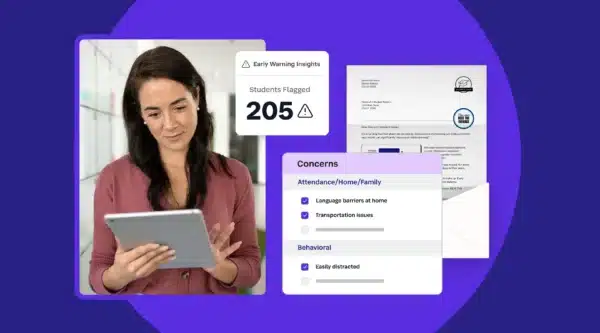
Data from 89 Districts Serving 513K Students Shows How to Consistently Reduce Chronic Absenteeism
read more


New Book Gives District Leaders a Practical Framework for Improving Chronic Absenteeism—and a Comprehensive Look at State-Level Attendance Policies
Read More >
Key Attendance Trends from the 2025-26 School Year: Insights from 1.1M Students
Read More >

Chronic absenteeism doesn’t start in September. It starts with what districts do in summer. In a webinar with District Administration, attendance and district partnership experts from SchoolStatus broke down the three practices that separate districts making real progress from districts stuck in the same patterns year after year. Watch the full recording to see what’s actually working.
Districts know chronic absenteeism is a problem. It’s in the improvement plan. The board has asked about it. The superintendent is accountable for it. What’s harder to answer is what happens next: how that goal connects to what an attendance coordinator does on a Tuesday morning. And how you know if you’re making progress before accountability season arrives.
That question drove a recent webinar, co-hosted with District Administration, featuring SchoolStatus District Partnerships Director Nichelle Smith and Senior Solutions Consultant Abbey Thering. The conversation covered three specific practices that districts actually moving their numbers have built into how they work before the school year starts.
Most attendance systems are built to monitor: who’s absent, how absences are coded, whether families received a notification. That matters. But monitoring isn’t improving.
As Abbey Thering put it:
Attendance improvement is understanding why students are missing school. Reaching out to families early, while there’s still time to remove barriers. Building outreach that families actually trust and respond to. And having reporting that tells you what’s working and where to focus — not just what happened.
The districts that are reducing chronic absenteeism have made that shift. When teams spend time building relationships instead of processing data, students who would have hit 18+ absences get a phone call in October instead.
The first practice is early identification, with intention. The districts making progress aren’t reacting to every absence in September. They’ve decided, before the school year starts, which patterns indicate a student is trending in the wrong direction. Three absences in the first month. Absences clustered on Mondays. A student coming off a difficult year.
That specificity matters because it changes the family conversation. Abbey shared an example from a district that flagged one campus with a disproportionately high chronic absenteeism rate. What they found wasn’t apathy. It was a transportation gap. Students who lived within the one-mile bus exemption radius were being asked to walk uphill on streets without sidewalks. Once they knew where to look, the district organized a community walking school bus: parents volunteering in shifts, walking students from block to block. Attendance went up. Trust went with it.
The default attendance response in most districts starts with a consequence. What that does is put families on the defensive before the relationship has had a chance to form.
Nichelle Smith framed the broader shift happening across the country: “We are seeing entire states mandate a shift in the language schools use in their engagement with families — from ‘gotcha’ to ‘we’ve got your back.'” Districts are building trust as a strategic goal, not just a communication preference.
What works is making contact early, before a student hits a chronic threshold, and making that communication positive. Automated messages when attendance improves. Personalized texts. Social media shoutouts to families doing the right thing. One parent summarized the shift simply: “It’s nice to know I’m doing something right, versus my kid doing something wrong.”
Research backs this up. Consistent, positive family communication meaningfully reduces chronic absenteeism. Families who trust the district let them in when barriers arise. That’s when real problems, like a transportation gap or a housing instability, become solvable before a student misses 20 days.
Families should experience the same district regardless of which building their child attends. What many districts actually have is significant variation: one campus with a tiered outreach system, another sending a letter after fifteen days.
That inconsistency has consequences. When a student reaches the point of needing a conference or a truancy filing, teams need a documented record of what was tried. Without it, everyone starts over. The family has no reason to believe this time will be different.
The teams moving forward have designed their workflows so the right action is also the easiest one. Abbey described a district that lost two attendance leads mid-year. Outreach and intervention letters landed on campus staff who were already stretched. Their goal was to document conferences with 90% of families before any truancy referral, but with the capacity they had left, that felt out of reach. When they automated the administrative work, campus leaders got plugged into what families actually needed. That 90% goal stopped feeling like a pressure point.
Sometimes it’s not about adding capacity, it’s about freeing up the capacity you already have.
Abbey Thering, District Partnerships, SchoolStatus
The webinar closed with concrete starting points for district leaders heading into summer:
The full conversation is available on demand. Watch it to see the three practices in context and hear directly from the practitioners building them.
Watch the Webinar On Demand →This is one of the most common structural problems in attendance work. The districts making the most progress tend to designate one role, often an attendance director or coordinator, as the owner of the data and the reporting cadence. That ownership holds even when the intervention work itself is shared across departments. What breaks down most often is when no one has a complete picture of what’s happening across campuses. A shared dashboard that everyone can see helps, but ownership of the data and the escalation protocol needs to live somewhere specific.
Overall attendance averages can mask chronic absenteeism because a student missing two days a month still looks fine in a weekly average. By the end of the year, they’ve missed 20+ days. The clearest way to make that visible to a board is with a campus-level breakdown that shows what percentage of students have missed 10% or more of the year. When you show that number next to the average daily attendance rate, the gap makes the case itself.
There’s no single answer, but the districts seeing results have moved to multi-channel outreach: text, voice call, in-app message, and in some cases a physical mailer. They’ve also made the outreach positive before the situation is serious. A family that has only ever heard from the district when something is wrong has good reasons to go silent. Starting contact earlier, with a warmer message, changes the response rate over time. Door-knocking still matters for the families who’ve gone fully offline.
The case is usually clearest when you document what the current manual work actually costs. Count the hours attendance coordinators spend on data entry, tracking, and drafting intervention letters. Those are hours not going toward conversations with families. Districts that have automated those tasks have found that the same team can manage a significantly higher caseload, and spend time on the work that actually gets a student back in a seat.
Start with the language in your existing templates. Review every letter, automated text, and notification your district currently sends when a student misses school. Identify which ones lead with consequences and rewrite them to lead with concern and support. The goal is establishing the relationship before accountability becomes necessary. Districts that have made this shift report that families are more responsive. Conferences are more productive because trust is already there.
 SchoolStatusSchoolStatus connects educators and families around the topics that matter most. The company partners with K–12 districts to improve attendance, engage families, and build trust so students can succeed. A recognized leader in data-driven attendance and family engagement solutions, SchoolStatus enables districts and educators to engage families with relevant, timely communications and proactive support on important topics including absenteeism, literacy progress, and overall student readiness. Today, SchoolStatus supports districts in all 50 states and serves more than 22 million students nationwide as a trusted partner in driving better student outcomes.

News, articles, and tips for meeting your district’s goals—delivered to your inbox.
















Ready to learn more about our suite of solutions?