


Featured Resource
SchoolStatus Launches Literacy Solution to Help Districts Engage Families in Improving Reading Outcomes
Read More >
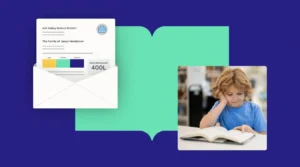
SchoolStatus Launches Literacy Solution to Help Districts Engage Families in Improving Reading Outcomes
Read More >
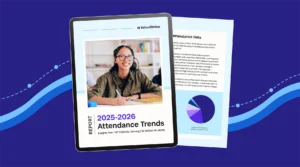
Key Attendance Trends from the 2025-26 School Year: Insights from 1.1M Students
Read More >

Dr. Cristine LaMontagne, instructional coach at East Side Union High School District in San Jose, California, advocates for an inquiry-based approach to explore and measure teacher growth, while immediately addressing the needs of students in the classroom.
Instructional coaching is so much more than observing a teacher and giving feedback. It’s more than taking notes, offering your sage advice, or facilitating a set of reflective questions after observing a lesson, like: “How do you think the lesson went? What would you have changed?”
I was encouraged to become an instructional coach due to my effectiveness with struggling and hard-to-reach students in the classroom. As a beginning coach, while I often thought about what worked for me and my students, I soon realized that I needed to coach my teachers differently, often with a process that focused on developing a skill set and pedagogy that was uniquely their own.
I quickly learned that effective instructional coaching is intentional, focused, and requires measurable outcomes—an “inquiry-based” approach. Below are 4 key ideas coaches should keep in mind when implementing an inquiry-based coaching cycle.
During the first weeks of school, teachers and coaches should get to know their students together. Teachers will often have their own strategies for getting to know their students and building relationships. If they don’t, consider working with your teacher to create a survey (e.g., Google Forms) for the students. Our students are so much more than their proficiency level or past grades! As an example, one of my favorite questions on a survey for high school students was, “What was one kind thing you did today?” and a question like this allows us to really hear our students’ voices.
Coaches learn a lot about the teacher and their students through direct observation and participation. I always ask the teacher if I can walk around and interact with the students during free work periods or group work. My go-to questions are: “What are you learning today?” and “How are you learning this?” I also use this time to build relationships with the students because they’ll be seeing me a lot throughout the year.
Additionally, I learn a lot by having the teacher speak about the strengths and challenges of each class. Through data from student voice, coach observation, and teacher perspective, we can hone in on authentic student challenges. Great research always begins with a problem we sincerely and passionately want to address. It’s these student challenges that will lead to an inquiry that both impacts students and defines the heart of your work together for the rest of the coaching cycle.
It’s not enough for coaches to leave teachers feeling good about their coaching sessions. We need to push for growth seen through quantitative or qualitative data. Coaches can encourage innovative ways, beyond grades and scores, to measure student growth.
Let’s use an example from a math teacher I worked with. She once said, “When I look through tests, I see so many instances where I think, “if they just asked me, I could have helped.” If the students have trouble asking questions, or don’t know how to ask questions, create a rubric that measures the ability to ask an effective question. Help the teacher find student examples for each level: (1) Emerging, (2) Approaching, (3) Standard, and (4) Exceeding.
If the students don’t work effectively in groups, create a rubric based on skills used in effective group work. If students are disengaged, create a survey using Likert-scale questions to measure student perceptions of instruction and/or classroom climate. The teacher can also collect student feedback through short answer questions on a survey. Furthermore, analyzing grades or test scores can be a secondary method to measure the impact of an inquiry.
Use a tool (e.g., rubric or survey) as a pre-assessment and post-assessment to measure the impact of the inquiry by measuring change in student skills, student engagement, or student perception.
Once you and your teacher have chosen a problem to address, brainstorm ways to solve the issue. In doing so, think about your teacher’s strengths in addressing a problem, your experience, research-based strategies, and what works for their colleagues. Maybe there is a strategy the teacher has always wanted to try out, or current practice they want to fully develop that could address the problem?
Using my math teacher’s example, we created specific lessons and a collaborative group protocol that focused on student opportunity to ask questions. Our inquiry, “Effective Questioning in a High School Math 2 Class,” was the focus for our semester together. The collaborative group protocol was run at least once a week––for eight weeks––where I would often observe and listen to what the students were saying. At the end of each visitation, the teacher and I would debrief, compare notes, and plan next steps after the lesson.
These observations and debriefs allowed the teacher to change and improve the protocol. Next, we created new mini-lessons together from our observations of student struggles during the protocol. Once the observations were complete, the teacher shared a self-reflection exit ticket to address what students need during the protocol in order to be more responsible for their learning.
For reference, an inquiry can run from anywhere between 4-10 weeks. Formal and informal observations and debriefs happen between the pre-test and post-test. Throughout this time we’ll make mistakes, ask questions, collect and discuss student data and coach feedback, and implement changes.
While the strategy or protocol you study will evolve and become more detailed based on student data and coaching feedback, the inquiry objective and skill being measured should remain constant. Facilitating inquiry research moves coaching beyond advising research-based instructional strategies that may be inauthentic for a particular teacher and ineffective for their students.
How often have teachers attended professional development workshops only to leave confused at how the information would actually apply to their own students? While schools often have teachers who share best practices, coaches who facilitate inquiry research help teachers develop a highly-defined practice with measurable student outcomes using their own school population.
Great research should not just sit in a binder or an online folder. Coaching through inquiry allows teachers to focus on developing a specific practice, strategy, or protocol to help solve a challenge in the classroom.
Joellen Killion recognizes two styles of coaching—coaching heavy and coaching light. “Coaching light emphasizes the sense of being supported rather than the sense of producing results.” Teachers who participate in inquiry learning don’t just feel supported, they will be able to specifically describe concrete improvement that took place in their students, as well as themselves.
Your teacher’s findings—the developed strategy and lesson plans, the student outcomes, teacher setbacks, lessons learned—should be shared with colleagues.
By implementing an inquiry-based coaching cycle with teachers, I’m able to provide a truly personalized, professional development experience for each teacher, enhancing their own pedagogy and defining their own practice. They explore innovative ways to measure growth while addressing immediate needs of the students in their classroom.
Dr. Cristine LaMontagne has been an instructional coach in the East Side Union High School District. As an instructional coach with a researcher’s background, she believes in guiding educators to develop their own critical, yet personal, pedagogy. She streamlines professional learning through a process of goal setting, inquiry, and self-reflection that is strongly grounded in collecting measurable data.
As a classroom teacher, Dr. LaMontagne is always thinking about how to facilitate dynamic learning experiences for disengaged and struggling students, where mistakes, real-time feedback, and growth are all part of the process. She is passionate about teaching the basics of learning theory and instructional strategy to struggling students, so they have a voice in the world of education. Her doctoral research highlights what can happen when students and teachers have a shared understanding of teaching and learning.
Connect with Dr. LaMontagne on Instagram @thevarsityclassroom!
 Dr. Cristine LaMontagneDr. Cristine LaMontagne, an instructional coach in the East Side Union High School District, integrates her research background to empower educators in developing personalized pedagogy. Through goal setting, inquiry, and self-reflection, she facilitates streamlined professional learning grounded in data. Committed to dynamic learning experiences, she equips struggling students with essential learning theory and instructional strategies, fostering their voice in education.
News, articles, and tips for meeting your district’s goals—delivered to your inbox.




















Ready to learn more about our suite of solutions?


