Your Attendance Improvement Plan Should Do More Than Meet Compliance
read more


New Book Gives District Leaders a Practical Framework for Improving Chronic Absenteeism—and a Comprehensive Look at State-Level Attendance Policies
Read More >
Key Attendance Trends from the 2025-26 School Year: Insights from 1.1M Students
Read More >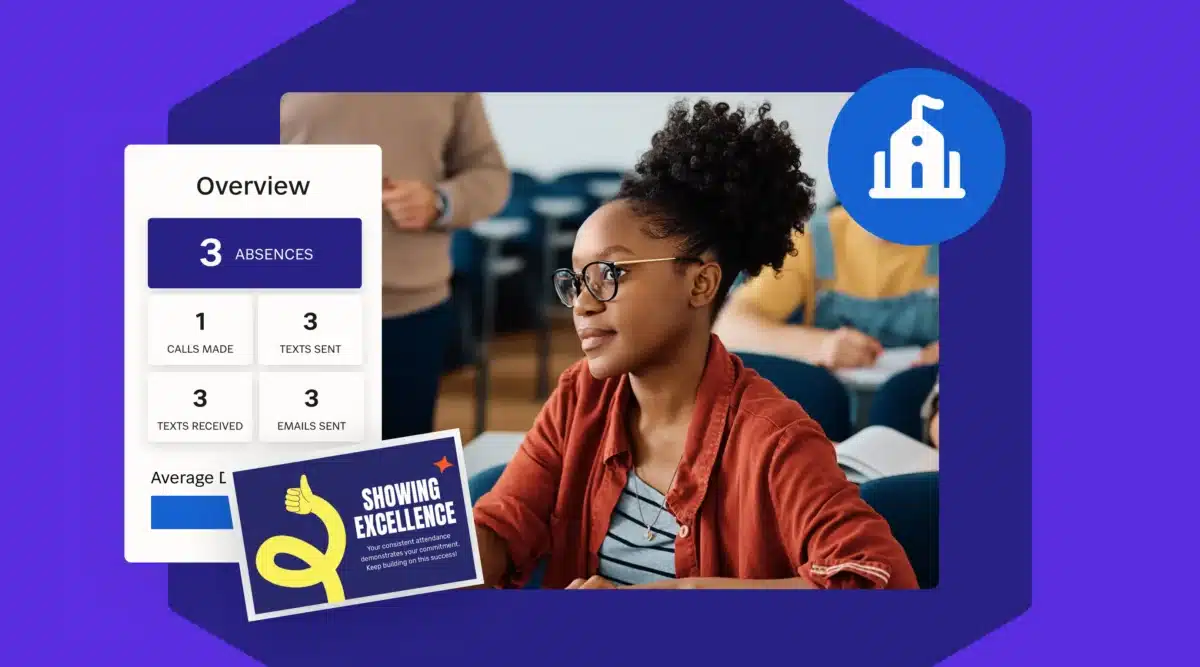

A single outreach channel, a call, an email, a letter, works for some families some of the time. Coordinating physical mail with digital follow-up works for more families more consistently. This post covers why hybrid outreach produces stronger attendance outcomes than either channel alone, and how to build it into your intervention workflow without the coordination breaking down.
Every attendance coordinator has experienced the same frustration: you send the message, nothing comes back. You follow up, still nothing. You escalate to a phone call, and by that point, the student has missed two more weeks of school.
The easy excuse is that families don’t care. The actual problem is that a single outreach channel rarely penetrates the noise of daily life consistently enough to generate a response. A text gets buried. An email goes to a folder no one checks. A phone call lands at the wrong time and doesn’t get returned.
Hybrid attendance outreach, coordinating physical mail and digital channels like email and text, addresses this.
There’s a reason direct mail has outlasted every prediction of its demise: a letter in a mailbox demands attention in a way a notification doesn’t. It’s physical. It has weight. A family can set it on the kitchen counter and come back to it.
For attendance outreach specifically, a mailed letter carries a different signal than a text or an automated call. It communicates that the school took deliberate action, that someone made a decision to reach out in a formal, considered way. For families who have tuned out digital notifications, that signal matters.
Mailed letters also reach families where digital channels don’t. Not every household has reliable smartphone access or a consistently checked inbox. At the same time, not every student has a stable mailing address — housing instability is one of the most common barriers to attendance, and it’s also the barrier most likely to make a letter undeliverable. That’s precisely why neither channel is sufficient on its own. Digital reaches the families a letter can’t. Physical mail reaches the families a notification can’t. The combination closes the gap that either channel leaves open.
When letters are written in a family’s home language — and translated accurately, not through a generic automated pass — that signal of care gets stronger. A letter in Spanish or Somali or Haitian Creole arriving in a family’s mailbox communicates that the school sees them.
Digital outreach has real strengths: speed, cost, two-way communication, and the ability to track whether a message was opened. For attendance work, those strengths make a real difference. You can send a text within hours of an absence and see whether it was read.
But digital fatigue is also real. Families with students in multiple schools may receive dozens of messages per week from the district. The more messages arrive, the less any individual one registers. An attendance notification competes with a Spirit Week reminder and a lunch balance alert for the same attention.
Digital outreach also tends to look the same regardless of what it’s communicating. A text about chronic absenteeism looks, to the recipient, a lot like a text about a school event. The format doesn’t signal urgency or care – the words have to do all the work.
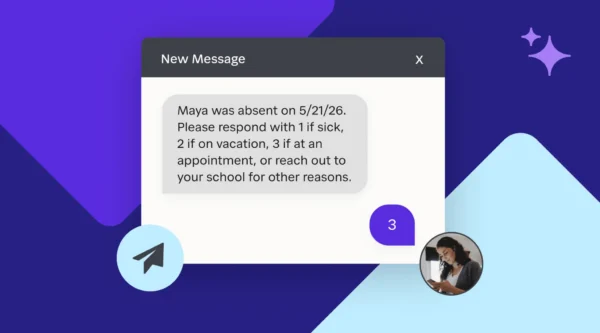
A hybrid model adds reinforcement to reach. A family that receives a thoughtfully written letter about their child’s attendance pattern, followed a few days later by a text with a direct link to schedule a conversation, experiences those two touches as a coordinated message rather than random noise.
The letter establishes the seriousness of the outreach. The digital follow-up makes the next step frictionless. Together, they move a family from awareness to action in a way that either channel alone rarely does.
The best hybrid outreach is also positive in tone. Families reached only when something is wrong become harder to reach over time. Coordinating celebration letters — recognizing improved attendance or a student milestone — alongside intervention outreach shifts the relationship from reactive to relational.
The operational challenge of hybrid outreach is coordination. A letter that goes out without a timed digital follow-up is just a letter. A text that arrives before the letter does undercuts the sequence. And without visibility into which families responded to which channel, your team has no way to adjust what it’s doing.
Managing that coordination manually — across hundreds of students, in multiple languages, with outreach triggered by live absence data — breaks down fast. The districts that sustain hybrid outreach at scale connect their SIS data directly to their outreach workflow, so the right message goes to the right family through the right channel without staff having to orchestrate each step.
SchoolStatus Attend coordinates physical and digital outreach through a single workflow, in more than 100 languages, with tracking that shows what landed and what didn’t.
See how it works in a personalized demo.
For same-day absence response, yes, that’s where digital channels do the work. Physical mail is most effective for early-pattern intervention, when the goal is establishing a relationship before the situation becomes urgent. A letter sent after three absences carries more weight than one sent after fifteen.
A hybrid model doesn’t require every family to receive every channel. Attendance coordinators can configure outreach based on what’s worked for a given family. The point is having both options available so your team isn’t limited by a single channel’s reach.
Start with the languages most represented in your district’s enrollment data. The goal is accurate translation in the languages your families actually speak. Auto-translated letters in a family’s home language are meaningfully better received than English-only outreach, but quality matters.
Track response rates, meeting scheduling, and attendance changes at the student level for students who received outreach, compared to those who didn’t. Read rates on digital messages give you a leading indicator; actual attendance data gives you the outcome. Both matter.
Yes, with the right systems in place. The workflows that make hybrid outreach manageable at large scale — automated triggers, pre-built templates, coordinated send schedules — are the same ones that make it viable for smaller teams. The key is not having to build or manage each piece manually.
 Dr. Kara Stern
Director, Education and Engagement
Dr. Kara Stern has seen school from just about every angle: high school English teacher, middle school principal, fellowship director for math and science teachers across New York City, and head of school at a rural N-12 school. That breadth is what she brings to her work at SchoolStatus, where she writes, speaks, and challenges educators to build the kinds of school communities where every student thrives. She holds a Master’s in Education Leadership from Teachers College and a Ph.D. in Teaching and Learning from NYU.
News, articles, and tips for meeting your district’s goals—delivered to your inbox.












Ready to learn more about our suite of solutions?