School-Home Communication Audit: 10 Questions to Assess Your District’s Strategy
read more


New Book Gives District Leaders a Practical Framework for Improving Chronic Absenteeism—and a Comprehensive Look at State-Level Attendance Policies
Read More >
Key Attendance Trends from the 2025-26 School Year: Insights from 1.1M Students
Read More >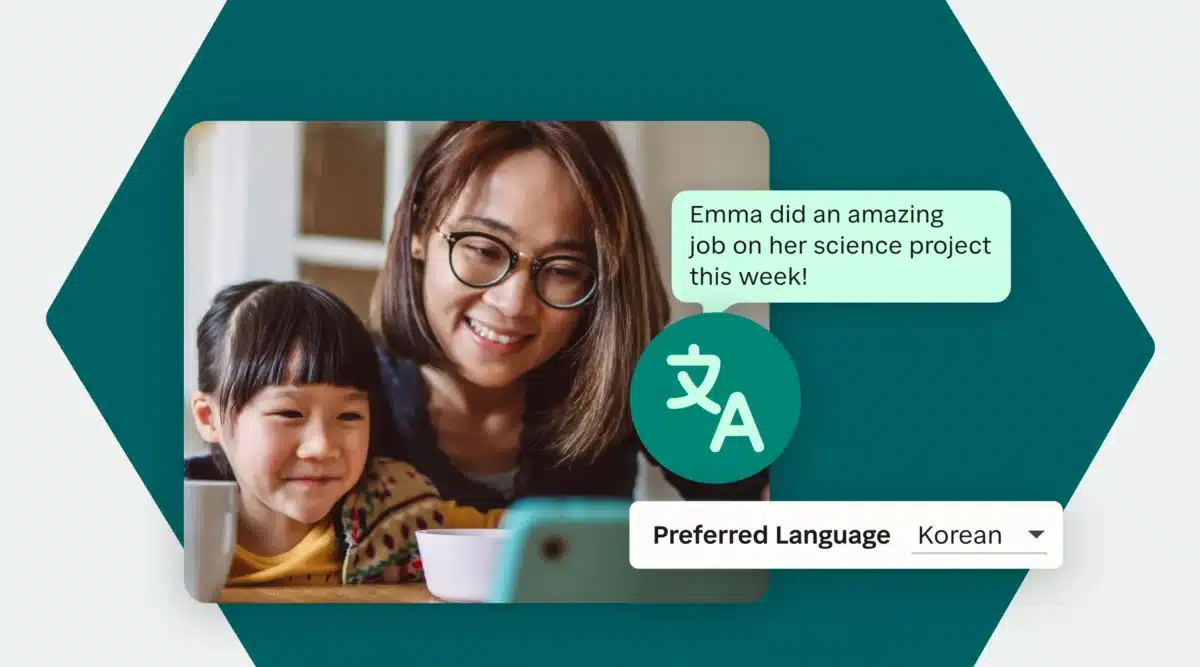

Translating enrollment forms is a start. But when the early dismissal notice goes home in English, a family that prefers another language misses it. Districts that reach non-English-speaking families effectively carry language preference through every message sent during the school year, not just the paperwork. That means routine updates, translated automatically, through the channel the family actually uses, with a way to reply and be understood.
Consider this: A new family enrolls in September. The adults at home prefer to communicate in a language other than English. They receive enrollment information in that language. Then the picture day flyer goes home in English. So does the note about an early dismissal on Wednesday. The family arrives at school at the usual pickup time, two hours after classes ended.
That is the real gap in how most districts communicate with non-English-speaking families. The district knew which language the family preferred. That information just did not carry through to the messages sent during the school year.
What does multilingual family communication mean in K-12 schools?
Multilingual family communication means ensuring families receive school messages in their preferred language across every communication, not just enrollment documents. It includes day-to-day updates, early dismissal notices, and conference reminders, delivered through whatever channel the family uses, with the ability to reply and be understood.
A district may translate enrollment forms and other important documents, yet still send day-to-day messages in English. Since there are often many people in the district sending messages—the district office, the school, a teacher, the nurse—if there isn’t a clear policy and resources everyone has access to, translation may only happen part of the time.
When a school message reaches a family in English, a child may be asked to explain it, or a parent may need to call the front office and try to get in touch with someone who speaks their language. In order to ensure all parents and guardians have accurate information, staff need a reliable way to translate school communications when they have an urgent message.
Translation starts with keeping each family’s preferred language on record and checking that it’s accurate. Staff also need to know which communication channels will deliver a translated message. Those two steps matter for a conference reminder just as much as they do for an early dismissal notice.
SchoolStatus Connect automatically translates messages into more than 130 languages based on a family’s preferred language. Staff can send everyday updates through Connect, and families can read them in the language they prefer.
→ Read more about how preferred languages and two-way translation work.
When a parent or guardian reads a translated reminder about a conference, they also need a way to respond. For example, to ask whether an interpreter will be available. With two-way translation in SchoolStatus Connect, the family member can write a message in their home language. The staff member reads the translated message and can reply in their preferred language. This is how they can transition from simply receiving information to actively taking part in their child’s academic journey.
For a sensitive or complex conversation, the district still needs to arrange appropriate language support. Everyday messaging gives the family a way to engage in the conversation.
Look at the messages your district sent last week. Are families’ preferred languages recorded accurately? Which messages were sent through a channel that translates them, and which weren’t? The answers will show where a family could miss information and what your district needs to change.
See how SchoolStatus Connect supports translated, two-way messaging in more than 130 languages. Request a Demo.
SchoolStatus Connect automatically translates messages into more than 130 languages based on each family’s preferred language setting. That means a district does not need to manage separate translations for different populations. The same message sent once reaches every family in the language they actually read.
Yes. With two-way translation in Connect, families can write back in their preferred language and staff receive the translated response. This matters most for everyday questions like whether an interpreter will be available at a conference or what time an event starts.
Messages sent through Connect, including texts and emails, are translated based on each family’s preferred language. That applies to everyday updates, early dismissal notices, and larger announcements. Translation is not limited to formal documents. It applies to every message sent through the platform.
No. Families can receive messages by text or email without downloading an app. They can also reply through the same channel, which means the district can reach families who are unlikely to download or navigate a new platform.
Effective communication with non-English-speaking families means more than translating enrollment documents. It means every routine message, from early dismissal notices to conference reminders, reaches families in their preferred language through the channel they actually use, with a way to reply and be understood. One-time translation does not meet that standard.
 SchoolStatusSchoolStatus connects educators and families around the topics that matter most. The company partners with K–12 districts to improve attendance, engage families, and build trust so students can succeed. A recognized leader in data-driven attendance and family engagement solutions, SchoolStatus enables districts and educators to engage families with relevant, timely communications and proactive support on important topics including absenteeism, literacy progress, and overall student readiness. Today, SchoolStatus supports districts in all 50 states and serves more than 22 million students nationwide as a trusted partner in driving better student outcomes.
News, articles, and tips for meeting your district’s goals—delivered to your inbox.
















Ready to learn more about our suite of solutions?