How To Improve Attendance With Data Insights: A Superintendent’s Guide
read more


New Book Gives District Leaders a Practical Framework for Improving Chronic Absenteeism—and a Comprehensive Look at State-Level Attendance Policies
Read More >
Key Attendance Trends from the 2025-26 School Year: Insights from 1.1M Students
Read More >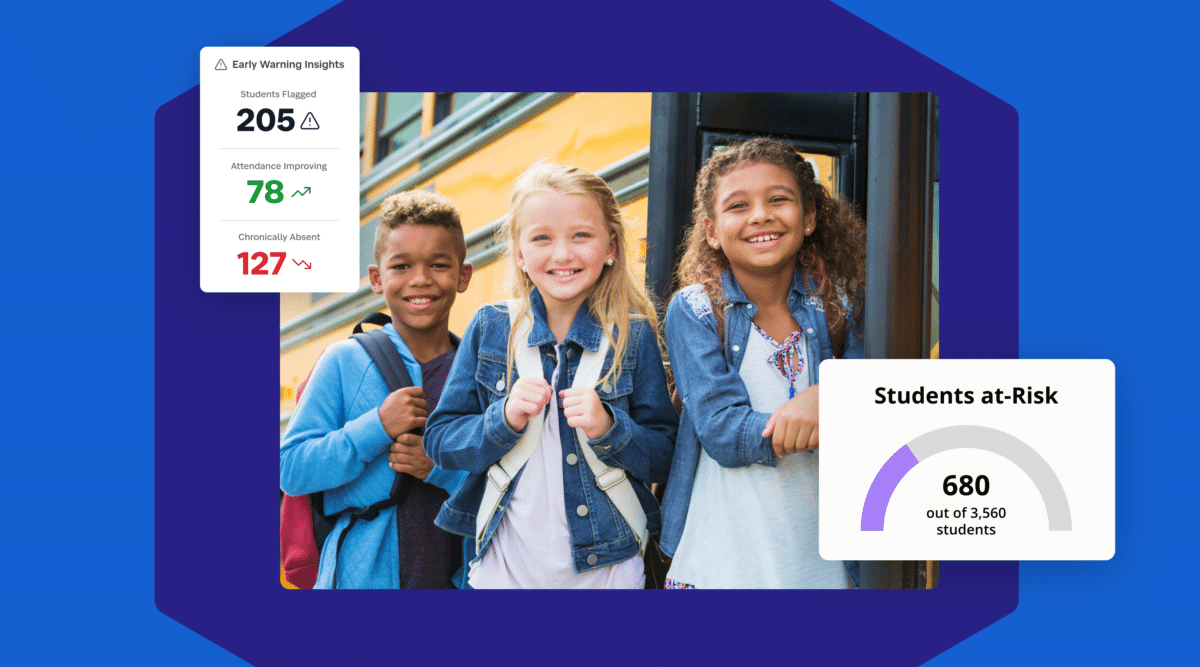

Schools collect more student data than ever, and much of it lives in separate systems. Actionable insights emerge when those signals connect, giving educators a complete view of each student and guiding timely, focused action. Clear, early answers to “who needs help, why, and what next” help schools reach the right families sooner and support students before small challenges grow.
Actionable insights are data-driven findings that help schools make informed decisions to support students. They result from connecting information across different systems, allowing educators to identify patterns, understand student needs, and take effective next steps. This approach sits at the center of modern, data-driven decision-making in schools, enabling earlier support and better interventions.
Valuable time goes toward compiling reports from multiple systems instead of acting on what the data shows. Research consistently confirms that having data is only the first step. The real work is turning it into meaningful action.
Seeing the whole student means connecting academic, behavioral, attendance, and engagement data into a complete picture. When signals from different systems come together, patterns and emerging challenges become visible sooner, giving educators the opportunity to act before issues escalate.
Districts that connect student data early in the year can spot trends more quickly and support students proactively.
Once data is connected, actionable insights help educators answer three core questions: Who needs help? Why is this happening? What should we do next?
Early visibility helps staff focus on students who are beginning to struggle, understand the context behind the numbers, and choose the most effective next steps. That clarity is how connected insights translate information into meaningful support.
This is where connected data changes something important. When educators have a complete picture of a student, they can reach out to that student’s family with something specific and real. A message grounded in actual patterns — about this child, at this moment — lands differently than a broadcast update.
Families engage when communication feels personal and relevant to their child. They respond when outreach arrives early enough for them to help. Research shows that timely, targeted communication improves student outcomes, and the foundation of that communication is insight.
Connected data makes it possible to celebrate a win, flag a concern early, or start a conversation before a challenge becomes a crisis. That consistency builds trust between schools and families over time.
With connected insights, educators gain clarity about where to focus their time and energy for the greatest impact. Identifying patterns early and engaging families with personal, relevant, timely outreach leads to stronger partnerships and better outcomes for students.
Actionable insights in education are data-driven findings that guide decisions. They help educators identify which students may need support, understand why challenges are happening, and determine what action to take next. Rather than simply reporting trends, actionable insights point toward specific steps that help students stay on track.
Schools collect large amounts of student data, but that data becomes useful when it helps educators act. Actionable insights connect signals from multiple systems so educators can identify patterns earlier and focus their time where it matters most. That clarity helps schools reach the right families sooner and support students before challenges grow.
Schools generate actionable insights by connecting data across multiple systems, including student information systems, assessment platforms, attendance tools, and communication systems. Bringing those signals together helps educators see patterns across academic performance, attendance, engagement, and family communication.
Actionable insights help schools identify early warning signs like attendance patterns or shifts in engagement. Educators can reach out to families sooner and address challenges before they become chronic. Early, personal outreach strengthens family trust and helps keep students connected to learning.
 Dr. Kara Stern
Director, Education and Engagement
Dr. Kara Stern has seen school from just about every angle: high school English teacher, middle school principal, fellowship director for math and science teachers across New York City, and head of school at a rural N-12 school. That breadth is what she brings to her work at SchoolStatus, where she writes, speaks, and challenges educators to build the kinds of school communities where every student thrives. She holds a Master’s in Education Leadership from Teachers College and a Ph.D. in Teaching and Learning from NYU.
News, articles, and tips for meeting your district’s goals—delivered to your inbox.

Ready to learn more about our suite of solutions?