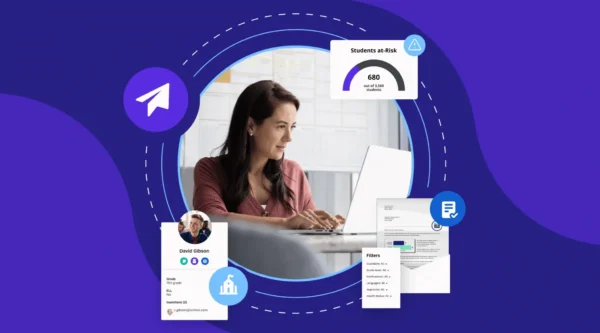
New Guide Shows How to Improve Attendance by Up to 40% with Data-Driven Outreach
read more


New Book Gives District Leaders a Practical Framework for Improving Chronic Absenteeism—and a Comprehensive Look at State-Level Attendance Policies
Read More >
Key Attendance Trends from the 2025-26 School Year: Insights from 1.1M Students
Read More >

Attendance and engagement data protect ADA-based revenue, reduce operational costs, and give CFOs a clearer line of sight between technology spend and student outcomes. When systems are connected, districts can measure education technology ROI in real financial terms.
You know the pressure. Every investment needs justification. Your budget is tight. Oversight is high. And in many states, your funding still depends on whether students show up.
That makes attendance and engagement data more than an instructional concern. It’s a financial one.
The education technology ROI you’re looking for shows up in three places: protected revenue, lower administrative costs, and more transparent reporting tied to outcomes.
If you’re in an ADA-funded state, you already know attendance drives your revenue. Even small drops in daily attendance can add up to meaningful losses over a school year.
Accurate attendance data changes the game. You can report ADA with confidence, spot attendance patterns before they become trends, and act while there’s still time to recover both days and dollars. When your data’s delayed or fragmented, you’re reacting after the damage is done. Real-time insight lets you intervene before chronic absenteeism sets in, while outreach can still bring students back.
This is one of the clearest examples of education technology ROI you’ll see. The right data protects your general fund.
It’s important to note: families play a central role in whether students show up consistently.
That’s where engagement data becomes essential. It shows you which families are actually receiving your messages, which ones are reading them, and where your team needs to follow up. When your outreach is targeted and timely, when you’re reaching the right people at the right moment, families are more likely to respond. That response often shows up first in attendance patterns, then later in academic and behavioral outcomes.
Engagement data gives you essential context. It explains why attendance is improving in one school and not another. And it supports better conversations with your superintendent, board, and community.
Disconnected tools create hidden costs you might not even see in your budget. Your staff spend hours reconciling reports, chasing missing information, and duplicating work across systems.
Integrated attendance and engagement solutions reduce that friction. They automate the routine tasks that eat up time, centralize your reporting so everyone’s working from the same source, and cut down on the manual follow-up that bogs down your team. The time savings matter to your bottom line. When your staff spend less time managing data, you reduce overtime, limit burnout, and operate more efficiently. Those savings rarely show up as a single line item, but they compound over time.
This is another key component of the education technology ROI you’re measuring. The return isn’t only financial, it’s operational.
You’re often asked to explain how technology investments support student success. Attendance and engagement data make that connection obvious.
With the right systems, you can track attendance trends alongside your outreach efforts, measure the impact of your interventions, and tie improvements to specific actions. This clarity helps you make better decisions. It also strengthens your case for continued investment by showing how your dollars translate into outcomes.
Before you approve new technology spend, ask yourself: Does this protect or stabilize ADA-based revenue? Will it reduce administrative workload? Can we measure impact over time? Does it support clear reporting to the board? When you can answer yes to each of these questions, the investment becomes easier to defend.
Here’s what you need to know: attendance data without engagement insight tells an incomplete story. And engagement tools without attendance context? They limit your impact. But when the two are connected, you gain a fuller picture of what’s happening and why. That clarity helps you act faster, spend smarter, and stay focused on students. This is the heart of education technology ROI. Smart investment supports both your fiscal responsibility and your students’ long-term success.
If you’re reviewing attendance or engagement investments this budget cycle, start with a clear picture of where your attendance patterns and outreach efforts connect today. Seeing those signals side by side can surface risks, savings opportunities, and gaps that are easy to miss in disconnected reports. Other districts are already using connected attendance and engagement data to protect funding and operate more efficiently. You can too. Let’s talk about what this could look like for your district.
In ADA-funded states, attendance directly drives your funding. Accurate, timely data helps you spot issues early and prevent revenue loss.
Engagement data shows whether your outreach is actually reaching families and getting them to act. Strong engagement often leads to better attendance, which protects your funding.
Integrated systems reduce manual work, streamline reporting, and cut out duplicate effort across your departments.
Precise data, consistent reporting, and the ability to connect your actions to outcomes make ROI easier to track and explain.
Nef DukesManager of Education Strategy and Insights
Nef is a former teacher who is passionate about helping educators use data and communications to build family trust and improve educational outcomes. At SchoolStatus, Nef partners with districts to share practical insights and stories about what works in schools today.

News, articles, and tips for meeting your district’s goals—delivered to your inbox.















Ready to learn more about our suite of solutions?